


James Rodríguez was long hyped to eventually play in MLS. His signing for the U.S./Canadian top league just made sense: Colombia’s captain, a creative, goalscoring #10 at the highest level for club and country, and one of the few players who can still sell jerseys and tickets wherever he goes in North America. However, few expected it to come with Minnesota United, and even fewer expected his debut to come with his new team already trailing 5–0 in Vancouver on the road. Against a Whitecaps side with former Bayern and German national team star Thomas Müller, a team that has quietly become one of the better outfits in MLS, James’s entrance felt like an on‑the‑nose metaphor for his club life: chaos already in motion, and him dropping into it late.
From León to a Frozen Landing in Minnesota
The 34-year-old Rodríguez arrived in MLS by way of León in Liga MX, where the plan was simple enough: lead an accomplished Mexican club and use the 2025 FIFA Club World Cup as his global showcase. Instead, León were disqualified in favor of Pachuca due to dual ownership rules. James never saw the Club World Cup, and his time in Mexico ended quietly in November 2025 without even competing for a trophy.
In 34 games he was fine but not transformative: five goals, nine assists, some flashes of the old vision, but no glory-filled runs and a team buried in the Liga MX standings. León got a solid Liga MX player. They did not get the 2024 Copa America sensation. He was a good player on a forgettable team. It’s the kind of output that keeps you employed, but not the kind that convinces anyone you should still be the centerpiece of a team that considers itself a dark horse in the World Cup power rankings.
After that came nearly three months in the wilderness. Links to MLS were inevitable, but the destination was not. Orlando City and Austin FC reportedly showed interest. A few South American clubs — including options in Ecuador and Argentina — explored the idea. In his home country, Millonarios in Bogota pushed hardest, as they are also sponsored by Adidas like the national team, but he dismissed Liga BetPlay Dimayor as below the sporting level he wanted, and the security and spotlight issues of playing in Colombia are more trouble than they’re worth for the country’s most famous active player, a player who is posted about on social media by every Colombian sports newspaper and football channel for anything he does.
In the end, Minnesota United offered something that suited everyone: a short-term deal that runs through the World Cup, with an option beyond that. Minnesota get the most famous player in club history at a manageable risk. James gets a high salary, a platform, and the promise of regular minutes as he tries to arrive fit and firing at a third World Cup as Colombia’s starting #10.
Rodríguez Eases Into MLS
From his February signing, the jokes wrote themselves. The cold in Minnesota would annoy him the same way the cold annoyed him at Bayern. The turf, the travel, the physicality — all the familiar MLS talking points. For a couple of weeks, all anyone saw were training clips and social media posts. Even the Colombian fans who frequently defend him the most were becoming frustrated.
Minnesota’s first three games, including a marquee home date against FC Cincinnati, went by without him. He finally debuted in the 64th minute away to Vancouver, with the Whitecaps already 5–0 up. The game finished 6–0. In that lost cause, he still managed around 40 touches and got on the ball in good pockets, but there was nothing there that could tell us what his real impact will be. It looked less like the start of a new era and more like a cameo in a season that had started without him.
He should get his first real look at Allianz Field in St. Paul, Minnesota soon, likely from the start, against the Seattle Sounders. That will tell us more than anything that happened in Vancouver.
Can James Still Move the Needle?
Context matters here. Minnesota have been a smaller-budget side that punch above their weight in MLS. They finished fourth in the Western Conference last season and sixth the year before. They aren’t the best team in the league, but they live comfortably in the upper half, and James Rodríguez is by several magnitudes the biggest name they’ve ever had. Finland’s Robin Lod, New Zealand international Michael Boxall, Argentine Emanuel Reynoso — all important players for the club past or present, none of them global superstars.
The problem is that the league is littered with big-name attackers who came late in their careers and found out the hard way that MLS is unforgiving if you aren’t fully locked in. Gonzalo Higuaín drifted through his first year in Miami before finally buying in. Douglas Costa never really did. A player with James’s talent but a patchy motivation record, who isn’t going to give you 90 minutes of pressing and tracking back every week, can very easily end up in that category, especially given he’s going to only be an offensive contributor.
On the other hand, his skill set is still tailor-made to hurt MLS defenses. The league remains full of teams that defend poorly in transition and concede cheap fouls in dangerous areas. James’s set pieces, his ability to hit a pass on a dime, his knack for seeing the disguise ball into the box — those things don’t disappear overnight. If he is engaged, you can absolutely imagine him racking up assists against back lines that switch off for a second. Luis Suárez with bad knees was still finding ways to score for Inter Miami regularly.
Real Madrid Darling to Football Nomad
That “if” hangs over everything because the last decade of his club career has been one long, strange slide. While so many of his 2014 teammates — Juan Cuadrado at Pisa, Teófilo Gutiérrez at Junior de Barranquilla, Juan Fernando Quintero at River Plate, Mateus Uribe at Atlético Nacional — kept delivering steady output as they aged, James has been on a world tour.
After exploding at Porto, Monaco and then as a star for Real Madrid, delighting their Colombian fans, he went on loan to Bayern Munich, played well enough on paper, but never really settled. At Everton he began brightly under Carlo Ancelotti and then soured as soon as Ancelotti left. Qatar (Al-Rayyan), Greece (Olympiacos) and Brazil (São Paulo) followed, with each stop producing the same pattern: moments of quality, injuries, frustration, and noise. He picked up red cards, disappeared for spells, clashed with managers, and complained — sometimes about referees, sometimes about teammates, sometimes about how he was being used as he would see spells on the bench.
The last European chapter, at Rayo Vallecano in La Liga, was arguably the bleakest: six miserable league games, one assist, escalating grumbles about intensity and treatment, and then the exit door. León in Mexico was calmer but still underwhelming. By the time Minnesota came calling, he was drifting through short-term bets and “maybe this is the place where he’ll shine again” rhetoric, after his magical 2024 Copa America reinvigorated his career.
Talent like his doesn’t vanish, but the nomadic path — from Real Madrid star to short-term fix in MLS — tells its own story about how the football world views him now.
No. 10 Insurance: Why Colombia Needs Match-Fit James Playing in Minnesota
For all of that, Colombia still need James Rodríguez to be good in Minnesota. Not “Real Madrid golazos on Instagram” good, but “played 70–80 minutes last weekend in MLS and will do it again next weekend” good. They are walking into a World Cup where Portugal awaits in the group stage, with the likelihood of even stronger opponents later. You don’t bluff your way past those sides with throwback YouTube clips, fever dreams, and leadership quotes. You need a No. 10 who has been sprinting, getting kicked, and feeling the rhythm of proper games consistently. James doesn’t have a season to figure this out—he has three months.
That’s the bargain Colombian manager Néstor Lorenzo has made. He can build structures around Luis Díaz, Luis Suárez, Richard Ríos, and the rest of this new core, but when Colombia are under pressure, the ball still gravitates to James’s left foot. There are alternatives — Quintero is still capable of running a game and scoring big goals at River Plate when fit, Nelson Deossa is carving out a serious role at Real Betis after a great Club World Cup with Mexico’s Monterrey Rayados, Yaser Asprilla is growing up fast on loan at Galatasaray — but Lorenzo trusts James. That trust was rewarded in 2024 and 2025, when James was Colombia’s best player at the Copa América and a major reason they navigated CONMEBOL qualifying with the credible performances they did. Because Colombia are going to start him either way.
But 2026 is a new year. You can’t live on what you did at the last tournament forever, not with other No. 10s and hybrid creators pushing from behind. The March friendlies against Croatia and France in the United States are nice dress rehearsals, but they aren’t really auditions. Unless he’s injured, James is going to start the World Cup. There’s nothing to “win” in those games for him. The only question is whether they’re starting a match-fit No. 10—or a memory.
That’s where Minnesota matters. Allianz Field will be packed with Colombian fans in yellow, many of them wearing that same “JAMES 10” they bought back in 2014. The pressure is big-name, but the environment is smaller — not Madrid, not Munich, not even the intensity of Sao Paulo or Greece. It’s exactly the kind of stage where he can, if he chooses, take MLS seriously, run, train, and log the minutes his national team needs from him.
Because everyone can already see the moment in their heads. A World Cup knockout game in North America. The stadium effectively a Colombia home match. Families who saved for years to travel and get tickets. The anthem ends, the noise washes over the pitch, and somewhere between the halfway line and the goalkeeper’s box, James receives the ball with a yard of space. Colombia need that version of him — legs underneath him, timing sharpened, angles rehearsed — to pick the pass or take the shot he’s been hitting for over a decade to give them the goal they need to advance.
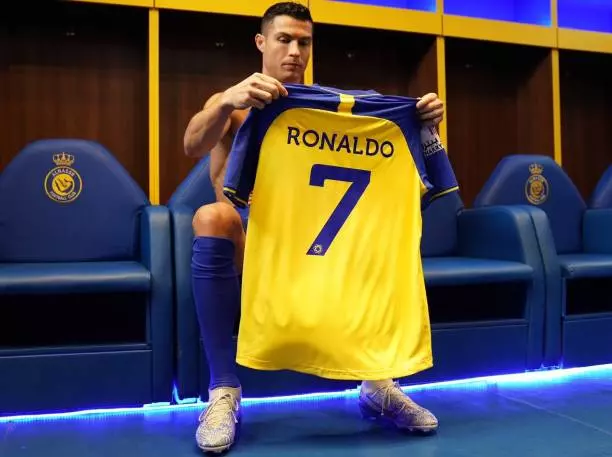
He doesn’t have to be Lionel Messi in MLS, or Cristiano Ronaldo in Saudi Arabia, or Luka Modrić dragging AC Milan around by sheer will and decades of wisdom. That phase of his career is gone, and everyone knows it. What he can be, if he leans into Minnesota instead of treating it like another stamp in the passport, is something more modest and just as important: a fit, confident, rhythm-sharp James Rodríguez who arrives at the 2026 World Cup ready to play 60+ minutes against the best in the world, not just pose on the Cerveza Aguila billboard and for the Panini cards.
Colombia need that. His teammates, including Bayern’s star Luis Díaz, need that. And the tens of thousands of Colombians packing those World Cup stands—plus the millions watching back home—deserve one last tournament where the #10 they grew up idolizing shows up ready to deliver, not just there to wave at the crowd.
Main Photo Credit: Smartframe Images



realmente aprecio tus amables palabras, gracias