
Football doesn’t always need to reinvent itself. Sometimes, it just needs to remember who it was.
This weekend, La Liga is doing exactly that. In a coordinated “Retro Matchday” initiative—the first of its kind across Europe’s major leagues—38 of the 42 clubs across Spain’s top two divisions are stepping onto the pitch in throwback kits. But the kits are merely the preamble.
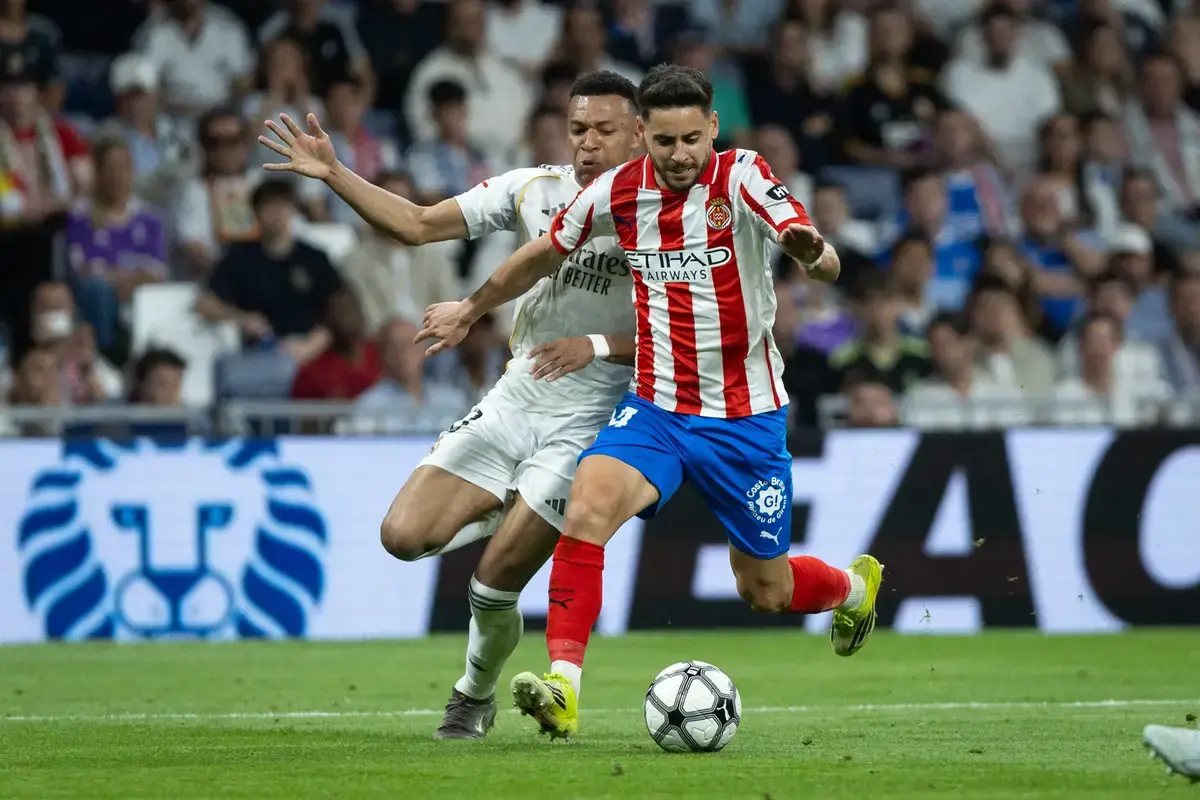
The referees are sporting vintage uniforms. PUMA has resurrected a modern version of a classic match ball. Even the TV broadcasts—the scoreboards, the lineup cards, the grainy transitions—have been rebuilt to mimic the visual language of decades past. Movistar and DAZN have overhauled their digital interfaces to match. When you tune in to watch Atlético Madrid or Athletic Club this weekend, you aren’t just seeing a different shirt; you are stepping into a time capsule as we saw in the Real Madrid vs Girona match on Friday.
The Currency of Nostalgia
It is easy to dismiss this as hyperbole for a marketing campaign. After all, football in 2026 is a polished, high-gloss product. Between the naming-rights deals, VAR interruptions, and crypto-partnerships, the “beautiful game” has often felt more like a global conglomerate than a sport.
A retro round doesn’t fix the commercialization of the sport, but it honors its roots. And that’s always something admirable.
Nostalgia is sport’s most powerful currency. When a supporter sees their club pull on a shirt from their childhood—the colors a shade deeper, the crest a little rounder, the sponsor missing or an ode to a company that may not even exist anymore—an emotional reaction occurs that no “digital activation” can replicate. They aren’t just watching a match; they are back in the living room where they first fell in love with the game, sitting next to the person who introduced them to it.
A Masterclass in Atmosphere
What makes this initiative work is the commitment to the bit. It’s the scoreboard that looks like it was designed like a classic EA Sports FIFA title. It’s the referee in a bright uniform—an absurd, wonderful detail that signals La Liga isn’t just dipping its toe into history; it’s diving in.
By unveiling the kits at Madrid Fashion Week, La Liga signaled that “retro” isn’t just for collectors; it’s for a new generation that wears these kits as street fashion. The throwback jersey is already a £40 million industry, yet by embracing it officially, the league is finally catching up to a trend their own supporters started years ago. it should be noted that the classic La Liga logo and branding, arguably looks better than the current version they use.
The Missing Giants: Real Madrid and Barcelona
Of course, there is the elephant in the room: Real Madrid.
The most decorated club in football history chose to sit this one out. While Barcelona, Getafe, and Rayo Vallecano cited logistical hurdles, Madrid offered no such excuse. Their absence is a quiet, deflating statement that their individual brand sits above the league’s collective identity, though they have practically never changed their iconic white home kit.
Their absence doesn’t ruin the spectacle. Seeing Athletic Club face Villarreal in classic strips, or watching Real Valladolid against Eibar through a broadcast format that could feel like a worn-out VHS tape, is inherently joyful. Next year, the giants should be expected to join—not for the marketing, but because a competition’s history belongs to everyone who has ever watched it. Especially given how much both clubs profit from retro kits, Nike (Barcelona) and Adidas (Real Madrid) releasing annual collections that harken to the clubs glorious pasts, not just their present.
A Lesson for the World
La Liga has done something genuinely creative. By Tuesday, the kits will be back in the equipment bags and the underlying problems of modern football will return to the headlines. There will still be constant headlines on kits, in stadiums, and online shouting “BET NOW” in as many words.
But for one weekend, the scoreboards are different. The ball looks heavier. Somewhere, a parent is pointing at a screen and telling their child, “I remember when they wore that.”
That’s more than enough. The Premier League, which prides itself on setting the global standard, should be taking notes. Spanish football just proved that to move forward, you sometimes need to look back.
Main Photo Credit: Smartframe Images