
The UEFA Champions League knockout stages are often defined by moments of individual brilliance, but more often than not, the real difference lies in the tactical battles unfolding across the pitch.
This is even more important with the change in the away goals rule, which has altered the way teams come into these matchups.
Now, teams can be a little more fluid in the second leg as there’s no double score for an away goal.
In addition, Europe’s elite teams meet over two legs, resulting in managers having to adjust their systems, exploit weaknesses and search for small advantages.
For analysts, fans and those placing live bets, understanding these tactical matchups can reveal which team might gain the upper hand as the pressure gets greater.
UEFA Champions League Knockout Stages: Dominant Gamestyles Can Clinch Crucial Wins
One of the most fascinating tactical clashes in football is the battle between positional dominance and transitional speed.
Teams coached in a possession-heavy style, something that’s been made very popular by coaches like Pep Guardiola, aim to control the tempo through structured passing patterns throughout the game.
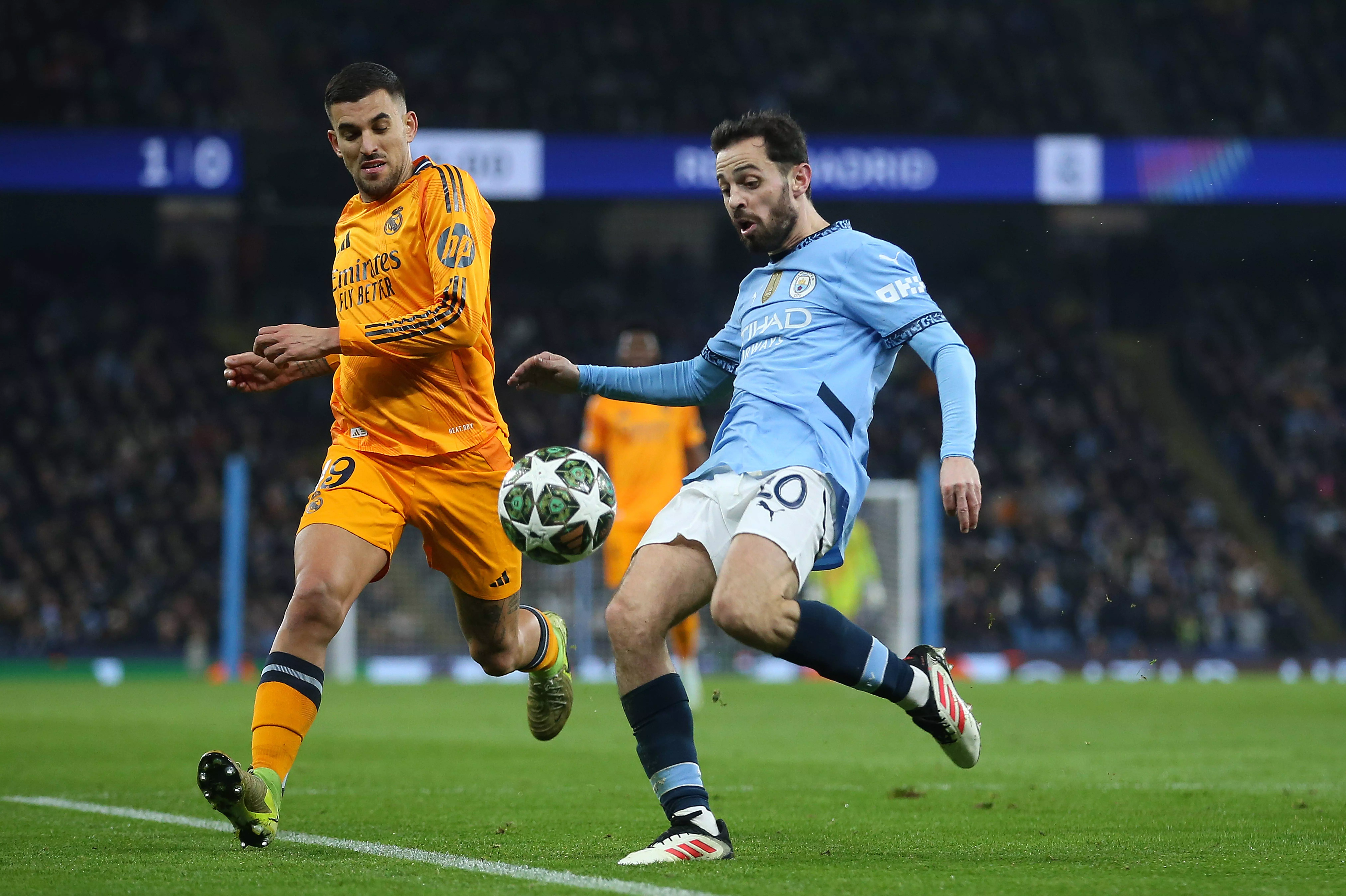
Clubs such as Manchester City often push their full-backs into midfield, creating numerical superiority in central areas and forcing their opponents to defend deep, creating exciting UEFA Champions League knockout stages games.
However, this approach leaves space behind the defensive line, which counterattacking teams seek to exploit.
Sides like Real Madrid have repeatedly demonstrated how impressive rapid transitions can be in the UEFA Champions League knockout stages.
Under managers who preferred this style of play, the Los Blancos were able to frequently absorb pressure before launching quick attacks through fast wingers and direct forward runs.
In matches like these, the tactical duel is increasingly obvious. Fans have to ask themselves whether possession-oriented teams can break down a compact block before being punished by a counterattack.
UEFA Champions League Knockout Stages: Controlling The Midfield
Another big, often decisive battle often occurs in the midfield.
The UEFA Champions League knockout stages are well-known for offering up tight, strategic contests where the central midfield determines the rhythm of the game.
Clubs such as Bayern Munich traditionally rely on dynamic midfielders capable of both pressing aggressively and progressing the ball forward quickly. Their high-intensity style can overwhelm opponents who struggle under sustained pressure.
However, some teams approach midfield dominance differently.
FC Barcelona, historically associated with positional play, prefers to circulate the ball patiently until defensive gaps appear.
The tactical chess match here revolves around pressing triggers, which are moments when the defending team chooses to press aggressively to disrupt buildup. If the pressing side mistimes the move, it can open channels that top players can exploit instantly.
YOU MAY ALSO LIKE: Bundesliga Relegation Battle: An Epic Battle At The Bottom Of The German Top Flight
UEFA Champions League Knockout Stages: Defensive Importance
Defensive structure is another factor that shapes the UEFA Champions League knockout stages.
Many managers adopt a more cautious strategy compared to domestic league matches, knowing that a single mistake can shift the entire game.
Italian sides like Inter Milan have built recent European success on disciplined defensive blocks combined with precise counterattacks.
Organised back threes, compact spacing and coordinated pressing make it difficult for opponents to create clear scoring opportunities.
In contrast, attacking-focused teams sometimes maintain their aggressive approach even in high-stakes matches.
Paris Saint‑Germain, for example, often relies on star forwards to produce moments of brilliance rather than utilising a strict defensive structure.
While this can create spectacular attacking sequences, it also introduces tactical vulnerabilities.
These are particularly noticeable against well-organised teams who are capable of exploiting defensive transitions.
UEFA Champions League Knockout Stages: Magic Of Full-backs And Wingers
Wide areas also become important tactical spots during knockout fixtures. Modern football increasingly relies on full-backs and wingers to create overloads on the flanks.
Teams attempt to isolate defenders in one-on-one situations or create numerical advantages through overlapping runs.
Clubs like Liverpool FC under Jürgen Klopp mastered this approach by pushing their full-backs high up the pitch to deliver crosses or cutbacks into dangerous areas.
Opponents often respond by adjusting their defensive shape, either dropping a winger deeper or shifting to a back five.
These adjustments highlight how knockout ties evolve tactically over two legs. A team that dominates the first match may face a completely different tactical setup in the return fixture as the opposing manager searches for a strategic solution.
UEFA Champions League Knockout Stages: The Importance Of Strategy
Ultimately, the Champions League knockout stages represent football at its most strategic.
Managers analyse opponents in detail, preparing tactical plans that attempt to neutralise strengths while targeting weaknesses.
Whether it is the clash between possession and counterattack, the struggle for midfield control, or the importance of defence, these battles can make a huge difference in the final outcome.
Main Photo
Credit: IMAGO / AgenciaLOF
Recording Date: 10.03.2026