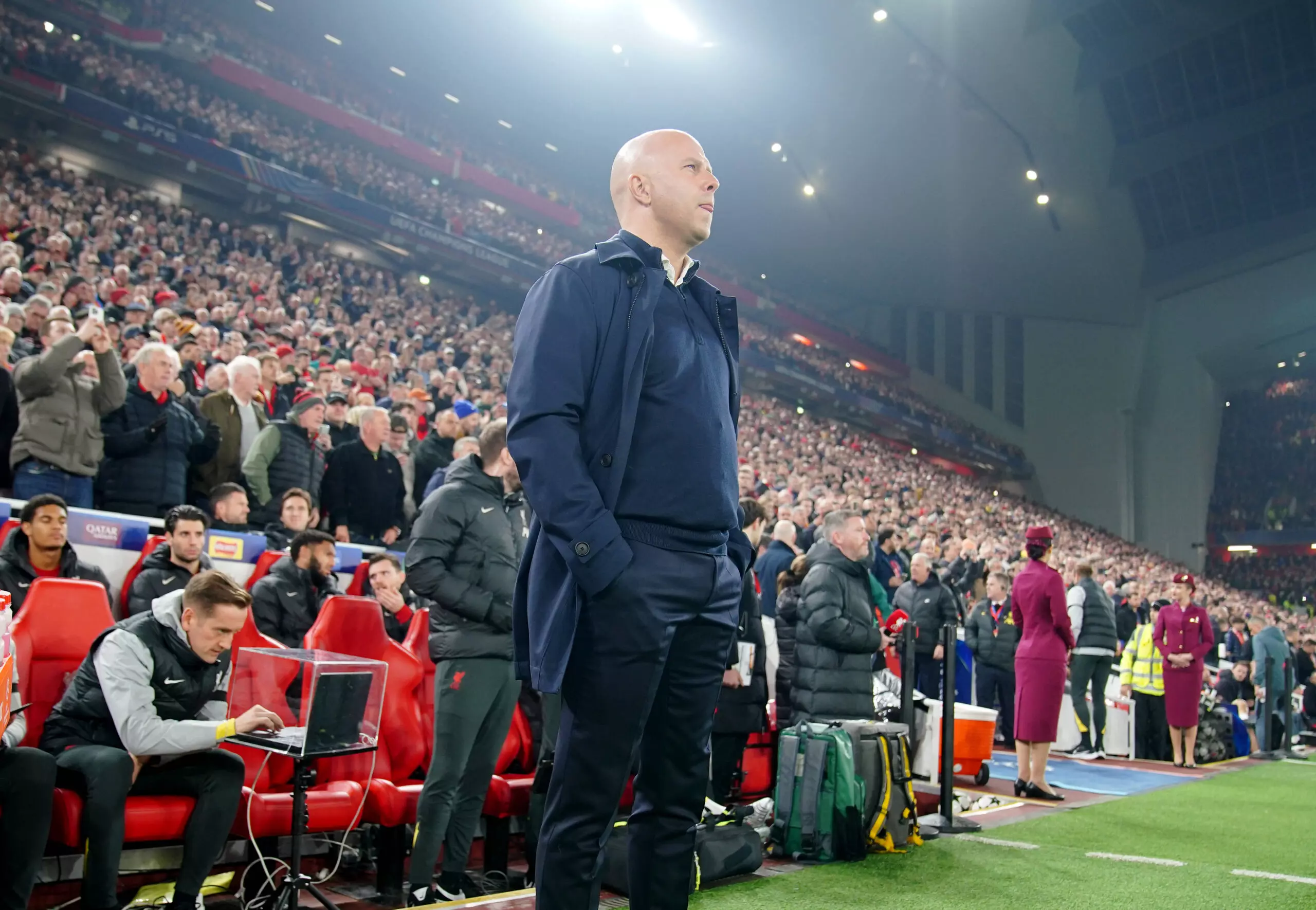


In the aftermath of yet another defeat, “Chelsea crisis” became the dominant headline across sports blogs, newspapers, and social media debates.
What was once frustration has now spiralled into something far more serious — a full-blown meltdown at Stamford Bridge.
It’s safe to say the club’s ongoing struggles have pushed the atmosphere to a boiling point, and matters were only made worse by an embarrassing 3-0 defeat away to Everton at Hill Dickinson Stadium in Saturday’s late kick-off.
Perhaps most concerning was the players’ body language during the game. There was a visible lack of urgency and intent — no intensity, no resilience, and no sense of fight.
At no point did it feel like there was a player capable of producing moments of individual brilliance to ignite the team or shift the momentum of the game.
Instead, Chelsea looked flat, predictable, and devoid of ideas — a side going through the motions rather than one fighting to turn their season around.
This raises the biggest question of all: is this ongoing Chelsea crisis down to the players failing to deliver, or is it a reflection of deeper issues stemming from the dugout?
Three Games, No Goals: Chelsea Crisis Hits New Low After Miserable Week
This latest setback only deepens the Chelsea crisis, making it the first time since September 2023 that the club has failed to score in three consecutive matches.
Among Europe’s top leagues, Chelsea under Liam Rosenior has the third-worst defensive record, conceding 34 goals since early January to date. The Blues have looked increasingly porous at the back, often leaving gaps that opponents have ruthlessly exploited.
Set-piece defending is shaky, despite the Blues having one of the tallest teams in England. Transitions are slow, and mistakes have happened on numerous occasions, with the goalkeepers as well as the defenders making mistakes far too frequently.
All these compounded a “miserable week” for the Blues that saw them dumped out of the Champions League by Paris Saint-Germain, and hit by a £10.75 million fine, along with an immediate nine-month academy transfer ban and a one-year first-team transfer ban — although the latter is suspended for two years.
A win — any win — would go a long way for Chelsea right now.
Whether it’s a scrappy 1-0 victory or a dominant performance, the priority is simply getting back to winning ways, with their last Premier League point coming nearly three weeks ago.
What makes this run even more frustrating for fans is the number of missed opportunities.
On several occasions, Chelsea have failed to capitalise on chances to close the gap on the teams above them in the race for a top four finish.
Those slip-ups are now proving costly, and as things stand, the possibility of the Blues missing out on Champions League football next season is becoming increasingly real.
Chelsea Crisis Deepens: A Team Losing Its Identity On The Pitch
In their last two home games, Chelsea have failed to score — a statistic that would have seemed unthinkable not too long ago.
Despite creating clear chances against Paris Saint-Germain in the UEFA Champions League Round of 16 and against Newcastle United in the Premier League, the Blues have repeatedly failed to convert.
Against Everton, the performance raised even more concerns. There was a sense of confusion in their play, as though the players were still trying to come to grips with the manager’s demands.
Whenever they approached Everton’s penalty area, the pattern was the same — safe passes, no incision, no movement, and no real intent.
The tempo felt painfully slow: a thousand passes around the box, but none into it. Suddenly, Chelsea looks like a side reliant on crosses rather than creativity — a stark contrast to how they performed with their last coach.
All of this feeds directly into the growing Chelsea crisis, and it naturally raises the big question: Is this down to the players or the manager?
YOU MAY ALSO LIKE: Poland National Team Squad: Important 2026 World Cup Play-Offs Ahead As Head Coach Jan Urban Announces Squad

Chelsea Crisis: The Case Against Liam Rosenior (Tactics & Authority)
Many fans have pointed out that this same group of players, under a more proven, elite coach in the mould of a Thomas Tuchel or Carlo Ancelotti, might produce far better results.
Under Rosenior, a curious pattern has emerged — the constant writing and passing of notes during matches, even when the game appears beyond reach.
In the 86th minute against Everton, with Chelsea already 3-0 down, the head coach was seen handing sheets of paper to players to circulate on the pitch.
The same scenario played out against Paris Saint-Germain. With the aggregate score already an emphatic 8-2, Rosenior was once again spotted issuing instructions through handwritten notes — a move that has so far drawn criticism.
To many observers, it painted the picture of a manager scrambling for solutions in real time, rather than one with a clear plan.
Critics have gone as far as describing it as a sign of a coach “out of ideas,” while others argue it reflects a breakdown in communication between him and players on the pitch.
Regardless of this, it only adds another layer to the growing Chelsea crisis — one where clarity, authority, and direction all seem to be in short supply.
It’s not just Rosenior’s handwritten notes that have raised eyebrows — there are other worrying signs across the squad, most notably the alarming dip in individual player form.
Cole Palmer has struggled for rhythm since the former Strasbourg coach’s arrival, managing just two open-play goals in his last 12 games.
Moisés Caicedo’s influence has also dipped. João Pedro, who was once in red-hot form with 10 goals in 11 matches, has now gone four games without scoring, and vice-captain Enzo Fernandez’s future at the club is in doubt as he now looks a shadow of the player who once controlled games with authority.
It all feels like a team that has lost its identity — caught between ideas, short on confidence, and lacking the clarity needed to compete at the highest level. Unless something changes quickly, this Chelsea crisis risks evolving from a poor run of form into a season-defining collapse.
Chelsea Crisis: The Case Against the Players (Indiscipline & Errors)
Sixth place with 48 points is far from where Chelsea should be, especially considering how often they’ve been the architects of their own downfall this season.
On numerous occasions, reckless challenges have led to needless red cards, disrupting momentum and costing valuable points.
In fact, Chelsea are the only team this season to have accumulated as many as 10 red cards in all competitions — a damning statistic that highlights a persistent lack of discipline.
That indiscipline has repeatedly proven costly, with the team dropping points from winning positions due to being reduced to ten men. Just last week, Pedro Neto narrowly avoided back-to-back punishments after already being fined £70,000 by the English FA for dissent in the 2-1 loss to Arsenal.
While in Europe, he escaped with only a warning from UEFA following an incident involving a ball boy during their UCL Round of 16 clash against PSG.
Indiscipline has become a recurring theme for Liam Rosenior’s side’s underwhelming league position, and it lies at the heart of the Chelsea crisis.
This season, the Blues have also made five errors leading directly to goals in the league this season — a worrying statistic that underlines their ongoing defensive fragility.
The latest came from Robert Sánchez, whose costly mistake gifted Everton their second goal, adding to what has become an all-too-familiar pattern.
Similar errors were seen with Filip Jorgensen against PSG, further compounding Chelsea’s struggles at the back.
These repeated lapses have now sparked a debate among fans and pundits as they argue that Rosenior’s philosophy of playing out from the back has put his goalkeepers under constant pressure.
Main Photo
Credit: IMAGO / Action Plus
Recording Date: 21.03.2026