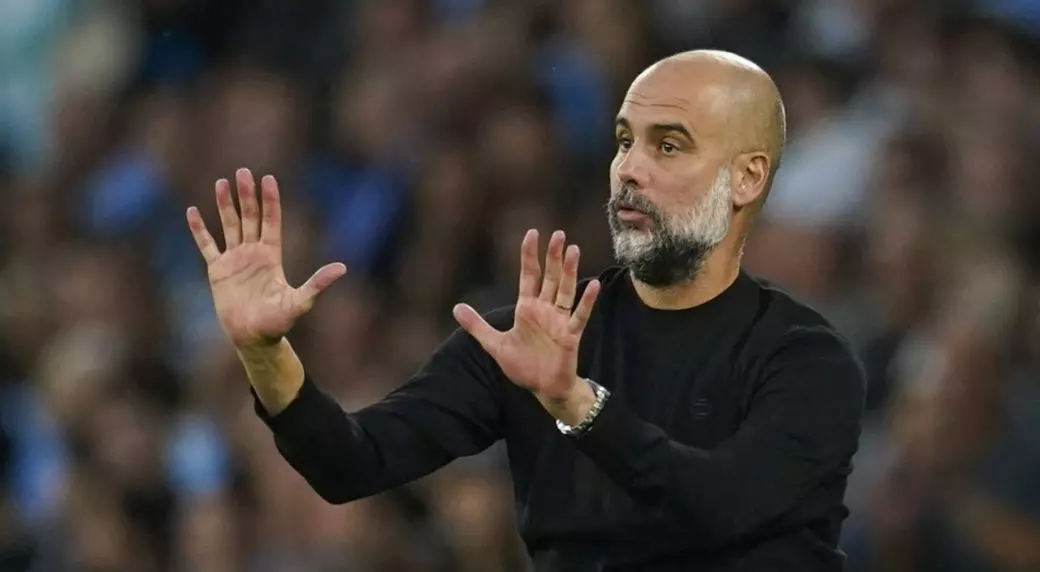

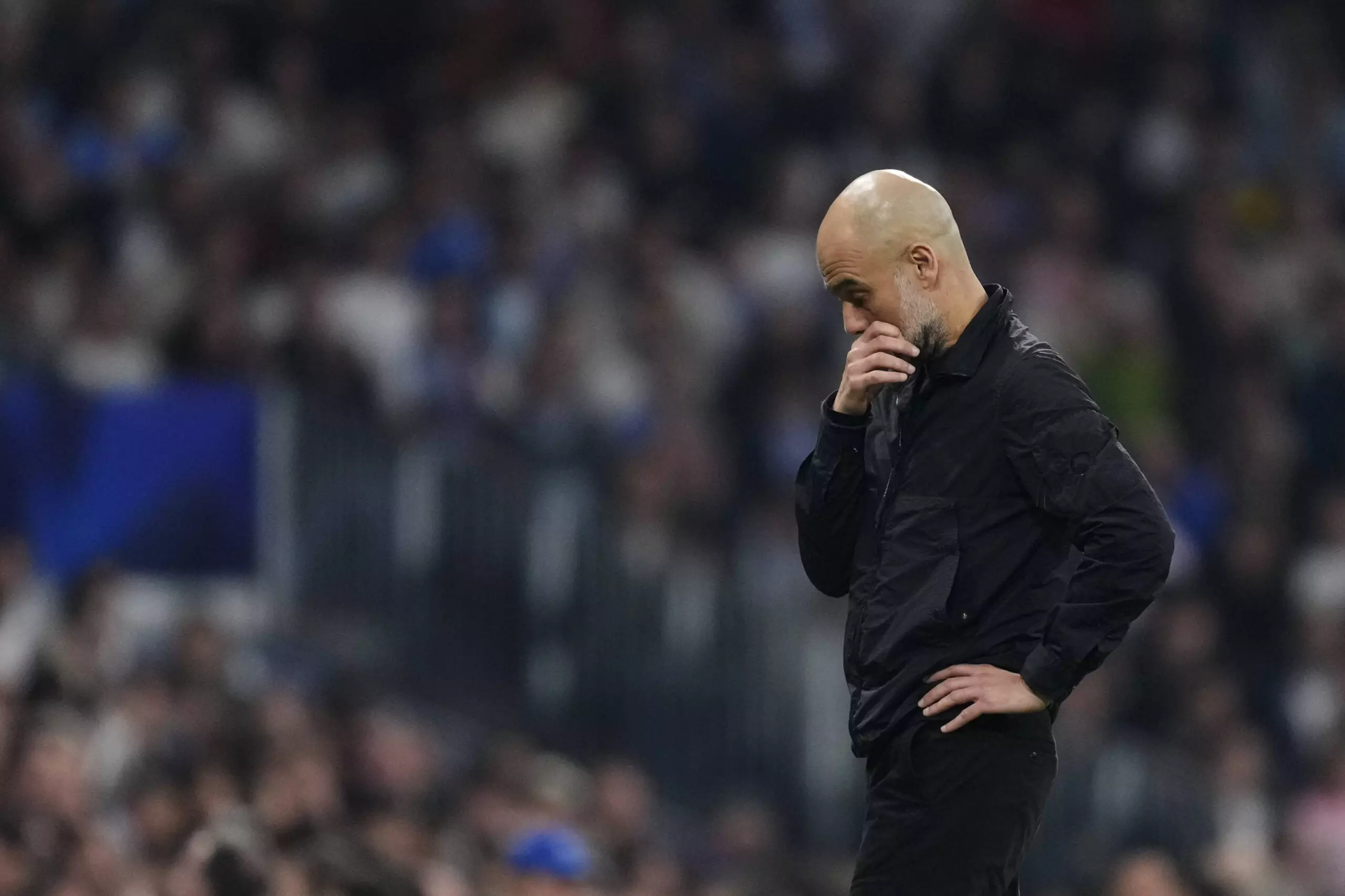
Manchester City were thrashed 0-3 by Real Madrid in the first leg of the round of 16 of the UEFA Champions League at Santiago Bernabeu on Wednesday, March 11. The Manchester City formation in the match was a 4-2-3-1 that kept switching to a 4-3-3.
The Cityzens were repeatedly found wanting while defending against counter-attacks of Real Madrid. It has been a trend for quite some time now, but the Manchester City formation had something to do with it.
Manchester City Formation Solutions
For quite some time now, Manchester City have been vulnerable against counterattacks. The Manchester City formation has been primarily 4-2-3-1 for the last couple of seasons. Prior to that, it was a 3-2-2-3, with the inverted full-back in John Stones shifting to the midfield to play alongside Rodri.
This allowed City to better control against the counter-attacks of the opposition, as both Rodri and Stones are defensive players. However, playing with Bernardo and Rodri in the double-pivot makes it a makeshift one, as Bernardo is not a defensive player.
Bernardo’s presence in the double-pivot helps Manchester City recycle possession better and originate moves from deep in midfield. However, as far as foiling the speedy counter-attacks in quick transitions of the opposition is concerned, a proper defensive player would have come in handy.
Hence, if the Manchester City formation remains a 4-2-3-1 against big teams who are capable of hurting them from counters, two proper defensive midfielders need to be there in the double-pivot. Ideally, in a 4-2-3-1, both players in the double-pivot should be defensive players only.
If Rodri plays as the lone No.6, Manchester City will continue to concede from counterattacks, especially against the bigger teams. Rodri keeps making forward runs often in order to make the Cityzens tick upfront, which means that there is nobody to guard against the counters aside from the centre-backs.
The Cityzens do not press as intensely higher up the pitch as Guardiola’s Barcelona used to do. Hence, the defending needs to be done inside their own half only.
Either Tijjani Reijnders or Nico Gonzalez can partner with Rodri in the double-pivot. It will mean that the Cityzens will have to either bench Rayan Cherki or play him on the flanks, as they have already done a number of times in the past.
This slight change in personnel is needed by Pep Guardiola’s team against quality opposition. They might not do it in the return leg against Real Madrid, as they would need a big win to go through and hence, an attacking line-up. However, in the other upcoming matches, they might think of implementing the change.
YOU MAY ALSO LIKE: Arsenal vs Everton: Three Key Factors To Consider, Predicted Lineups And Team News

Upcoming Fixtures
City will face Arsenal in the EFL Cup final in a couple of weeks. They will also face the Gunners in a crucial Premier League match in April and Liverpool in the FA Cup quarterfinal, and have an away visit to Chelsea lined up in the Premier League.
In all those matches, the Manchester City formation needs to be such that they are not vulnerable defensively. In order to win a title or two, the Cityzens might have to make the necessary adjustments to their set-up. It remains to be seen whether they decide to do it.
Main Photo
Credit: IMAGO / NurPhoto
Recording Date: 11.03.2026