

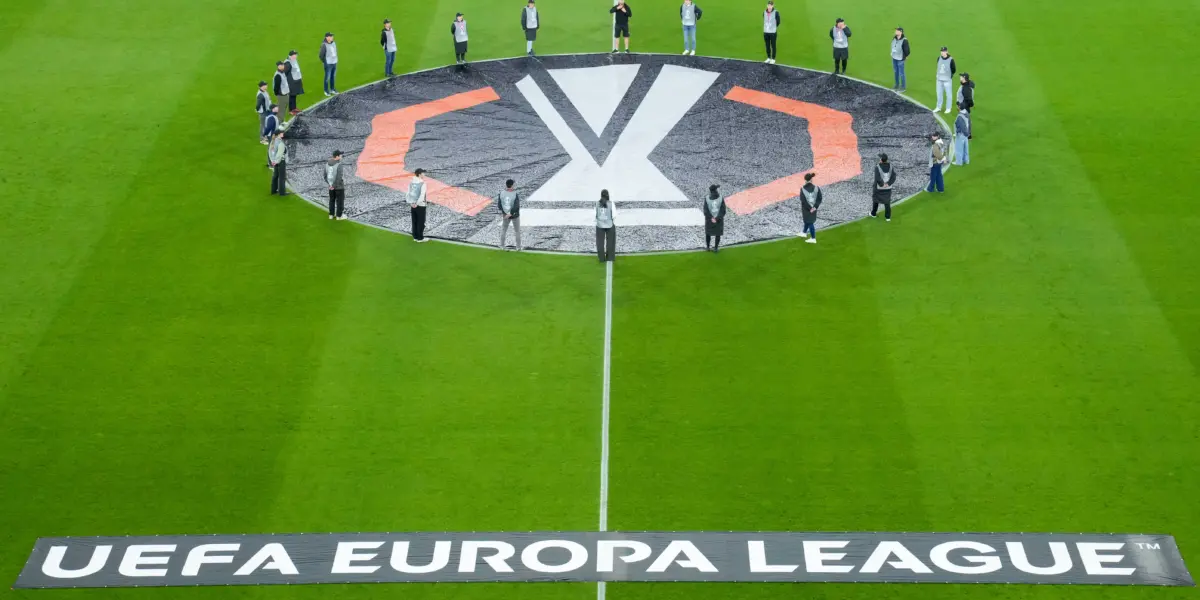
Over the last few seasons, European football has changed. The huge difference between the UEFA Champions League and the UEFA Europa League, which was the case a decade or 15 years ago, hardly exists now.
Even during major midweek fixtures, fans have noticed this change. Talking about betting and match analysis sessions that at first were limited to Tuesday and Wednesday nights has now expanded to Thursdays, with teams like Liverpool, Roma, or Bayer Leverkusen on a Thursday schedule.
Besides, the UEFA Europa League has become one of the most enjoyable competitions in European football, almost in silence. It is not because it has the most star players, but rather due to the unpredictable nature of this competition that has changed everything.
UEFA Europa League: The Secondary Competition
There was a time when many fans almost considered the UEFA Europa League a secondary competition. Most teams heavily rotated their squads, stadium attendance dropped in some countries, and television audiences hardly ever matched UEFA Champions League numbers.
That view has changed. At first, very gradually and then very clearly.
One aspect of it has been financial. For a club that is struggling to combine its domestic ambition and European exposure, the competition seems increasingly attractive both from the sporting and financial points of view.
UEFA Europa League qualifying round prize money has improved, sports broadcasters have gained visibility and winning the competition has become more important than ever. After all, it guarantees a place in the UEFA Champions League for the following season.
That changes priorities immediately.
A club sitting fifth or sixth domestically may suddenly see the UEFA Europa League as its fastest route back to elite European football. When that happens, coaches stop treating Thursday nights as experimental fixtures. Strong lineups appear, tactical preparation becomes more serious, and the intensity rises naturally.
That same logic shows up clearly in league coverage too, as outlined in Extratime Talk’s “The Race for European Football: 2025/26 Premier League Mid-Season Check-In”, where finishing positions outside the top four still keep clubs firmly in the mix for serious European campaigns.
In our experience comparing recent editions of the tournament, the difference is obvious even in the early knockout rounds. A decade ago, some ties felt predictable before kickoff, but now, honestly, very few do.
Recent data-driven coverage reflects the same picture, with Opta’s UEFA Europa League predictions for 2025-26 underlining how many serious contenders and tightly balanced ties now exist across the competition.
UEFA Europa League: Stronger Clubs Have Raised The Overall Level
Part of the competitiveness comes from the calibre of teams entering the competition. Modern football economics have made domestic leagues more demanding, especially in England, Italy, and Germany.
Finishing outside the top four no longer means a club is weak.
Liverpool played UEFA Europa League football recently despite remaining one of the strongest squads in Europe. Roma treated the competition almost like a major seasonal objective under José Mourinho. Bayer Leverkusen turned it into a platform for one of the most dominant unbeaten runs seen in recent European football.
Then there is Sevilla.
The Spanish side has practically built a separate European identity through this tournament. Their consistency in knockout football says a lot about how seriously experienced clubs now approach the Europa League.
UEFA Europa League: Why The Quality Has Improved
| Past Europa League Era | Current Europa League Era |
|---|---|
| Heavy squad rotation | Strong first-team lineups |
| Limited global interest | Wider international coverage |
| Fewer elite-level coaches | Tactical managers throughout |
| More predictable outcomes | Balanced knockout ties |
On the other hand, UEFA Champions League dropouts also affect the balance. Teams eliminated from the group stage often enter the UEFA Europa League with squads that still possess UEFA Champions League-level quality.
That dynamic creates difficult knockout paths. Sometimes brutal ones.
A club that dominated its group suddenly faces a former UEFA Champions League contender in February. From a neutral perspective, it makes the competition far more entertaining.
UEFA Europa League: Tactical Variety Makes Matches More Difficult to Predict
This may be the biggest reason the UEFA Europa League feels different today.
The competition brings together teams from very different football cultures, and unlike some UEFA Champions League fixtures where elite clubs control possession comfortably, UEFA Europa League matches often become tactical battles with awkward rhythms and uncomfortable environments.
One week, a Premier League side faces aggressive pressing in Germany. Next, they travel to Italy and encounter a slower, defensive structure focused entirely on transition moments.
That variety matters.
UEFA Europa League: Different Styles Collide Constantly
Italian Tactical Discipline
Italian clubs tend to slow games down intelligently. Defensive positioning still plays a huge role, especially in knockout football, where one mistake changes everything.
German Intensity and Pressing
German teams often force matches into chaotic stretches. High pressure, vertical attacks, transitions every few seconds. It can overwhelm technically stronger sides.
Spanish Ball Retention
Spanish clubs usually remain calmer under pressure. Even in difficult away matches, possession becomes a way to manage tempo and frustration.
Premier League Physicality
English clubs bring squad depth and tempo. Sometimes that is enough to dominate ties physically over two legs, particularly late in the season.
What makes the UEFA Europa League interesting is that these styles collide constantly, and not always in predictable ways.
A technically superior team can struggle badly away from home. A disciplined underdog can survive pressure for 180 minutes and capitalise on one mistake. We have seen it happen again and again recently.
UEFA Europa League: Fans Are Paying Much More Attention Now
The atmosphere around the competition has changed, too.
A few years ago, casual supporters often ignored group-stage fixtures unless their own club was involved. That is less common now. The quality of matches improved, yes, but audiences also became more informed and analytical.
People follow squad rotation, fixture congestion, injury management, and tactical matchups. In practical terms, football conversations became more detailed everywhere, especially online.
At the same time, broadcasters and digital platforms helped increase visibility. More matches are available internationally, highlights circulate instantly, and statistical analysis has become part of everyday football coverage.
Even smaller clubs receive far more exposure than they did before.
In all honesty, some UEFA Europa League atmospheres are exceptional. Stadiums in Italy, Spain, Turkey or Germany during knockout nights often produce environments comparable to UEFA Champions League fixtures.
Sometimes even louder.
YOU MAY ALSO LIKE: Bosnia and Herzegovina World Cup Squad: The Dragons Become First Team To Announce Squad Ahead Of The 2026 World Cup
UEFA Europa League: The Competition Feels More Open Than The UEFA Champions League
This may sound controversial, but many fans now find the UEFA Europa League more entertaining weekly.
The UEFA Champions League still has the prestige, naturally. The biggest stars, the highest revenue, the historic weight — none of that changed. However, some UEFA Champions League group-stage matches can feel uneven because financial gaps between clubs have become enormous.
The UEFA Europa League often avoids that problem.
There is usually more balance between opponents, especially after January. Margins are thinner, matches stay alive longer, and smaller clubs genuinely believe they can compete.
That unpredictability creates tension, and tension creates entertainment.
UEFA Europa League: Why Some Fans Prefer UEFA Europa League Matches
- More balanced knockout fixtures
- Strong home atmospheres
- Fewer one-sided ties
- Tactical unpredictability
- Underdog stories still happen regularly
That said, the UEFA Champions League remains football’s premier competition for obvious reasons. The global attention is different, and elite players still prioritise it above everything else.
However, from a purely entertainment perspective? The discussion is no longer ridiculous.
UEFA Europa League: Football Analysis And Match Preparation Have Also Evolved
Another factor worth mentioning is preparation quality.
Modern coaching staffs analyse opponents obsessively now, even in secondary European competitions. Clubs invest heavily in performance departments, video analysis, physical monitoring and tactical scouting.
As a result, UEFA Europa League football looks more organised than before.
Even teams from smaller leagues arrive with clear structures and detailed preparation plans. You can see it in defensive compactness, pressing triggers, transition patterns — details that were less common years ago.
In reality, the tactical floor across European football has risen. Smaller clubs are better coached, recruitment is smarter, and data scouting has improved enormously.
Competitions have become more competitive as the average level increases.
UEFA Europa League: The Evolving European Secondary Competition
The UEFA Europa League may never replace the UEFA Champions League in terms of prestige. Realistically, it does not need to.
What changed is the perception of the tournament itself. The quality improved, stronger clubs participate regularly, tactical diversity creates difficult matchups, and knockout rounds now produce genuinely elite football consistently.
In some ways, the UEFA Europa League feels closer to traditional European competition than the UEFA Champions League does today. It is less predictable, slightly messier, and more emotional.
For many football fans, that unpredictability is exactly why Thursday nights suddenly matter much more than they used to.
Main Photo
Credit: IMAGO / STEINSIEK.CH
Recording Date: 07.05.2026

Leave a Reply