
The next Manchester United head coach will not be walking into a clean slate, no matter how appealing the job description may seem. Whoever takes charge at Old Trafford will inherit challenges that cannot be ignored.
For any manager to succeed at a club, three fundamentals are non-negotiable: a streamlined squad made up of quality players the coach actually requested, sufficient time to implement his style of play and the patience required for the team to gel, grow and fully adapt to his ideas.
When these conditions are met, the likelihood of success rises significantly. When they are not, the result is all too familiar — the endless cycle of chopping and changing managers that has defined Manchester United since the departure of Sir Alex Ferguson.
Ruben Amorim spent just 14 months in charge, becoming United’s sixth permanent manager since 2013. With former Manchester United midfielder Michael Carrick taking over as the interim manager until the end of the season, the search for the next Manchester United head coach is already underway.
Whoever steps into the Old Trafford hot seat is bound to inherit a familiar set of challenges his predecessors also faced.
Next Manchester United Head Coach: Three Inescapable Problems He Will Inherit From Day One
A Squad Built By Multiple Ideologies
Every new coach inherits players signed for different systems, different philosophies and different managers. Making them function as one coherent unit is often the toughest job of all.
United’s last manager, Rúben Amorim, favoured a 3-4-3 setup, with regular shifts into a 3-4-2-1. When defending, his teams typically morphed into a 5-2-3 shape, as the wing-backs dropped deep to form a compact back five alongside the three centre-backs.
Before the Portuguese coach, Erik ten Hag, who predominantly operated with a 4-2-3-1 formation, occasionally switched to a 4-3-3 depending on personnel and opposition.
At his request, the club recruited several players familiar with his methods from Ajax — Lisandro Martínez, Antony, André Onana, Matthijs de Ligt, and Noussair Mazraoui — to replicate the possession-heavy, high-pressing style that brought the Eredivisie outfit domestic dominance and a memorable run to the Champions League semi-finals.
However, the result of managerial instability at the club is a squad assembled to serve fundamentally different tactical demands.
Players suited to a back four are suddenly asked to thrive in a back three, wingers such as Amad are repurposed as wing-backs and midfielders signed for positional play must adapt to more transitional roles.
In search for the next Manchester United head coach, the board must prioritise a manager whose style of play aligns with the attributes and strengths of the existing squad.
Appointing a coach whose footballing philosophy cannot be effectively executed by the players already at the club would only repeat a familiar and costly cycle.
The consequence is inevitable: a frantic rush into the transfer market, heavy spending on players tailored to the new manager’s system and yet another squad overhaul that sacrifices long-term stability for short-term adaptation — all while the core issues remain unresolved.
YOU MAY ALSO LIKE: Manchester United Win Against Arsenal Marks Another Huge Success for Michael Carrick
A Club Trapped Between Past And Present
At United, the past is never really the past. Every decision is measured against the Ferguson era, and anything short of instant dominance is framed as failure. The new coach inherits not just a team, but an identity crisis fueled by nostalgia.
Sir Alex Ferguson remains the benchmark for success at Manchester United.
A serial winner whose longevity and trophy haul speak for themselves, the authority and respect he commanded at Old Trafford remain unmatched. As a result, the tenure of the next Manchester United coach will be placed under intense scrutiny from the very start, measured — often unfairly — against the standards set by his legendary predecessor.
Every season without silverware, every dip in form and every sign of instability will be viewed through the same unforgiving lens that has defined the post-Ferguson era.
The fans are eager to return to the glory days and demand evolution, but as the short-term fixes are favoured over long-term planning, the result is usually almost the same.
Pressure That Allows No Grace Period
From the onset, from the first game, the first defeat, the first substitutions, the first team selection, and even the words spoken at his opening press conference, every decision the next Manchester United head coach makes will be dissected to the bone.
Nothing goes unnoticed. The weight of managing one of the world’s biggest football institutions becomes apparent the moment he walks through the door.
Early struggles could be framed as proof of poor tactical ability, rather than part of a rebuilding phase, while every setback is amplified by history, expectation and constant comparison to past eras of success.
For any incoming manager, the challenge is not just tactical or technical — it is psychological. Surviving the storm long enough to impose an identity, reshape the squad, and shift the culture is often the hardest battle of all.
Is Michael Carrick Set For A Longer Spell As United Head Coach?
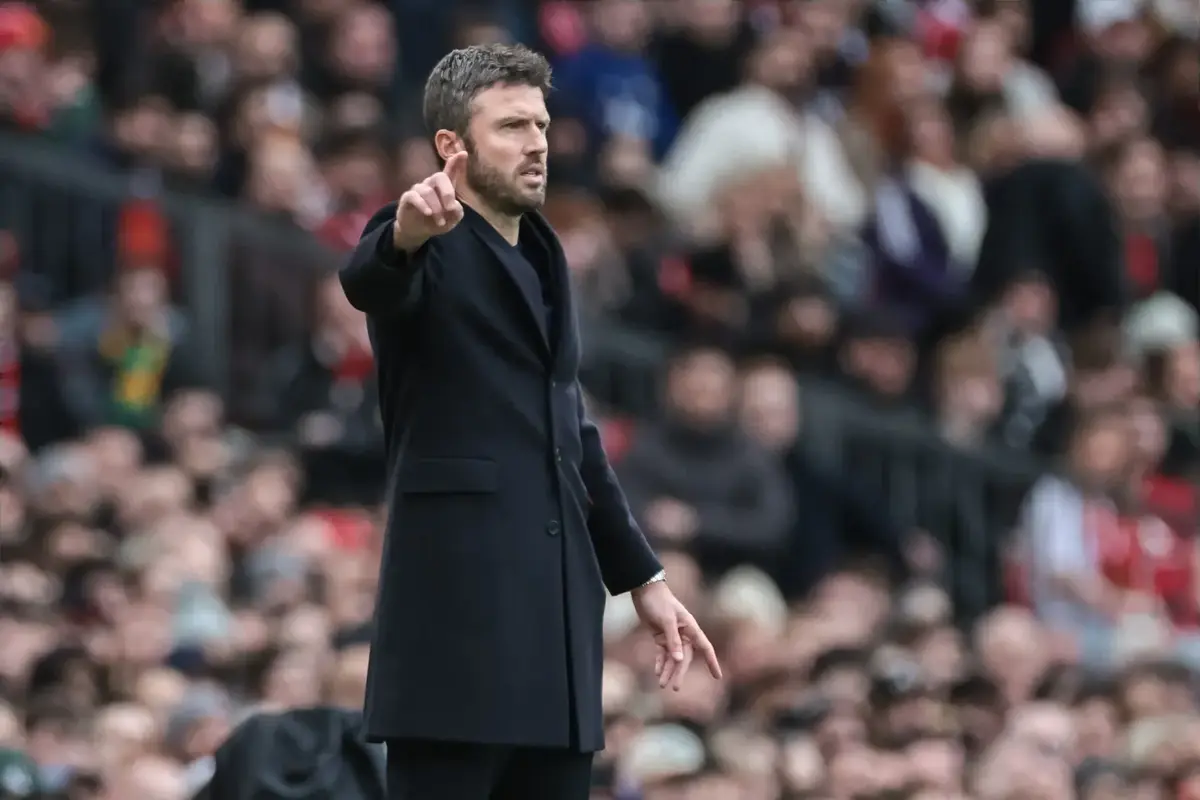
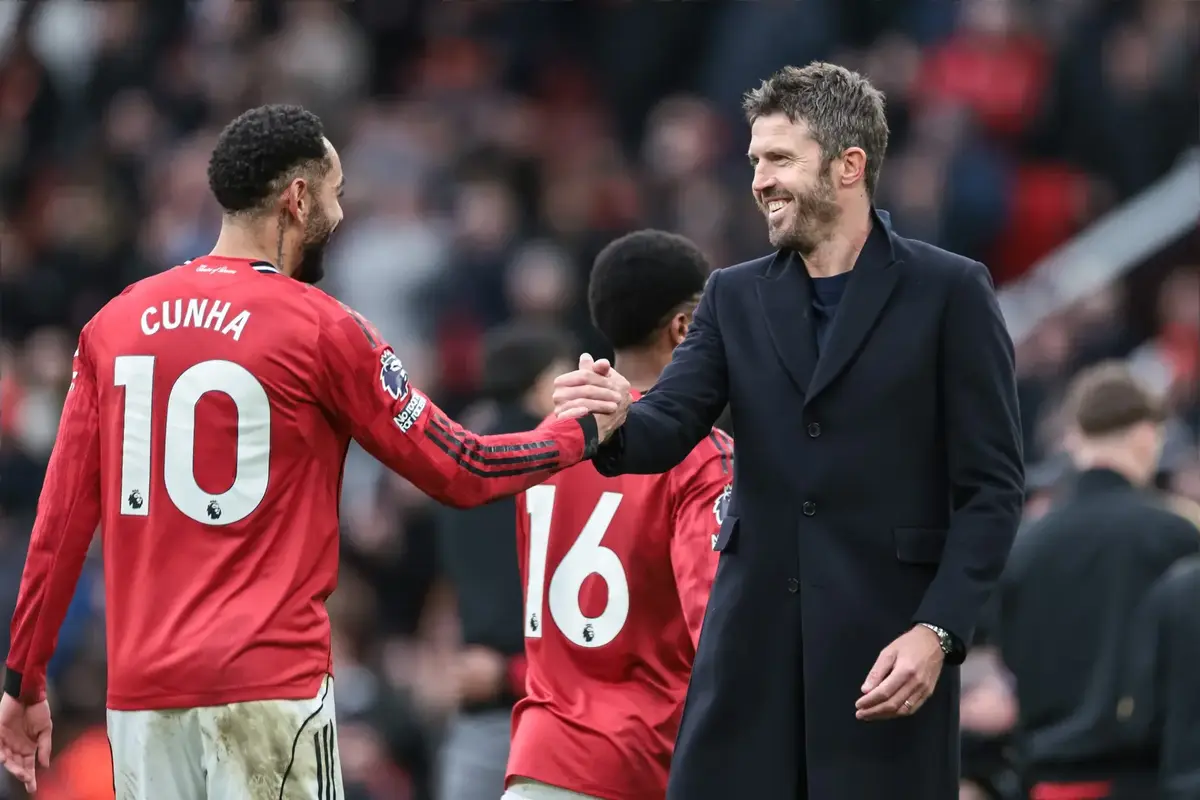
So far, it has been a very good start for Manchester United interim coach Michael Carrick.
Across two separate spells in temporary charge, he has overseen four matches, winning three and drawing one — a return that, on paper, reads impressively.
The former United midfielder, who exudes a calm demeanour on the touchline and composure in his approach, has remarkably steadied the ship when called upon.
Next up is a tricky test against high-flying Fulham, who are unbeaten in their last five Premier League games.
The reverse fixture back in August ended in a 1–1 draw at Craven Cottage, and United will be eager to use their rejuvenated form to push for all three points this time around.
A victory would further enhance Carrick’s growing reputation, strengthen his CV, and inevitably raise questions inside the club about whether he deserves serious consideration as the next Manchester United head coach.
Meanwhile, Arsenal’s defeat to Manchester United a few days ago has added fresh intrigue to the Premier League title race.
The loss saw the Gunners’ lead at the top of the Premier League table cut to just four points, piling pressure on Mikel Arteta’s side as they look to steady themselves and respond strongly in the coming weeks.
With momentum shifting and rivals closing in, every fixture now carries the weight of a potential title-defining moment.
Main Photo
Credit: Mark Cosgrove/News Images
Recording Date: 17.01.2026