
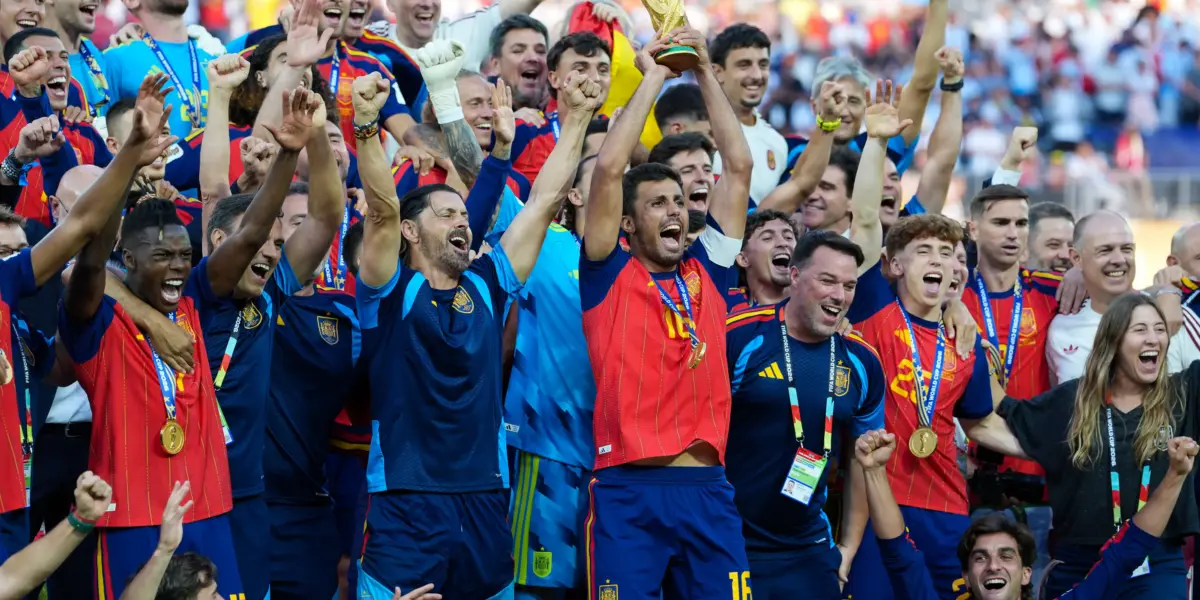
Spain produced a World Cup final performance for the ages in Spain vs Argentina, overwhelming defending champions Argentina before Ferran Torres finally broke the deadlock in the 106th minute of extra time to seal a 1-0 victory.
Spain controlled the possession, created chance after chance, and forced Emiliano Martínez into a string of spectacular saves while Argentina failed to register a shot on target and finished with 10 men after Enzo Fernández’s late red card. When the dust settled, Spain were deservedly crowned world champions, as Argentina’s reign was over, and perhaps, so too, was the World Cup journey of Lionel Andrés Messi.
Here are the five essential takeaways from an unforgettable Spain vs Argentina final.
Spain Didn’t Just Win, They Took The Crown With Authority
The first lesson from Spain vs Argentina was clear: World Cup finals are not always won by moments of individual brilliance; they are sometimes won by complete footballing superiority.
For 120 minutes, Spain imposed their will on the defending champions, finishing with nearly 70% possession, completing almost 900 passes, and outshooting Argentina 20-3, including 11-0 on target. It was football played on Spain’s terms: measured passes, relentless pressing, and precise decision-making. Every passing sequence drained Argentina’s energy, every coordinated press forced another mistake, and every attack carried the feeling that the breakthrough was inevitable.
In the end, it arrived through the brilliance of Ferran Torres, whose composed finish in the 106th minute finally broke Argentina’s resistance and rewarded a performance that had deserved a winner long before extra time.
Spain’s triumph wasn’t built solely on technical excellence; it was orchestrated by a world-class midfield trio of Rodri, Pedri, and Dani Olmo. The Argentina side spent much of the night chasing shadows, unable to register a single shot on target as La Roja tightened their grip with every passing minute.
World Cup finals often hinge on a flash of magic or a stroke of fortune; this one was different. Spain didn’t steal the crown; they reclaimed it with authority, producing a performance of control, courage, and clinical finishing that will stand among the finest ever seen on football’s greatest stage. Spain vs Argentina was not simply a victory in a final; it was an introduction of a new football dynasty.
Lionel Scaloni And Argentina Got It All Wrong
World Cup finals are often decided long before the winning goal. Sometimes, they’re shaped by the decisions made before the opening whistle. In Spain vs Argentina, the tactical battle was already decided before Ferran Torres found the winning goal.
Lionel Scaloni has earned his place among Argentina’s greatest managers, but this was a night when every major call seemed to play into Spain’s hands.
His decision to start Nicolás González over Leandro Paredes effectively conceded the midfield battle from the outset. While González had proven to be a valuable impact substitute throughout the knockout stage, asking him to replicate the balance and control that Paredes provides against a possession-dominant Spain left Argentina outnumbered where the game mattered most.
The comparison with the 2022 World Cup final was unavoidable. Four years ago, Scaloni’s bold decision to start Ángel Di María changed the match because Di María possessed the quality to stretch France and punish them in transition. González worked tirelessly, but he is a different profile of player, and against a side that monopolised nearly 70% of the ball, Argentina needed composure and control more than industry.
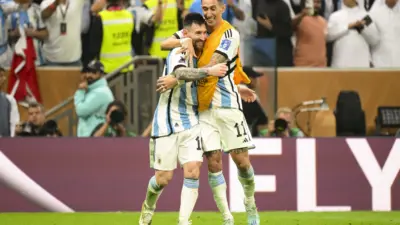
Spain sensed it immediately. They dictated the tempo, circulating possession almost at will and whenever Lionel Messi dropped deep searching for touches, Spain calmly passed him between disciplined lines instead of allowing him to dictate the rhythm.
Then came the emotional collapse.
Argentina’s frustration finally spilt over in stoppage time when Enzo Fernández, already on a booking, crashed into Pau Cubarsí with a reckless challenge and received a second yellow card, reducing the defending champions to 10 men before extra time. By then, however, the contest already felt decided. The dismissal didn’t cost Argentina the World Cup; it merely underscored a night in which Spain had broken them physically, tactically, and, ultimately, emotionally.
Argentina weren’t simply outplayed. They were out-thought, out-possessed, and, when the pressure reached its peak, out-composed. Finals demand clarity of mind as much as quality on the ball. On this occasion, Spain had both, and Argentina had neither. Scaloni deserves enormous credit for building one of Argentina’s greatest modern sides, but in this Spain vs Argentina showdown, Spain’s game plan proved superior from beginning to end.
The FIFA World Cup Final Half-Time Show Delighted Fans But Left Players Paying The Price
Beyond the football itself, Spain vs Argentina also highlighted the growing relationship between sport, entertainment, and global spectacle. The entertainment was spectacular, the atmosphere was electric, and the production was undeniably worthy of football’s biggest stage.
For supporters watching around the world, the half-time show added another layer of spectacle to the World Cup Final. FIFA’s first-ever World Cup Final half-time show brought a Super Bowl-style production to football’s biggest match, featuring global stars including Madonna, Shakira, BTS, Justin Bieber, and Burna Boy, along with appearances from figures such as Ronaldo, Ronaldinho, and characters from The Muppets.
However, for players, the experience was far more complicated.
The half-time break in the final between Argentina and Spain stretched to 27 minutes and 19 seconds, far beyond the usual 15-minute interval permitted under the Laws of the Game. FIFA had reportedly assured both teams that the performance itself would last around 11 minutes, with additional time needed for setting up and removing the stage. However, the actual delay was significantly longer.
Footballers spend years perfecting rhythm, momentum, and competitive intensity. Extending half-time risks cooling muscles, disrupting concentration, and forcing players to mentally restart the biggest match of their careers. Sports physiology experts have warned that longer periods of inactivity can contribute to a greater drop in muscle temperature, potentially affecting performance and increasing injury concerns.
The show was a celebration for millions watching. It created unforgettable images, attracted new audiences, and pushed the World Cup further into the world of global entertainment. Yet the controversy showed the challenge FIFA faces: expanding the tournament’s entertainment value without compromising the competitive demands of elite football.
As FIFA continues blending sport with entertainment, striking the balance between spectacle and competition will become increasingly important.
YOU MAY ALSO LIKE: Pau Cubarsi World Cup 2026: The Defensive Masterclass That Made Him The Tournament’s Best Young Player

Spain vs Argentina Confirmed That Modern Attacking Football Has Truly Arrived
For decades, elite football was dominated by defensive discipline, compact structures, counterattacks, and minimising risk. However, the modern game is shifting toward a more proactive style based on possession, pressing, flexibility, and attacking control.
The Spain vs Argentina World Cup Final represented this tactical evolution, showcasing a new model of football built around initiative rather than reaction. Spain’s system highlighted modern principles with full-backs moving into midfield, creative midfielders controlling play, and forwards pressing from the front. Possession has evolved from simple ball retention into a tool for creating pressure, recovering the ball quickly, and producing more attacking chances.
Top clubs such as Paris Saint-Germain and Bayern Munich reflect this transformation through aggressive attacking systems, high defensive lines, and intense counter-pressing. These teams no longer depend solely on individual brilliance but aim to dominate matches through structure, territory, and sustained pressure. The decline of traditional defensive philosophies is also visible internationally, with Italy’s absence from three straight World Cups showcasing that defence-first strategies alone are no longer sufficient.
The modern game requires teams to defend through possession, pressing, and control rather than simply absorbing pressure. Passive approaches based on waiting for mistakes are becoming less effective against technically gifted and physically intense opponents. If Spain’s approach becomes the blueprint for future generations, the next era of football will be defined by proactive teams that seek to dominate rather than merely survive. This game was more than just a final; Spain vs Argentina represented a changing football landscape.
Spain vs Argentina: Thank You, Lionel Andrés Messi
Beyond tactics, statistics, and the final scoreline, Spain vs Argentina will also be remembered as a farewell to one of football’s greatest journeys. The night belonged to Spain, but it also marked a moment of reflection for the player who defined an era.
Some players win trophies, some players change clubs, and some players change football forever. Lionel Andrés Messi belongs in the final category.
For more than two decades, the world watched a man turn the impossible into routine. A pass that seemed to come from another dimension, a dribble that defied gravity, and a finish that made millions hold their breath before erupting in disbelief. He did not just create moments; he created memories that will live far beyond the numbers.
He carried the hopes of a nation, delivered Argentina its long-awaited glory, and gave the world the final pieces of a story that felt written by destiny. The trophies will be remembered, the records will be counted, but the magic will be what remains. Because every footballing era eventually reaches its final whistle. Not because greatness disappears but because even the greatest journeys must one day find their horizon.
The story of Spain vs Argentina will never be remembered only for Spain’s triumph, but as Lionel Messi walked away from the World Cup stage, the applause was not only for a champion; it was for a dreamer, a creator, and an artist who painted football’s most beautiful pictures with his left foot.
For the boy from Rosario who gave the world wonder.
For the captain who carried a nation’s dreams.
For the magician who made the impossible feel ordinary.
Muchas gracias, Leo.