
It is almost a certainty that whenever a major football tournament concludes amid high-stakes drama, FIFA corruption allegations inevitably resurface across social media platforms, and the World Cup 2026 was no different.
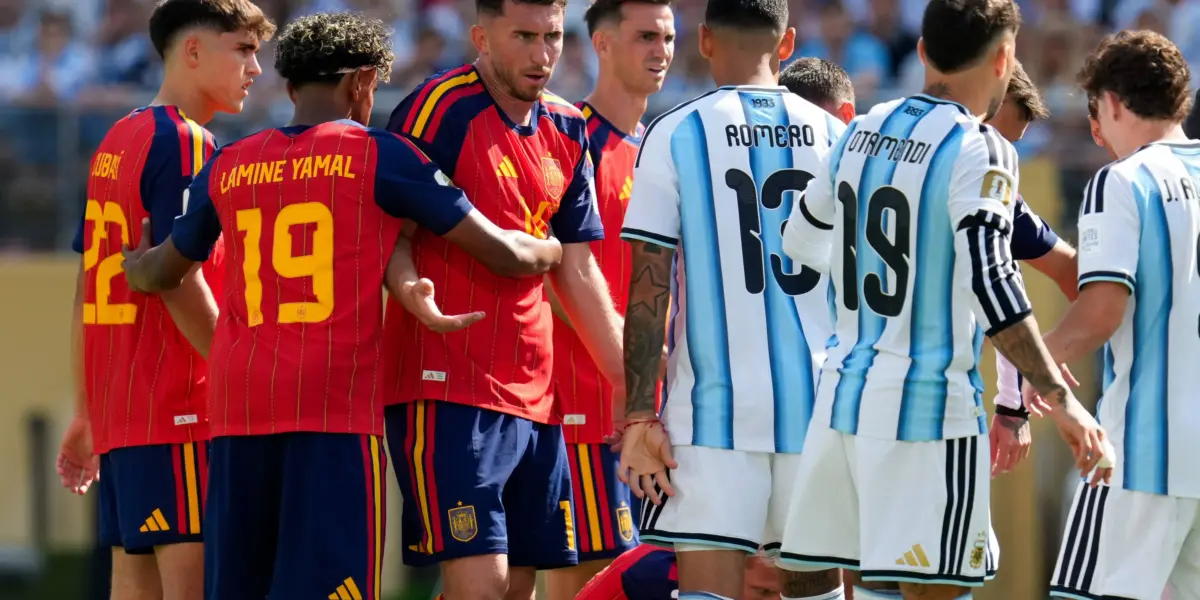
A Lionel Messi-led Argentine national team reached consecutive FIFA World Cup finals and came within minutes of taking a second successive final to penalties before suffering a heartbreaking defeat to Spain after Ferran Torres scored seconds into the restart of the second half of extra time.
Throughout the final, however, Argentina never looked like one of the tournament’s highest-scoring teams, finishing the entire 120 minutes without registering a single shot on target.
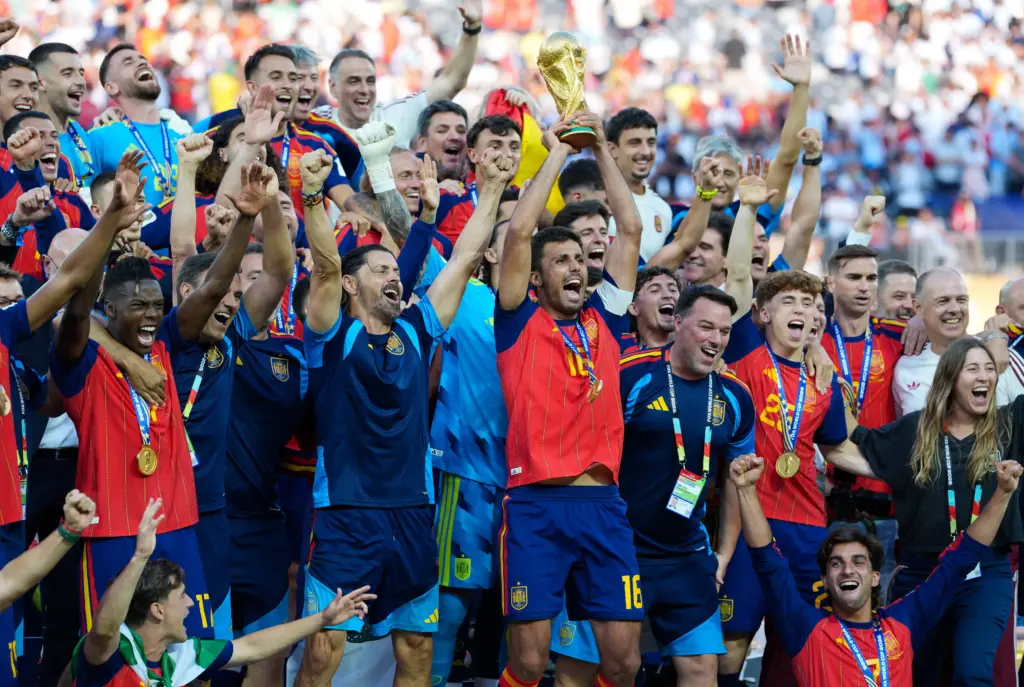
They were comprehensively outplayed by a dominant Spanish side that deservedly lifted the trophy.
FIFA Corruption Allegations: The Rise Of The ‘VARgentina’ Narrative
For the nation, reaching the final did not come without accusations that the competition had been rigged in their favour.
Following almost every victory, the hashtag “VARgentina” trended across X, TikTok, Facebook, Reddit, and other social media platforms, as millions of fans accused FIFA of manipulating the tournament in favour of Argentina.
Throughout the campaign, coaches, players, and pundits questioned officiating decisions, with many claiming the Argentines were repeatedly getting away with what they considered foul play.
Videos claiming to expose hidden evidence amassed millions of views. Tackles made by Argentine players were, more often than not, labelled by fans as clear red-card offences, even when the contact appeared minimal.
Slow-motion clips of contentious penalties were replayed endlessly, while screenshots were shared as supposed proof that match officials had deliberately influenced key moments.
What began as post-match frustration gradually evolved into one of the biggest Argentina World Cup conspiracy theories ever seen in modern football.
The accusations eventually grew to the point where online petitions demanding an investigation into FIFA reportedly attracted millions of signatures from supporters convinced that the tournament had been compromised.
This agenda, hostility, and suspicion did not emerge overnight. Rather, they reflected years of accumulated distrust towards football’s governing body following previous controversies that have damaged FIFA’s public image.
Political Interference And The Infantino-Trump Controversy
Ironically, during the same World Cup 2026, FIFA risked further damaging its credibility after suspending the automatic one-match ban imposed on United States striker Folarin Balogun following his straight red card, replacing it with a one-year probationary period while leaving the dismissal on his disciplinary record.
The decision reportedly came after the President of the United States contacted FIFA president Gianni Infantino and asked him to “review” the decision.
One of the principles FIFA has consistently claimed to uphold is preventing political figures from influencing decisions within football’s governing body. However, many critics argued that Infantino’s response to Donald Trump’s request placed FIFA’s commitment to that principle under scrutiny.
For many supporters, the incident only strengthened the belief that Infantino also held a favourable view towards Lionel Messi and the Argentine national team.
As a result, every close offside decision, every VAR review, and every penalty awarded during Argentina’s campaign was interpreted through a lens of suspicion rather than neutrality, becoming another chapter in the wider FIFA refereeing controversy.
Psychologists describe this behaviour as confirmation bias — the natural tendency to notice and remember information that supports existing beliefs while dismissing evidence that contradicts them.
For fans already convinced that FIFA could not be trusted, every decision benefiting Argentina appeared to confirm a pre-determined conclusion.
Meanwhile, decisions that favoured Argentina’s opponents or went against the defending finalists received noticeably less attention.
Modern social media algorithms amplified this effect even further. Short clips stripped of context spread much faster than detailed explanations of the Laws of the Game or the VAR review process.
Emotional reactions generated far more engagement than careful analysis, allowing the controversies surrounding refereeing decisions to snowball into widespread FIFA corruption allegations before many viewers had even watched the full incidents themselves.
Separating Algorithmic Outrage From Football Reality
Consequently, for millions of football supporters and rivals of Lionel Messi and the Argentine national team, virtually every controversial decision became further evidence supporting the wider conspiracy narrative.
While refereeing decisions undoubtedly fueled debate throughout the World Cup 2026, controversy alone does not prove corruption.
A careful examination of FIFA’s officiating protocols, independent cybersecurity evidence surrounding the viral petition, the operation of the VAR system, and the tournament’s eventual outcome paints a very different picture.
World Cup 2026 Round of 16 vs Egypt: The Match That Sparked The Argentina World Cup Conspiracy
The FIFA corruption allegations surrounding the Argentine national team were not built on a single controversial decision.
Out of the eight World Cup 2026 games Lionel Scaloni’s team played, at least four featured high-profile incidents that unfolded and added fuel to the growing Argentina World Cup conspiracy.
While many supporters believed these moments were proof of favouritism, a closer examination of FIFA’s laws of the game, VAR protocols, and the actual circumstances of each match tells a far less sensational story.
For many critics, Argentina’s dramatic 3-2 comeback victory over Egypt — which saw La Albiceleste score three goals in just 12 minutes — marked the moment FIFA refereeing controversy truly exploded.
Egypt had controlled large spells of the match and appeared firmly on course for victory when Mostafa Ziko found the back of the net for what supporters believed was a deserved 2-0 lead.
However, following a lengthy VAR review, the goal was ruled out, sparking immediate outrage among Egyptian fans and neutrals alike.
During the replay check, officials identified foot-on-foot contact at the beginning of Egypt’s attacking move. Although many supporters argued that the foul occurred too far before the goal to justify intervention, the protocol does not rely on public opinion — it follows the written law.
Although Egypt eventually got their two-goal advantage with another strike, Argentina mounted a remarkable comeback, scoring three unanswered goals in the closing stages to seal a dramatic victory.
The controversy did not end there. In the build-up to one of Argentina’s goals, Egyptian supporters insisted that Mohamed Salah had been fouled, yet play was allowed to continue, further intensifying the backlash.
For many fans, these two incidents became the strongest pieces of evidence supporting the Argentina World Cup conspiracy claims, with critics arguing that FIFA was deliberately protecting the Argentine national team.
However, a closer look at the IFAB VAR Protocol presents a very different picture. Whether supporters agreed with the interpretation or not, the decision itself was made within the framework of IFAB’s regulations rather than outside them.
World Cup 2026 Quarter-Final vs Switzerland: The “Mistaken Identity” VAR Decision
The Argentina World Cup conspiracy narrative gathered even more momentum in the Quarter-Final against Switzerland.
After taking an early lead through Alexis Mac Allister, the Swiss responded brilliantly, equalising and gradually taking control of the contest. With the momentum firmly on Switzerland’s side, many believed they were the more likely team to score the decisive goal.
Then, in a matter of seconds, the match took a dramatic turn.
Swiss striker Breel Embolo was initially involved in a collision with Leandro Paredes, with the Argentine midfielder receiving a yellow card.
However, following a VAR check, the referee overturned the disciplinary decision, rescinded Paredes’ caution, and instead issued Embolo a second yellow card for simulation, resulting in the Swiss forward’s dismissal.
To critics, the intervention appeared unprecedented and quickly became another major talking point in the FIFA refereeing controversy. Social media was flooded with claims that FIFA had used VAR to hand Argentina a numerical advantage by forcing Switzerland to play with 10 men.
However, the decision was entirely consistent with a rule introduced specifically for the World Cup 2026.
Before the tournament began, FIFA expanded the authority of VAR, allowing match officials to intervene not only in cases of mistaken identity but also to correct yellow card offences involving simulation and attempts to deceive the referee.
After reviewing the incident, the officials concluded that Embolo had initiated the contact in an attempt to trick the referee into booking the Argentine player.
It is also important to note that the Argentine national team were not the only beneficiaries of this updated protocol.
Earlier in the group stage, United States defender Tim Ream had his yellow card rescinded after VAR determined that Paraguay’s Miguel Almirón had exaggerated contact in an attempt to win a foul.
In both incidents, the same law was applied using the same review process. Whether supporters agreed with the referee’s interpretation is a matter of opinion and will always remain open to debate.
What cannot be ignored, however, is that the protocol itself was not created to favour Argentina. It had already been applied elsewhere during the World Cup 2026, demonstrating that the law was enforced consistently rather than exclusively for the Argentine national team.
World Cup 2026 Opening Group Stage Clash vs Algeria: Did Messi Deserve A Red Card?
The Argentine national team began their World Cup 2026 campaign against Algeria, a match that attracted global attention even before kick-off.
While Lionel Messi stole the headlines by scoring his first-ever FIFA World Cup hat-trick, the game also produced one of the tournament’s earliest and most controversial refereeing incidents — many believe it gave birth to the now-famous VARgentina narrative.
Midway through the first half, Messi lunged into a challenge on an Algerian player, immediately sparking outrage among supporters, pundits, and former players.
Social media platforms were flooded with claims that the Argentine captain had committed a clear red-card offence but escaped punishment because of his status as football’s biggest star.
The incident quickly became one of the earliest flashpoints in the FIFA refereeing controversy. Critics argued that had any other player made the same challenge, they would have been sent off without hesitation.
The backlash grew to such an extent that the Algerian Football Federation reportedly lodged an official complaint with FIFA, questioning the referee’s decision and alleging that officiating bias had favoured the Argentine national team.
For supporters already convinced by the growing FIFA corruption allegations, the challenge was viewed as yet another piece of evidence supporting the wider Argentina World Cup conspiracy claims.
However, a closer examination of the Laws of the Game presents a very different interpretation. Under IFAB Law 12 (Fouls and Misconduct), a player can only be sent off for serious foul play if the challenge involves excessive force or brutality and endangers the safety of an opponent.
The threshold is deliberately high because a red card is reserved for tackles that pose a genuine risk of injury rather than simply arriving late. Multiple VAR replay angles of Messi’s challenge showed that although the tackle was mistimed, he pulled his studs down before making contact.
The contact itself was relatively minimal; there was no two-footed lunge, and the challenge lacked the speed, force, and follow-through normally associated with serious foul play.
These factors were central to the referee’s decision to issue a caution rather than a straight red card. The available evidence indicates that the match officials applied the criteria set out in IFAB Law 12 and did not afford Lionel Messi any special treatment.
For fans, once emotions take over, controversial decisions are often viewed as proof of bias instead of subjective refereeing judgments, making it easier for narratives such as the Argentina World Cup conspiracy and broader FIFA corruption allegations to gain traction across social media.
YOU MAY ALSO LIKE: Spain vs Argentina: Five Main Takeaways As La Roja Dominates La Albiceleste To Spoils Lionel Messi’s “Last Tango” And Reclaim The World Cup Glory
The World Cup Final That Shattered The Argentina World Cup Conspiracy
Since the beginning of the competition, social media was flooded with claims that FIFA wanted Lionel Messi to end his international career by lifting another World Cup trophy.
Every controversial decision involving the Argentine national team was cited as further proof that the tournament had been engineered in Argentina’s favour.
Some players even went as far as congratulating Argentina for “winning” the World Cup before the final had even been played, convinced that the outcome had already been decided.
The final, however, told a completely different story.
Argentina were beaten 1-0 by Spain after extra time, with La Roja producing the better performance and deservedly lifting the trophy. Rather than protecting Argentina when it mattered most, Slovenian referee Slavko Vinčić showed no hesitation in enforcing the Laws of the Game.
Chelsea midfielder Enzo Fernández received a second yellow card and was rightly sent off during the decisive stages of the match, reducing Lionel Scaloni’s men to 10.
That moment alone significantly weakens the central argument behind the Argentina World Cup Conspiracy. If FIFA had truly intended to ensure Argentina’s victory, it is difficult to explain why one of their most influential midfielders would be dismissed in the biggest match of the tournament.
A genuinely rigged competition would almost certainly protect its supposed beneficiary during the World Cup Final — not leave them at a numerical disadvantage when chasing the game.
Ultimately, the three matches most frequently cited in the FIFA corruption allegations — against Algeria, Egypt, and Switzerland — formed the foundation of the wider Argentina World Cup conspiracy.
Yet, when each incident is examined individually, the accusations become far less convincing.
Every major controversy can be explained through the written Laws of the Game, FIFA’s published VAR protocols, or the broader context in which the decisions were made. While supporters are free to disagree with individual refereeing calls, disagreement alone is not evidence that the World Cup 2026 was manipulated or predetermined.
The Hacked AFA Emails: The False Evidence Behind The FIFA Corruption Allegations
One of the main reasons the Argentina World Cup Conspiracy gained so much traction was that many supporters believed they had uncovered hard evidence showing FIFA was working behind the scenes to manipulate the World Cup 2026.
Edited videos, leaked emails, screenshots, and anonymous social media posts were circulated millions of times, creating the impression that they were concrete proof of the growing FIFA corruption allegations.
However, when these claims were examined more closely, they quickly fell apart.
As the tournament entered the knockout stages, a series of emails were allegedly sent from the official Argentine Football Association (AFA) account.
The messages appeared to “confess” that FIFA had favoured the Argentine national team, with some versions even claiming that referees had received secret instructions to help Lionel Messi reach another World Cup final.
The fake emails spread rapidly across virtually every social media platform, where they were presented as the long-awaited evidence that had finally exposed FIFA.
Thousands of users shared screenshots without verifying their authenticity, while numerous troll accounts cited the messages as irrefutable proof that the Argentina World Cup conspiracy was real.
The problem, however, was that the emails themselves were never credible evidence.
As the messages continued to circulate, the AFA publicly confirmed that its communication systems had been hacked.
According to the federation, unauthorised individuals gained access to its official account and distributed fraudulent emails without the knowledge or approval of AFA officials.
The organisation immediately flagged the security breach, warned the public not to trust the messages, and condemned the hackers responsible for spreading the false information.
Incidents like this have become increasingly common. Cybercriminals are becoming more sophisticated and often target compromised accounts because messages sent from legitimate addresses are far more likely to be believed.
Once an official account is breached, false information can spread rapidly before the organisation has an opportunity to respond.
By the time the AFA clarified the situation, millions of people had already seen the screenshots and shared the false rumours across the internet.
The episode perfectly illustrates how modern conspiracy theories spread. A sensational claim travels at incredible speed, while the correction often struggles to reach the same audience.
Ultimately, the cyberattack demonstrated how far some individuals were willing to go to convince the public that the Argentine national team was being aided by FIFA and match officials.
Far from proving the FIFA corruption allegations, the incident instead highlighted how misinformation can quickly gain credibility when it appears to come from an official source.