
A player leaves the pitch in the 62nd minute, shakes his head and walks past the manager.
The television camera presents the familiar story of a coach reacting to a poor performance. Inside the technical area, however, the change may have been written on the match plan several hours earlier.
Modern football substitutions are shaped by medical limits, physical data, tactics and the competition calendar. Many begin as conditional decisions made before the teams reach the stadium. Sometimes the substitution is expected, whilst other times it only leads to chaos on the sideline.
When Players Were Enraged When Taken Off During Football Substitutions
Granit Xhaka (Arsenal vs Crystal Palace, 2019): Subbed off while serving as club captain, Xhaka responded to home fans’ jeers by cupping his ears, mouthing obscenities, ripping off his shirt, and marching straight down the tunnel. The incident temporarily cost him the captaincy.
Mohamed Salah (Liverpool vs West Ham, 2024): While waiting to be substituted on – following a stretch of being subbed off early in prior matches – Salah got into a visibly heated verbal row with manager Jürgen Klopp on the touchline, requiring teammate Darwin Núñez to physically step between them.
Sadio Mané (Liverpool vs Burnley, 2019): After being taken off shortly after Mohamed Salah opted to shoot rather than pass to him in an open position, Mané launched into an explosive tirade on the bench, requiring multiple teammates and staff to restrain and console him.
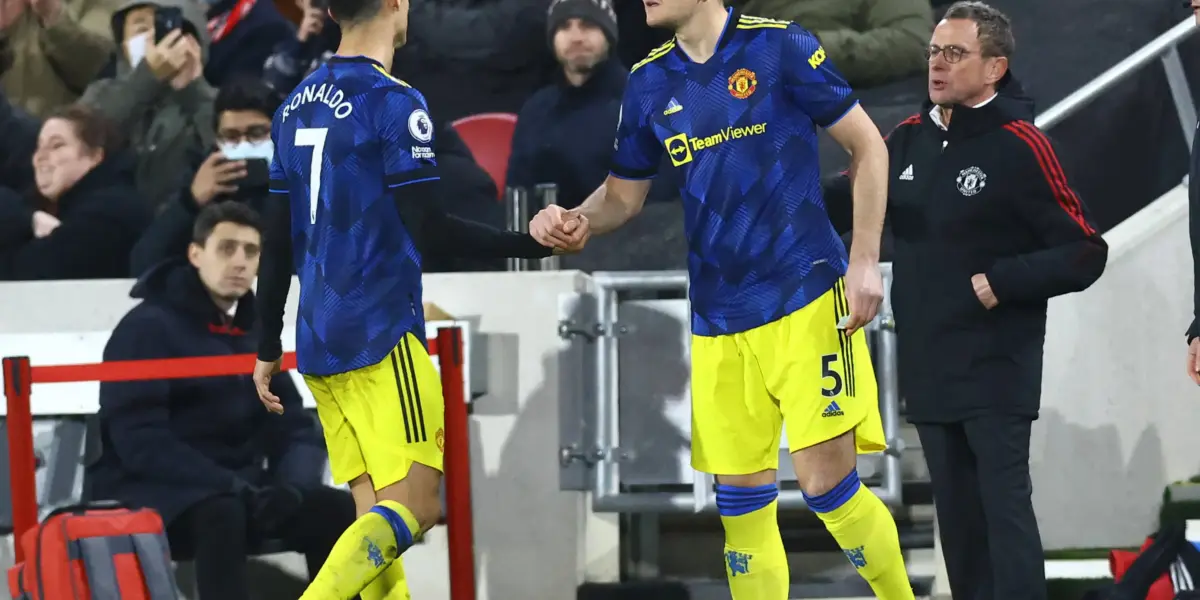
Cristiano Ronaldo (Manchester United vs Brentford, 2022): Upon seeing his number called by interim manager Ralf Rangnick, Ronaldo walked off shaking his head, slammed his coat to the floor, and sat sulking on the dugout steps while audibly asking coaching staff, “Why me?”
Kevin De Bruyne (Manchester City vs Liverpool, 2024): Replaced in the 69th minute of a crucial title-race match, De Bruyne engaged in a tense, face-to-face argument with Pep Guardiola on the touchline before continuing his animated complaints to coach Juanma Lillo on the bench.
Alexis Sánchez (Arsenal vs Swansea City, 2017): Despite Arsenal leading 4-0, Sánchez kicked a water bottle in disgust when his number came up, ignored manager Arsène Wenger, and sat completely isolated on the bench with a coat wrapped over his head.
The Match Plan Contains Several Versions
Of course, most times, despite disappointment, a player comes off without issue. Coaching staffs build branches around likely match states: protecting a lead, chasing an equaliser, facing ten men or managing a player returning after injury.
And players recognise this.
A quick winger might replace a full-back when a goal is needed, relieve another attacker during a controlled draw or remain unused after an early red card.
| Pre-match condition | Likely response | Reason |
|---|---|---|
| Player returning after injury | Change near an agreed minute | Control exposure to high-speed running |
| Three matches in eight days | Reduce minutes for a regular starter | Preserve availability for the next fixture |
| Opponent expected to tire | Introduce a fast forward late | Attack larger spaces behind the defence |
| Narrow lead | Add a midfielder or defender | Protect central areas and second balls |
| Team falls behind | Release an extra attacker | Increase penalty-area presence |
An injury or tactical mismatch can move the planned change forward, delay it or remove it.
Limits Work Best When Set Early
Establishing a boundary beforehand stops match-day emotion overriding its original purpose.
Pre-commitment also operates in digital entertainment when spending decisions can change during a session.
Before accessing online pokies Australia, an adult player can set deposit, loss or session limits that remain active after play begins. Casino controls restrict money or time, while football staffs use pre-agreed thresholds for minutes, physical output and exposure to demanding actions.
A winger returning after a hamstring injury may therefore be scheduled for 60 minutes regardless of the score or the quality of his performance. The limit protects the rehabilitation plan, not the manager’s opinion of the player.
Medical Restrictions Are Not Precise Timers
A 60-minute limit does not mean that a muscle becomes unsafe at 60:01. It marks a controlled increase in exposure alongside training and recovery.
Medical staff may recommend a range rather than an exact minute. The manager chooses a suitable stoppage, while explaining the plan prevents the change from being mistaken for punishment.
The replacement must warm up before the limit approaches, not after the ball goes out.
Live Data Can Confirm or Challenge the Plan
Tracking systems such as Catapult Vector and STATSports Apex monitor total distance, high-speed running, accelerations and repeated intense efforts.
The numbers require context. A centre-back may cover less ground than a wing-back but complete several demanding recovery sprints.
Useful live questions include:
- Has the player completed more high-speed work than expected?
- Is sprint output falling compared with the first half?
- Has the tactical role changed after a formation switch?
- Does the player show an altered running pattern?
- Is the next fixture close enough to affect the decision?
Data can support an earlier change, but it does not diagnose an injury by itself. Medical observation, communication with the player and the match situation remain part of the decision.
Five Football Substitutions Changed Bench Planning
Five substitutes provide greater freedom than the former three-change limit, although they cannot be introduced through five separate interruptions.
Under the IFAB rules governing the five-substitute option, competitions using five changes normally allow each team three substitution opportunities, with half-time changes excluded from that count. Changes made by both teams during the same stoppage use one opportunity for each side.
This encourages grouped changes. A manager may replace a winger and central midfielder together after 65 minutes, so both must warm up together and understand how their roles connect.
YOU MAY ALSO LIKE: A New Premier League Power Struggle: Who Can Challenge Arsenal?
The Substitute Needs More Than a Minute
An intended 70th-minute change still requires a defined role, defensive position and first action after the restart.
A substitute may need instructions on:
- which opponent to press and what triggers the press;
- where to stand when the team builds from the back;
- responsibility at corners and free-kicks;
- whether to attack space or retain possession;
- how the formation changes after the substitution.
Without clear instructions, a replacement may spend several minutes locating teammates while the opposition attacks the uncertainty.
A Plan Still Requires the Courage to Change It
Pre-match preparation should reduce rushed decisions, not remove judgement.
A striker scheduled to leave may be dominating the centre-backs, while the intended replacement could feel tightness during the warm-up. Following the original sheet without reconsideration would turn planning into rigidity.
The strongest benches treat each substitution as a reviewed decision. Medical limits usually remain firm; tactical timings stay adjustable.
What appears to be an impulsive change on television is often the final version of a plan that has been discussed, measured and rewritten throughout the match.