
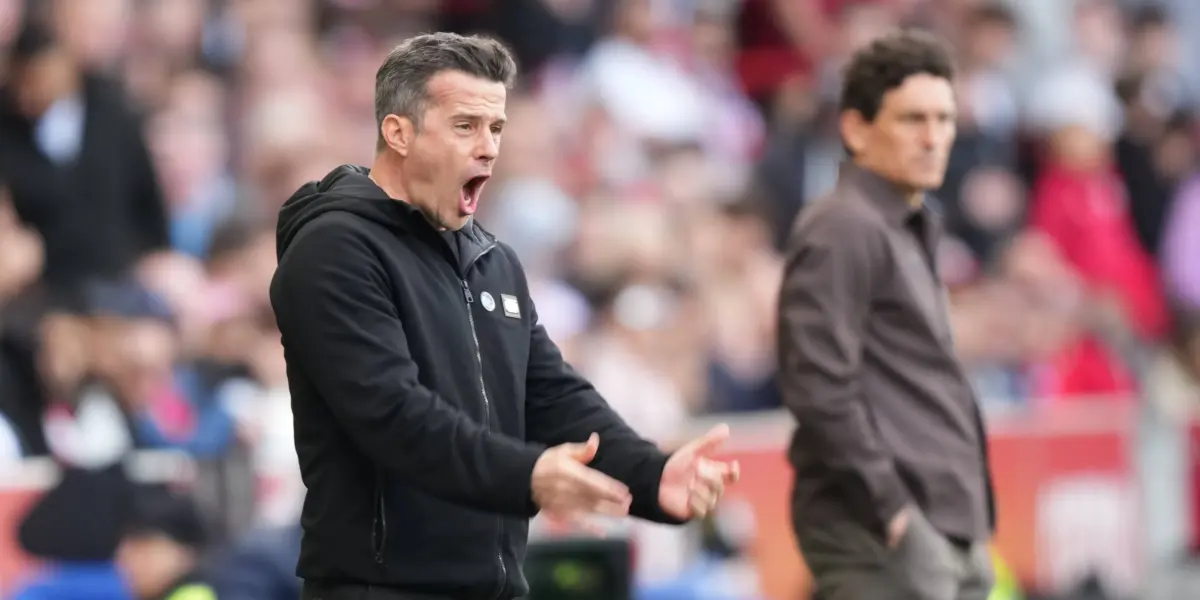
The noise surrounding Marco Silva to Chelsea continues to grow louder as the Blues intensify their search for a permanent manager ahead of the new season.
The past few weeks have seen Blues fans endure uncertainty and mixed emotions, with multiple reports linking them to several candidates in a crucial period of Chelsea’s ongoing managerial rebuild — four years after the Blueco takeover was completed.
Among the names heavily linked with the vacant position is Fulham’s boss Marco Silva, whose work with the Cottagers in the Premier League has reportedly caught the attention of the hierarchy.
While Chelsea supporters continue to expect a big-name coach with a proven winning pedigree and experience at the highest level, Marco Silva’s potential move to Chelsea has not generated overwhelming excitement among the fanbase.
They remain unconvinced that he is the right manager to lead the Blues back to the summit of English football and restore their reputation as genuine Premier League and UEFA Champions League contenders.
Following the departure of Enzo Maresca, the Blues turned to Liam Rosenior in hopes of steadying the club’s turbulent project. However, Rosenior’s reign lasted only four months before a disappointing run of results forced the hierarchy into another managerial change.
The club subsequently appointed Calum McFarlane as interim manager while the search for Chelsea’s next permanent coach continues.
Now, with the Blues facing a defining decision in their rebuild, the growing links between Marco Silva and Chelsea have sparked major debate among fans — especially over whether the Portuguese possesses the tactical flexibility, elite-level experience, and strong personality required to survive the immense pressure that comes with managing one of the Premier League’s biggest clubs.
Marco Silva To Chelsea: Five Reasons The Fulham Boss Could Suffer The Same Fate As Rosenior
1) Why The Step Up From Everton Could Be One Gamble Too Far For Stamford Bridge
In terms of managing a club with enormous expectations, a historic trophy cabinet, and constant pressure to compete for major honours, Everton remains the closest Marco Silva has come to handling a job of that magnitude — and his time at Goodison Park raises serious concerns about whether the Chelsea manager role may ultimately prove too big a step.
Unlike previous Chelsea managers such as Thomas Tuchel or Enzo Maresca, Silva has never coached a side genuinely expected to challenge for the Premier League title or consistently compete deep into the UEFA Champions League.
His managerial career has largely been built around stabilising clubs, exceeding modest expectations, and guiding teams toward respectable league finishes — a completely different environment from the relentless pressure that surrounds Stamford Bridge.
In 2019, after Everton spent more than £100 million on new signings in an attempt to push the club higher up the Premier League table, Silva’s side collapsed into the relegation zone, sitting 18th in the table before his dismissal.
That period exposed many of the same concerns Chelsea supporters now fear: fragile defensive structure, inconsistency in high-pressure moments, and an inability to steady the dressing room when results turned negative.
Moving from clubs like Hull City (relegation fight) to Watford (mid-table ambitions), and Everton and Fulham (top-half finish), the Portuguese manager’s career trajectory has never truly prepared him for the brutal demands of leading a club expected to qualify for the Champions League and challenge for trophies every season.
If, eventually, Marco Silva and Chelsea reach an agreement and he joins the club, it would feel like a massive gamble. The Blues’ ongoing rebuild already lacks stability, and appointing another manager who is trying to prove himself at the highest level could easily deepen the uncertainty surrounding the club.
2) Why Defensive Frailties Make Him A Risky Appointment
One of Chelsea’s biggest weaknesses this season has been their defence, as the Blues have conceded 48 goals in 35 Premier League matches — a worrying statistic for a club aiming to return to the top of English football and compete for major trophies.
Which is why reports linking Fulham’s boss to Chelsea should concern supporters, because the Portuguese coach’s managerial history suggests defensive organisation has consistently been one of the weakest aspects of his teams.
Despite earning praise for his possession-based style of football, Silva has repeatedly struggled to build a strong defence throughout his Premier League managerial career.
In fact, he holds an unwanted record in Premier League history: as he is the only manager to concede six goals at home with three different clubs — a statistic that immediately raises doubts about whether he possesses the tactical discipline required to succeed as Chelsea’s next manager.
During his spell at Everton, defensive problems became so severe that at one stage no side in the league had conceded more goals than the Toffees.
Set-piece defending was another glaring weakness under Silva, with nearly one-third of Everton’s goals conceded coming from dead-ball situations; a similar defensive pattern followed him throughout his previous jobs.
At Hull City, his side conceded 10 set-piece goals in just 18 league games, while his Watford team allowed 12 in 24 matches.
These recurring issues suggest that Silva’s defensive structure and in-game organisation have long been vulnerable under sustained pressure — something Chelsea’s current squad can not afford, given their already fragile mentality.
In fact, what was even more concerning was Everton’s inability to recover in difficult moments under Silva. His side lost all 20 Premier League matches in which they fell behind, exposing a lack of tactical adaptability, mental resilience, and game management — qualities essential for any manager hoping to survive at Stamford Bridge.
Even during Silva’s impressive 2025/26 campaign with Fulham, defensive concerns still lingered beneath the surface.
Fulham conceded an average of 1.40 goals per game and recorded a clean-sheet rate of just 23%, numbers that do not reflect the defensive solidity expected from a serious Premier League title contender or Champions League-level side.
3) The Big-Ego Problem That Could Break The Project
Chelsea’s current squad is packed with experienced winners and elite-level personalities. UEFA Champions League winners, FIFA World Cup champions, Club World Cup winners, and players with major European honours already occupy the Stamford Bridge dressing room.
Managing a squad filled with such high-profile talents requires more than tactical intelligence — it demands authority, elite man-management skills, and the ability to control big egos under constant media scrutiny, and without these qualities, a dressing room fallout is just a matter of time away — take Graham Potter and Liam Rosenior’s period as a case study.
This is one of the major reasons why fans are not welcoming of the development that might see Marco Silva join Chelsea.
While the Fulham coach has enjoyed respectable success throughout his managerial career, he has rarely worked with world-class stars. The few times he has managed high-profile personalities, things have not always ended smoothly.
An example was during his time at Everton, where Silva reportedly experienced tensions with former England captain Wayne Rooney.
While the situation never completely exploded publicly, it highlighted concerns about Silva’s ability to manage experienced stars with strong personalities — a challenge that becomes even more intense at a club competing for Premier League and Champions League success.
Silva’s best work has typically come in environments where he was the undisputed focal point of the project, operating with squads lacking superstar egos or dressing-room power dynamics. At Chelsea, however, the situation would be completely different.
YOU MAY ALSO LIKE: Arsenal vs Paris Saint-Germain: Three Things The Gunners Need To Do To Win The UEFA Champions League Final
4) Why His Record Against Elite Managers Raises Serious Doubts
Being able to compete consistently against fellow elite managers is a crucial quality every coach with ambitions of winning major trophies and competing at the highest level must possess.
For any manager hoping to compete for Premier League titles and major trophies, the ability to consistently challenge and outsmart elite coaches is non-negotiable. However, Marco Silva’s record against the very best managers in English football raises serious concerns about whether he is truly ready to become Chelsea’s next manager.
The Fulham head coach has faced Pep Guardiola 17 times in his managerial career and has lost every single encounter — an astonishing record that highlights the huge tactical gap between the Portuguese and one of the Premier League’s elite coaches.
For Chelsea, a club expected to regularly compete with and defeat sides like Manchester City in title races and cup competitions, that statistic alone is enough to raise major doubts over Marco Silva’s potential move to Chelsea.
In his managerial career, Silva’s teams have consistently struggled to take points from the Premier League’s heavyweights. At a club like Chelsea, where success is measured by trophies and performances in high-pressure matches, the inability to consistently compete against top managers could quickly become a fatal weakness.
5) Chelsea’s Next Manager: Why Stamford Bridge Is No Longer A Place For Experiments
At this stage, the atmosphere surrounding Stamford Bridge is filled with tension, frustration, and growing impatience, which makes Chelsea’s next managerial appointment one of the most important decisions the club will make.
With inconsistent performances and constant managerial changes — that has led to Chelsea fans protesting — the Blues can no longer afford another gamble that risks pushing the fanbase further into frustration and division.
Nearly five years into the BlueCo era, many supporters still struggle to identify clear signs of long-term progress despite the club’s enormous financial backing.
While Chelsea’s FIFA Club World Cup and UEFA Europa Conference League triumphs offered moments of celebration, those successes may have also created a dangerous illusion within the hierarchy that the project is progressing faster than it actually is.
The reality is that, even after spending close to $2 billion on transfers, Chelsea’s current squad still appears unbalanced and underwhelming compared to several elite rivals who have spent significantly less yet remain far more competitive, tactically organised, and mentally prepared for title races.
Questions surrounding recruitment, squad planning, leadership, and the overall direction of the rebuild continue to dominate conversations among supporters.
Now, patience within the fanbase is rapidly disappearing. Chelsea supporters are no longer interested in hearing promises about “long-term projects” or future potential — they want immediate results, consistent performances, and a genuine return to competing for Premier League and Champions League honours.
That growing pressure means whoever becomes Chelsea’s next manager will walk into one of the most demanding environments in European football, where there will be little room for mistakes, excuses, or extended rebuilding periods.
Main Photo
Credit: IMAGO /IPS
Recording Date: 18.04.2026