
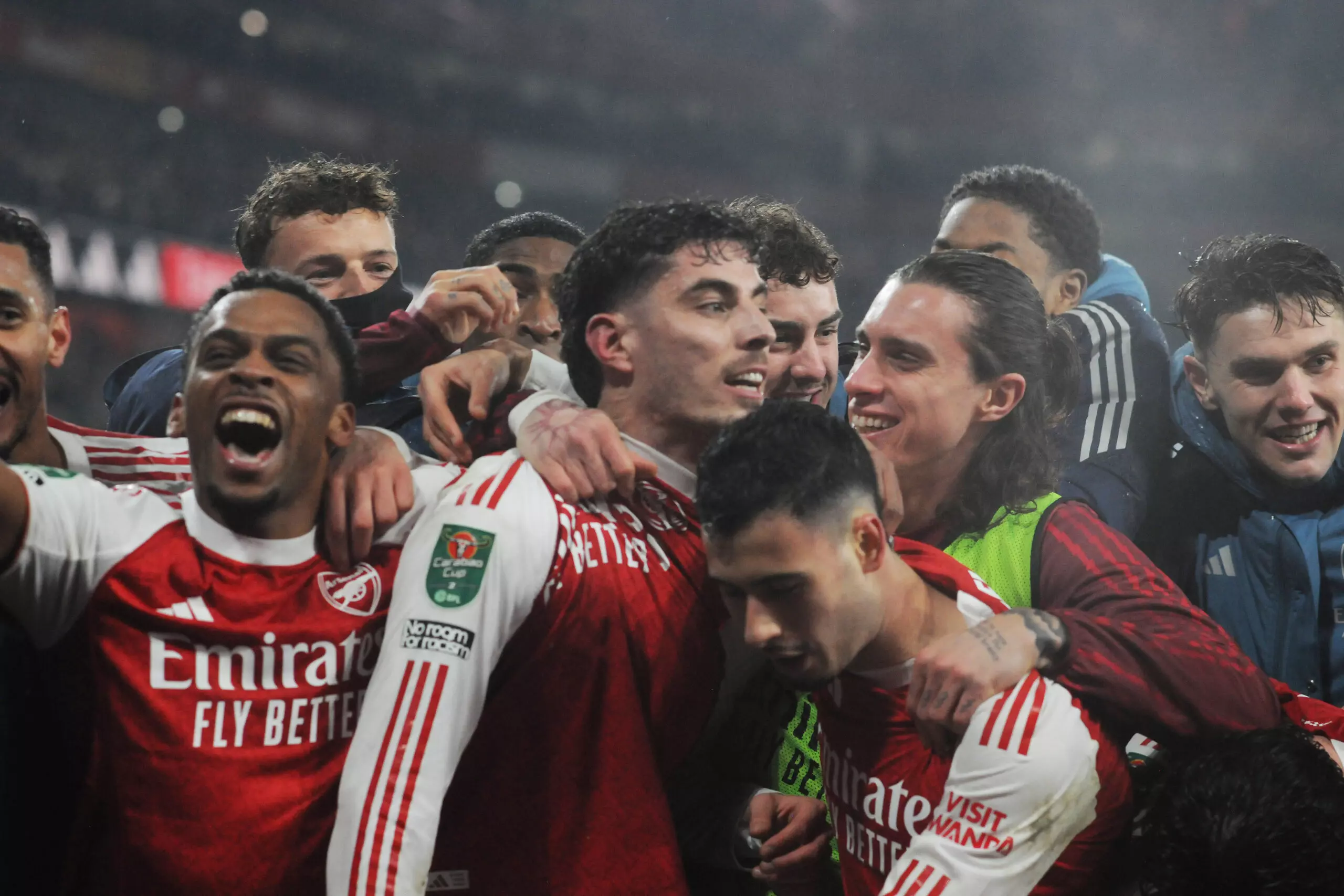
Arsenal’s mentality and resolve saw them secure their place in the Carabao Cup final, but the moment felt bigger than a single result.
It was not just about advancing to Wembley or keeping a trophy dream alive, but rather felt like something internally had shifted.
For a club that has spent the last few years knocking on the door of success without quite walking through it, this final represents more than progress in a competition, and it represents a change in Arsenal’s mentality.
Arsenal’s Mentality: Breaking A Pattern That Quietly Followed The Squad
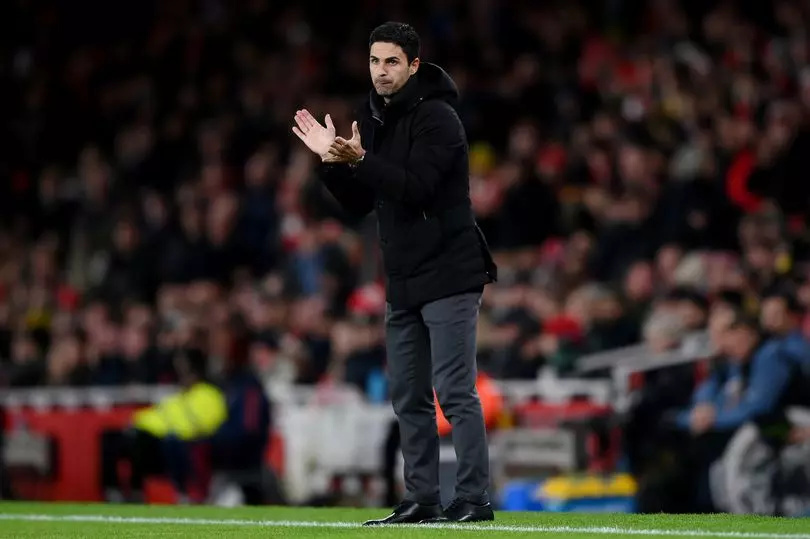
Under Mikel Arteta, Arsenal have rebuilt themselves into contenders.
They have returned to the Champions League, pushed for league titles, and developed a talented young core.
However, alongside that progress, there has been a lingering pattern. In knockout matches where the stakes were highest, Arsenal often fell just short.
Several semi-final exits in recent seasons created an unspoken narrative. Arsenal were strong, impressive, and exciting, but not quite finishing the job.
That pattern does more than frustrate supporters, but it also zaps the belief out of the squad.
When players repeatedly experience near misses, hesitation begins to replace instinct, and instead of expecting to win, teams begin hoping not to lose.
Reaching the Carabao Cup final disrupts that cycle.
It gives Arsenal something concrete they have not had in a while, proof that they can push past the barrier that stopped them before.
Why Confidence Changes How Players Perform
This is where the psychological impact becomes important. Confidence in football is visible, and it shows in the decision-making.
With the right decision-making, a defender steps forward instead of backing off, a midfielder demands the ball in tight spaces, and a striker shoots without second-guessing.
Arteta described the cup run as a “vitamin” for the squad, and that description feels accurate.
In a season where Arsenal are competing across multiple competitions, this kind of boost matters.
The Premier League race is demanding, and the Champions League brings its own pressure.
Fatigue builds both physically and mentally, and with a recent success to draw from, this can carry a team through difficult periods.
A team that feels like it belongs at the end of competitions starts to play like it.
YOU MAY ALSO LIKE: Khvicha Kvaratskhelia’s Rise: From Napoli’s Wonderkid To One Of PSG’s Most Important Players

Learning To Win Without Perfect Conditions
What makes this run more meaningful is how it happened.
Arsenal did not cruise through with easy victories; they had to manage tight moments, remain disciplined, and stay patient when the game felt locked.
Those experiences build a different kind of belief. Players learn they do not need perfect football to win, and they learn that structure, patience, and persistence can be just as important as attacking flair.
Over a long season, that lesson becomes critical.
There will be matches where Arsenal are not at their best. Having already come through a high-pressure situation like this, the squad can rely on the memory of staying composed and finding a way through.
A Cultural Change Inside The Dressing Room
This shift also affects the culture within the club. Footballers often talk about learning from past disappointments, but real change happens when those disappointments are replaced with positive experiences.
Leaders in the squad now have a recent example to point to. Instead of saying “we cannot repeat what happened before,” they can say “we know we can do this because we just did.”
That changes the tone in training, in preparation, and in big moments. Expectation begins to replace anxiety, belief replaces caution, and success starts to feel normal rather than rare. This is a key part of Arsenal’s evolving mentality under Mikel Arteta.
Cup runs often create momentum that carries into other matches. Players bring the emotional lift from one competition into another, and each game begins to feel like part of a bigger story.
For Arsenal, this could be crucial. They are fighting on multiple fronts where margins are small, as one moment of hesitation can cost points in the league, and one lapse in focus can end a European campaign.
Arsenal’s mentality in tense situations can be the difference.
Arsenal’s Mentality: From Potential To Expectation
For a long time, discussions around Arsenal have focused on potential. Potential to win trophies, potential to go far, and the potential to take the next step.
Reaching the Carabao Cup final shifts that discussion.
The team is no longer chasing the idea of success, but rather they are experiencing it.
That changes how players view themselves in high-stakes moments. They no longer enter these situations wondering if this is where things fall apart, and they enter believing this is where things come together.
The Carabao Cup final will be important in its own right, but the psychological impact is already visible. Arsenal have broken through a mental barrier that followed them for years.
In a sport where belief, resilience, and confidence matter as much as tactics and talent, this moment could shape the rest of their season. More than a place at Wembley, Arsenal’s mentality has gained something harder to measure but just as valuable.
They have gained the mindset of a team that expects to win.
Main Photo
Credit: IMAGO/Colorsport
Recording Date: 03.03.2026