

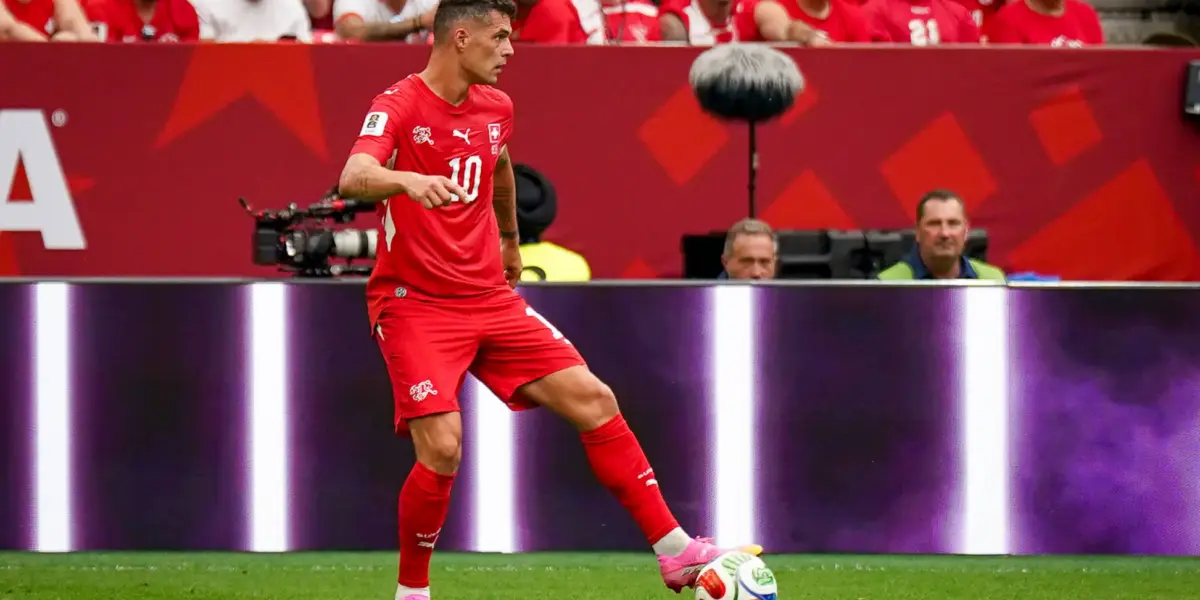
If the latest reports linking Granit Xhaka to Chelsea prove to be accurate, they will give Blues supporters a genuine reason to believe that BlueCo are finally ready to abandon one of the defining principles of their recruitment strategy.
Four years after completing their takeover, BlueCo embarked on one of the most ambitious experiments in modern football.
Rather than following the traditional model of blending elite experience with emerging talent, Chelsea’s recruitment strategy centred almost exclusively on signing young players with enormous potential before they reached their peak.
The vision was clear: assemble the world’s brightest prospects, develop them together under one roof, and build a dynasty capable of dominating English and European football for years to come.
On paper, it was a revolutionary idea. In reality, it has exposed an uncomfortable truth that no amount of investment can ignore — potential alone does not win football matches.
That reality became painfully evident during Chelsea’s disastrous 2025/26 campaign. Despite boasting one of the youngest and most expensive squads in Premier League history, the Blues slumped to a 10th-place finish with just 52 points.
It also marked the third time in four seasons that the Blues have failed to qualify for European competition under the current ownership, intensifying calls for a rethink during the 2026 summer transfer window.
Season after season, month after month, and game after game, these same flaws resurfaced.
Chelsea lacked control in possession, suffered too many emotional collapses after conceding, and repeatedly struggled to manage difficult moments in matches.
There was also a lack of composure in the team that was reflected in another worrying statistic, as the Blues finished the season having accumulated more red cards than any other Premier League side (eight).
These were not simply technical shortcomings, but the symptoms of a squad desperately lacking experienced leaders capable of calming the game, organising teammates and setting standards when pressure mounted.
That is why the growing speculation surrounding Xhaka’s transfer to Chelsea feels so significant because it would represent the complete opposite of the philosophy BlueCo have followed since arriving at Stamford Bridge, and show that Alonso is truly the man leading Chelsea’s project.
Granit Xhaka To Chelsea: How His Relationship With Xabi Alonso Gives Chelsea An Instant Tactical Edge
Beyond leadership, one of the strongest arguments why Xhaka’s transfer to Chelsea would be of advantage to the manager and the club is due to his existing relationship with Alonso.
Having spent two seasons working together at Bayer Leverkusen, Xabi Alonso transformed Granit Xhaka into the heartbeat of his midfield.
Their partnership reached its peak during the historic 2023/24 campaign, as Leverkusen won the Bundesliga title without losing a single match and completed a domestic double by lifting the German Cup, all while producing some of the most controlled and tactically sophisticated football in Europe.
Xhaka’s influence extended far beyond his passing or defensive work. On the pitch, he became like the second coach — a manager’s voice in midfield.
The Swiss international instinctively knew when to step forward to trigger the press, when to raise the tempo, and when to slow the game down to help Leverkusen regain control.
When the team needed to protect a lead, he instinctively slowed the tempo, recycled possession and denied opponents the chaos they wanted to create. His understanding of space, positioning and game rhythm became fundamental to the team’s success.
The tactical relationship between them is also important because Alonso’s preferred system, whether it’s 3-4-2-1 or a double pivot midfield, places enormous responsibility on the central midfielders, as they are expected to organise the press, shield the defence, and help build attacks from deep.
With Xhaka, he has already mastered these responsibilities, and his move to Chelsea could be seamless.
Instead of Alonso spending months teaching an entirely new squad the details of positional play, Alonso would have one midfielder who already understands the principle, which would, in turn, accelerate Chelsea’s tactical evolution.
More importantly, Xhaka’s presence would benefit those around him. Midfielders like Romeo Lavia, Andre Santos, and even Reece James — who could be asked to play a role in midfield — would have a reference point every day in training and during matches.
This is why the proposed Xhaka to Chelsea transfer is about far more than adding experience; it is about bringing in a player who already speaks the manager’s footballing language.
Why Granit Xhaka’s Transfer To Chelsea Could Unleash The Best Version Of Moises Caicedo
The Granit Xhaka to Chelsea move could have an even greater impact than simply adding experience to Chelsea’s midfield — it could finally unlock the best version of Moises Caicedo.
Since arriving at Stamford Bridge, Caicedo has often been asked to perform too many roles within the same match.
He has been responsible for winning the ball back, progressing play from deep, dictating the tempo, covering for attacking full-backs and shielding the defence.
While the Ecuadorian possesses the quality to perform each of these duties, asking him to carry such a broad tactical workload inevitably limits his greatest strengths.
Above all, Caicedo is one of Europe’s elite ball-winning midfielders. His game is built around reading danger, anticipating passes, pressing aggressively and recovering possession during transitions.
He is at his best as a dynamic box-to-box midfielder who can disrupt opposition attacks before immediately launching Chelsea’s own.
Those qualities are what make him one of the best defensive midfielders in world football, yet they are often compromised when he is required to sit deep as Chelsea’s primary distributor.
This is where the Granit Xhaka to Chelsea move becomes so important.
One of the defining characteristics of the Swiss international’s game is his ability to dictate possession from deep. Operating from the left half-space, Xhaka consistently ranks among Europe’s most reliable midfielders for accurate long balls, progressive passes and switches of play.
He naturally assumes responsibility during the build-up phase, allowing those around him to focus on their strongest attributes.
From analysing Xabi Alonso’s tactical approach at Bayer Leverkusen, there is little reason to believe he would use Caicedo as the primary ball-handler in deep build-up or as the lone holding number six.
Alonso’s system has traditionally relied on a more ball-dominant midfielder to control possession, organise attacks and dictate the rhythm of the game.
If Enzo Fernández ultimately remains at Stamford Bridge despite continued links with Real Madrid, Chelsea would have another excellent distributor in midfield.
However, Alonso appears unwilling to leave anything to chance. Having already worked with Xhaka, he knows exactly what the Swiss international offers tactically and why he is so valuable within his system.
Liberating Caicedo should be one of Chelsea’s biggest priorities next season. Give him the freedom to hunt the ball, dominate transitions and use his extraordinary athleticism, and supporters may finally see the version of the midfielder they watched at Brighton & Hove Albion.
For Chelsea, who have struggled to establish control in midfield and have often lacked physicality and composure, the proposed Granit Xhaka transfer is about far more than signing another experienced player.
It is equally about creating the tactical balance that allows Caicedo — and by extension the entire midfield — to reach its full potential.
YOU MAY ALSO LIKE: Steve Clarke Resigns: Scotland Head Coach Steps Down After Dramatic World Cup Exit

Granit Xhaka To Chelsea: The Transfer That Could Redefine BlueCo’s Recruitment Philosophy
Unlike Chelsea’s recent signing, Marco Palestra, Xhaka is not being recruited for what he could become, but for everything he already is — a proven winner, an influential dressing-room figure and a player capable of raising the standards of those around him.
If completed, the move would be far more than another addition during Chelsea’s squad rebuild; it would represent a clear acknowledgement that the youthful project needs experienced foundations to succeed.
In many ways, it could become the defining signing of the summer — not because of Xhaka’s age, but because it signals that BlueCo are finally willing to evolve their recruitment philosophy after four turbulent years.