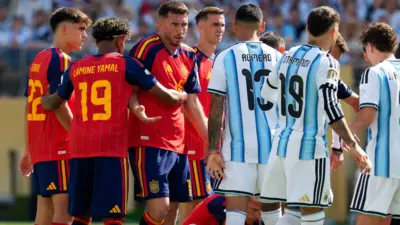

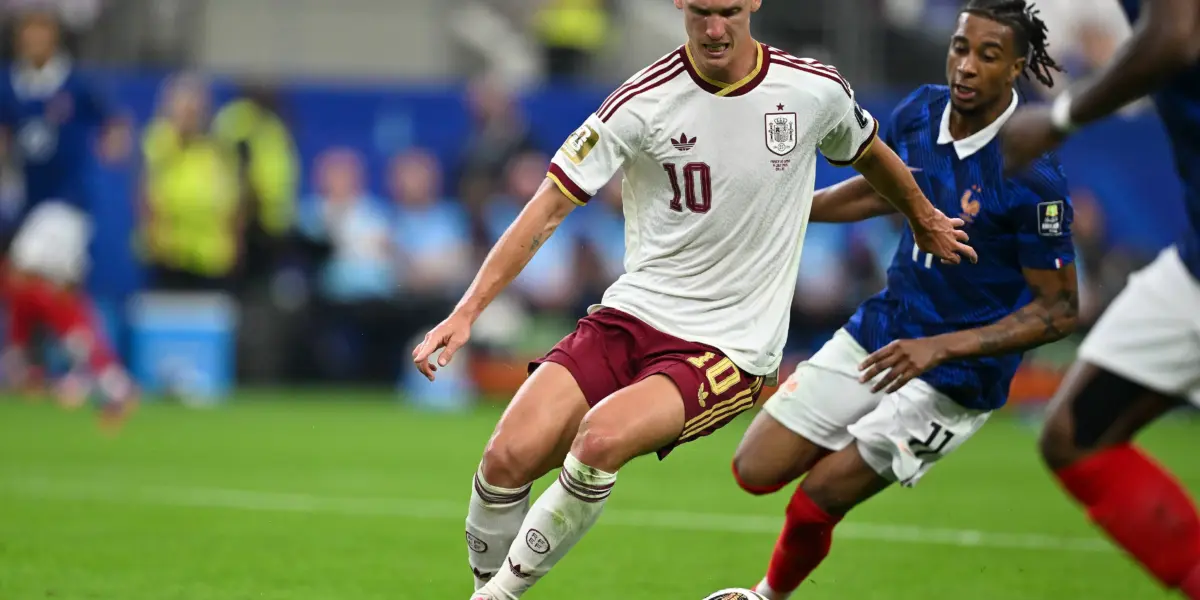
The Spain vs France clash proved one timeless truth: elite midfields will always have the edge over elite attacks.
The French football national team, widely regarded as one of the favourites to win the World Cup 2026, crashed out of the tournament after a dominant display from Spain inspired by Lamine Yamal.
While Yamal’s brilliance grabbed the headlines, the real story of the match unfolded in the centre of the pitch.
From the opening whistle, the Spain vs France midfield battle had a clear winner. Spain controlled possession, won second balls, resisted France’s press, and dictated the tempo throughout the contest.
Every important duel in midfield seemed to fall in Luis de la Fuente’s side’s favour, allowing Spain to establish complete control over the game.
Before kick-off, predicting who would reach the World Cup 2026 final was difficult, but within the first few minutes it became increasingly clear that Spain were dictating where the match would be won.
Modern football fans often focus on explosive front threes, spectacular goals and moments of individual brilliance. Yet football has never stopped being a game controlled from the middle of the pitch.
The battle for possession, territory and rhythm almost always determines which attack gets the better opportunities.
History supports this idea. The teams that dominate generations are usually remembered not only for their forwards, but for the quality of their midfield.
Spain vs France: La Roja Exposed the Flaw That Ended France’s World Cup Dream
An elite attack can only be as dangerous as the platform behind it. If a midfield cannot progress the ball consistently, escape pressure, control transitions or dictate the tempo, then even the world’s best forwards can spend most of the game isolated, chasing long passes and feeding on scraps.
That was exactly what happened to France against Spain.
Kylian Mbappé, who is the joint-leading goalscorer at the World Cup 2026 with eight goals, endured one of the quietest performances of his World Cup career.
The 27-year-old recorded the fewest touches of any outfield player, managed just three shots across the 90 minutes, and finished with the lowest player rating among the French national team starters at 5.8.
The struggles extended across France’s entire attacking line. Bradley Barcola was largely anonymous and created very little, while Ousmane Dembélé was kept unusually quiet by Spain’s defensive organisation.
Michael Olise also failed to influence the game and was fortunate to avoid a booking after a reckless challenge on Rodri.
However, their disappointing displays were symptoms rather than the cause. The biggest problem was France’s inability to compete in midfield.
Aurélien Tchouaméni and Adrien Rabiot were consistently outplayed as Spain dominated possession, controlled transitions and dictated the rhythm of the contest.
Without a midfield capable of supplying quality service or relieving pressure, France’s star-studded attack became disconnected from the game, highlighting once again why elite midfield control remains the foundation of success in modern football.
Why Every Great Football Dynasty Begins with an Elite Midfield
History has repeatedly shown that football’s greatest dynasties are built on elite midfields rather than elite attacks.
Spain’s era of international dominance was powered by the legendary trio of Xavi, Andrés Iniesta and Sergio Busquets.
The same midfield foundation also helped Barcelona’s iconic MSN attack of Lionel Messi, Luis Suárez and Neymar reach its peak.
Real Madrid’s historic three consecutive UEFA Champions League triumphs were built around Toni Kroos, Luka Modrić and Casemiro, while Manchester City’s rise to become Europe’s dominant force was driven by Rodri, Kevin De Bruyne and Bernardo Silva.
The Spain vs France semi-final served as another reminder that football is rarely decided solely inside the penalty area.
Before the ball reaches either box, there is a constant battle for possession, territory, tempo and control. More often than not, that battle is won or lost in midfield.
An elite midfield does far more than create chances. It controls the rhythm of the game, determines whether the match is played at a frantic or measured pace, dictates where possession is circulated, launches attacks, breaks opposition transitions and ensures the team spends more time on the front foot.
This level of midfield control is what separates good teams from truly dominant ones.
That is also why even the world’s best attackers can disappear in the biggest matches. It is not always because they perform poorly as individuals. More often, it is because the midfield behind them has lost the tactical battle.
No striker, winger or attacking midfielder can consistently influence a game when every pass arrives under pressure, every touch is heavily contested, and every attack begins deep inside their own half.
People often say goals win football matches, but goals are usually the reward for controlling the midfield first.
Take Spain, for example. They dominated possession, won second balls, progressed the ball effectively and dictated the tempo, which resulted in them creating the best attacking opportunities.
A team could field Kylian Mbappé, Erling Haaland, Vinícius Júnior, Mohamed Salah and any other elite forward, yet if the opposition dominates the centre of the pitch, controls possession, wins midfield duels and limits service into dangerous areas, those attackers become spectators for long periods of the game.
That was exactly what the Spain vs France encounter demonstrated during the World Cup 2026 semi-final.
For any club or national team with ambitions of dominating Europe or winning major international tournaments, building an elite midfield should always be the priority.
Great attacks may decide individual moments, but elite midfields consistently decide matches. Over the course of a league season or a tournament like the World Cup 2026, the teams that control midfield are usually the ones lifting the trophy.
YOU MAY ALSO LIKE: Manchester United Midfield: Can Kobbie Mainoo, Andrey Santos And Youri Tielemans Become The Trio That Restores United’s Identity In The 2026/27 Season?
England vs Argentina: One Match Away from a World Cup Final Clash with Spain
Having booked their place in the World Cup 2026 final for the first time since 2010, Spain will now await the winner of the England vs Argentina clash.
Thomas Tuchel’s England head into the contest brimming with confidence after an impressive run to the last four.
However, standing in their way are Lionel Messi’s Argentina, a side that has also looked vulnerable at times despite reaching another World Cup semi-final.
The clash promises to be a fiercely contested encounter, with both nations possessing enough quality to go all the way. It also marks the first time in this tournament that either side will face an opponent widely regarded as a genuine title favourite.
Since the group stage, both England and Argentina have largely navigated favourable knockout paths, but this semi-final represents their toughest challenge yet and a true test of their championship credentials.