
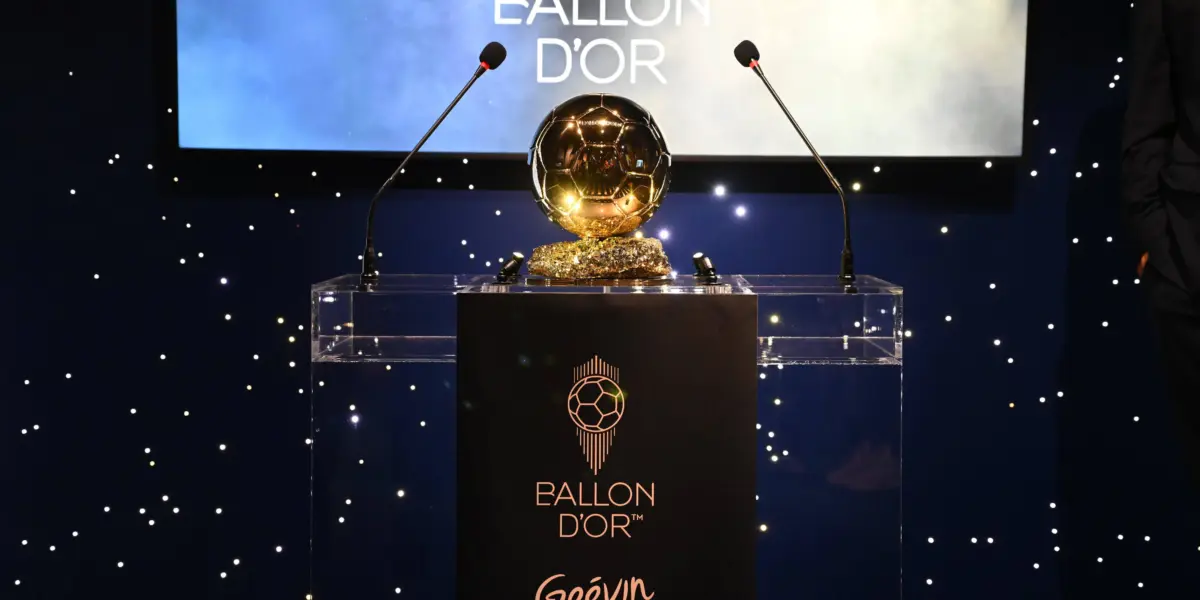
2026 Ballon d’Or nominees have officially been revealed, and it did not take long for the debates to begin — from who was rightfully or controversially left out, to who may not deserve a place on the list, and ultimately, who should walk away with the prestigious award.
With 30 players making the men’s shortlist, the usual heavyweights are all present. Harry Kane, Lamine Yamal, Kylian Mbappé, Erling Haaland, Lionel Messi, Jude Bellingham and defending champion Ousmane Dembélé headline a star-studded list that is expected to produce one of the most fiercely contested Ballon d’Or races in recent years. England captain Harry Kane, in particular, has emerged as the early favourite after an extraordinary season for Bayern Munich and the Three Lions.
However, while there is little surprise about many of the names expected to compete for the biggest individual prize in football, the 2026 Ballon d’Or nominees have also raised plenty of eyebrows. Almost immediately after the list was announced, attention shifted from the favourites to some of the names who made the cut, with genuine questions being raised over whether their performances during the 2025/26 season were enough to warrant a place among the world’s 30 best players.
At the same time, several high-profile players were left out, making the selection even harder for some fans to understand. Barcelona duo Raphinha and Pedri, for example, were notable absentees, while Cristiano Ronaldo was also missing from the men’s list. That is where the controversy surrounding this year’s nominations comes from. Over the years, the Ballon d’Or has consistently sparked heated debates and divided opinions among fans, with some even questioning the credibility of the award and the process behind selecting its winner.
There is, of course, no perfect formula for determining which individual performances deserve recognition. However, when glaring omissions occur while players with far less convincing cases make the cut, it inevitably raises questions about the criteria being used. The result is a shortlist that contains genuine favourites, understandable selections and, according to many fans, some of the biggest Ballon d’Or 2026 surprises, and that is what makes this year’s list so interesting. The debate is no longer simply about who will win the award; it is also about which players don’t deserve to be there in the first place.
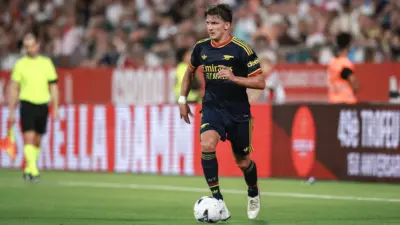
1) Ferran Torres: A World Cup Hero Among The Undeserving Ballon d’Or Nominees
Perhaps no name amongst the 2026 Ballon d’Or nominees has raised more eyebrows than Ferran Torres. The Spanish forward, who completed a move from Barcelona to Paris Saint-Germain in the recently concluded summer transfer window, certainly has a remarkable moment to point to.
Torres scored the winning goal in extra time of the World Cup final against Argentina, securing Spain’s second World Cup title and earning the Player of the Match award in the process. It was arguably the biggest goal of his career and, given the magnitude of the occasion, one of the defining moments of the entire football year. It must have played a significant role in convincing the voters to include his name on the final list, but is one extraordinary international moment enough to earn a place among the world’s 30 best players?
That is where the debate begins.
In the 2025/26 campaign, Torres recorded 25 goals and seven assists, helping the Catalan giants lift the La Liga and Spanish Super Cup, respectable numbers by any reasonable standard. The problem is that respectable numbers are not necessarily the same as a Ballon d’Or-calibre individual season. Torres was not the undisputed star of Barcelona’s campaign, nor was he generally regarded as one of the most dominant players in Europe throughout the season.
It becomes even more difficult for some fans to understand when compared with players who produced stronger individual campaigns but were left out of the final list of the world’s 30 best players. That is why his inclusion has become one of the biggest Ballon d’Or 2026 surprises. There is an argument that Torres’ nomination is being heavily influenced by the weight of his World Cup performance. Scoring the decisive goal in a World Cup final is the sort of moment that can define a player’s legacy, but the Ballon d’Or is supposed to recognise the best individual performer across the period rather than simply the player who produced the most memorable single moment.
This isn’t the first time a single kick of a ball has catapulted a player into the global elite. A perfect historical parallel is Mario Götze in 2014. Much like Torres, Götze endured a heavily rotated, mixed club campaign with Bayern Munich, yet his extra-time winner against Argentina instantly locked him onto that year’s Ballon d’Or shortlist, and it seems like history is repeating itself. France Football has a strong fixation on the “World Cup Final Hero” narrative — proving that a single, iconic tournament goal can completely mask a lack of consistent, world-class form across a 10-month club season.
His nomination is not indefensible. His numbers were good, he won major trophies, and he delivered when Spain needed him most. However, when the standard is supposedly the world’s 30 best players, fans are entitled to ask whether those achievements were enough — particularly when several notable Ballon d’Or 2026 snubs had arguably stronger individual cases. For many supporters, Ferran Torres’ inclusion therefore represents exactly what feels wrong with the shortlist: not necessarily a bad player being nominated, but a player whose biggest moment may have carried more weight than the quality of his overall season.
2) Sadio Mané: When Reputation Starts To Outweigh Recent Form
Seeing Sadio Mané back among the 2026 Ballon d’Or nominees for the first time since 2022 has raised plenty of eyebrows, particularly among fans who believe the list should be based strictly on what players produced during the qualifying period.
There is absolutely no question about Mané’s status as a footballing legend. The Senegalese forward has enjoyed a remarkable career, winning major honours with both club and country and establishing himself as one of Africa’s greatest players, but that is precisely what makes his nomination feel questionable. His performances for Senegal at AFCON were solid, but his overall club campaign with Al Nassr in the Saudi Pro League did not appear to carry the same level of individual dominance associated with a genuine Ballon d’Or contender.
For an award that is supposed to recognise the world’s best performers, simply being a great player should not be enough. This is where the argument over name value comes in. Mané’s reputation is enormous, and perhaps deservedly so, but his past achievements should not automatically strengthen his case for a place on the Ballon d’Or shortlist, an award that should ultimately be based on current performance.
If some of the 2026 Ballon d’Or nominees are being judged on relentless week-to-week excellence, then Mané’s inclusion naturally invites comparisons with players who delivered stronger individual numbers and performances throughout the campaign. For his supporters, it may be recognition of a legend who remains capable of producing important moments. For his critics, however, it looks more like nostalgia getting the better of the selection process.
YOU MAY ALSO LIKE: Premier League 2026/27 Season: The New-Look Teams Already Turning Heads
3) Julián Quiñones: The Biggest Surprise On The 2026 Ballon d’Or List
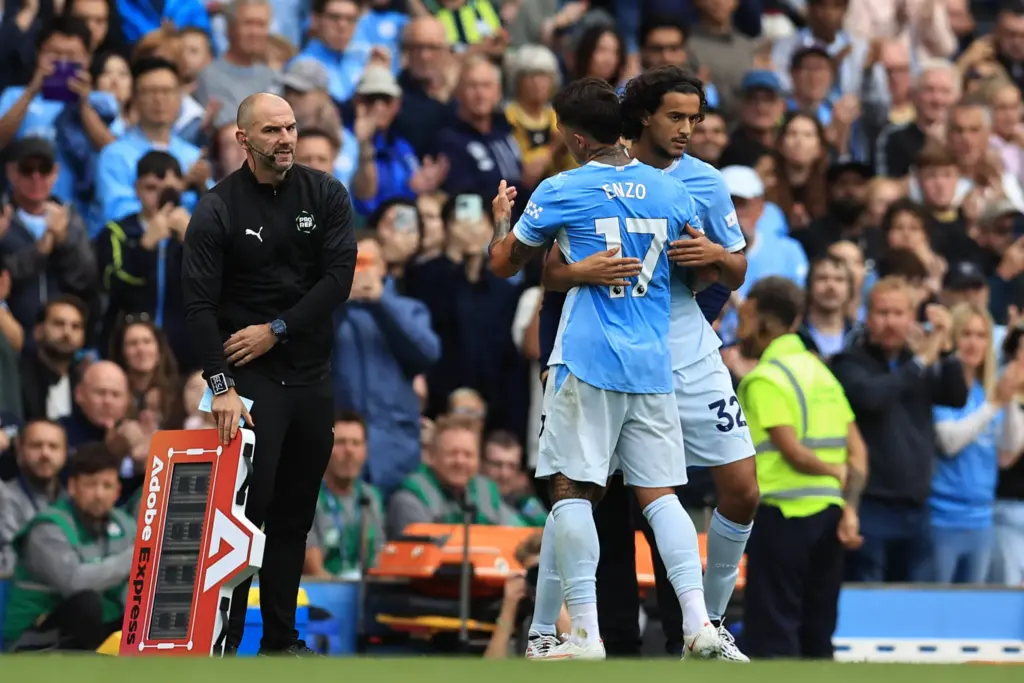
If Ferran Torres’ inclusion raised eyebrows, Julián Quiñones’ place on the 2026 Ballon d’Or nominees list may be the biggest shock of them all. The Mexican certainly has a case to make. He enjoyed a productive domestic campaign and then added four goals during his country’s World Cup run, giving him a major international tournament to point towards. However, the question is whether that body of work is enough to place him among the world’s 30 best players.
The biggest issue is the level of competition. Quiñones produced his numbers outside Europe’s traditional top-five leagues, meaning his performances cannot be measured in the same context as those of players competing week after week in the Premier League, La Liga, Bundesliga, Serie A or Ligue 1, particularly those also performing on the Champions League stage.
That does not mean his achievements should be ignored. However, it does make his inclusion more difficult to understand when compared with elite European performers who faced a significantly higher level of competition throughout the season. That is where the Ballon d’Or 2026 snubs become particularly difficult for fans to accept. Barcelona’s Raphinha, for example, was left out despite being one of the most influential players in European football during the campaign.
When a player such as Raphinha misses out while Quiñones makes the final 30, it inevitably raises questions about what exactly the voters valued most. Was it consistency at the highest level, major-tournament impact, raw statistics, or simply the weight of a memorable World Cup campaign? For many supporters, Quiñones’ nomination represents one of the clearest Ballon d’Or 2026 surprises — and one that becomes even more controversial when viewed alongside the players who were left out.
The Last Word
Cristiano Ronaldo, Robert Lewandowski, Rodrygo and a host of other superstars have previously criticised the criteria used to select the world’s 30 best players, and this year’s edition has done little to ease those concerns. If anything, the latest shortlist has only reignited questions over whether the selection process truly reflects the best individual performances in football.
The immediate fallout from the shortlist highlights a growing divide between fans and award selectors. On social media, the consensus is clear: giving nominations to players in lesser-tested leagues or rewarding brief tournament cameos over a full season’s body of work damages the award’s prestige.
Moving forward, this criterion sets a tricky precedent. If a few weeks of international football can completely erase 10 months of club mediocrity, elite European players will continue to be unfairly overlooked. Ultimately, these selections won’t stop the favourites from winning, but they permanently shift how fans view the integrity of the Ballon d’Or.
What do you think? Did France Football completely lose the plot by including Quiñones, Torres, and Mané among the 2026 Ballon d’Or nominees, or do their big-stage moments justify the hype?
Share your thoughts with us in the comments below, and we will check in to reply!
More Football News
Champions League 2026/27: Five Must-Watch Thrilling Games on Matchday 1