
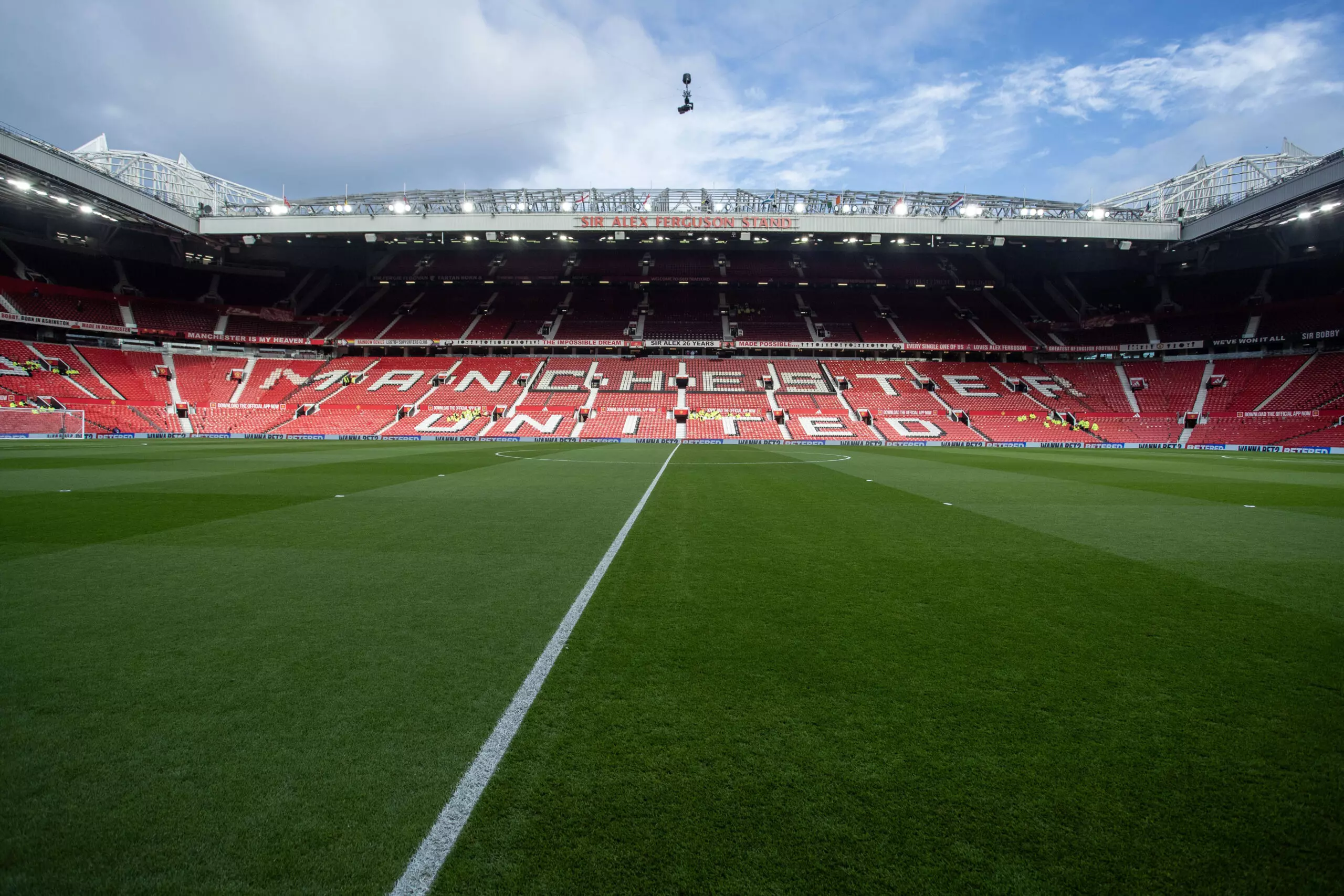
Manchester United’s problem has only intensified the tension around Old Trafford, as they have somehow found another way to make a bad week even worse. Just four days after putting on a horrific display in their 1-0 defeat to Manchester City in the Manchester derby, a game where United had more than an hour to play against a 10-man City and still failed to find a way through, Michael Carrick’s men returned to Old Trafford looking to set the record straight in the Carabao Cup against Brighton & Hove Albion.
For the opening 10 minutes, it appeared they had learned from their mistakes as they came flying out of the blocks, with Shea Lacey and Mason Mount putting Carrick’s side two goals ahead, but instead of using that advantage to take control of the game, Manchester United completely lost their grip on it.
In back-to-back Carabao Cup campaigns, United have now crashed out in the opening round of the competition after the Seagulls produced a stunning comeback, scoring three unanswered goals to send them out. What made the defeat even more painful was the fact that it was the first time since 1976 that the Red Devils had lost a home game after taking a 2-0 lead, and what has made Manchester United’s problem so difficult to ignore is the manner of these performances.
If Michael Carrick’s men were playing to their full potential and simply being beaten by better opposition, the frustration around Old Trafford would perhaps be easier to understand. Instead, it is the lack of intensity, urgency and aggression that has left fans increasingly angry. Against Brighton, United looked devoid of energy for large spells of the game. There was little urgency to their pressing, little speed in their attacking play and, most worryingly, very little response once Brighton began to turn the game in their favour.
Some fans described the performance as being played out in “slow motion”, a reflection of how sluggish and passive United looked throughout the game. For a side that had already suffered a disappointing defeat in the Manchester derby just four days earlier, the expectation was for a reaction. Instead, they produced another performance that has only intensified questions about Michael Carrick’s future and the direction of Man United’s 26/27 season.
So far, three defeats have already arrived in their opening six competitive matches, and United’s early Premier League position has left them in the bottom half of the table, with only one league victory from their opening four matches. For a club that spent much of the summer trying to build momentum around a new-look campaign, the reality has been very different.
Tactical Fragility Without A Clear Core
A major part of Manchester United’s problem is that their tactical fluidity does not always appear to have a clear foundation. Carrick has shown a willingness to move players around and create unpredictable attacking structures, but against stronger opponents, that flexibility can quickly become a weakness.
United have often looked caught between pressing high and dropping into a compact shape. When one player steps forward to press while others fail to follow, spaces begin to appear between the lines, leaving the midfield exposed. That was evident in the third goal they conceded against Brighton, as United struggled to maintain a consistent defensive structure once possession was lost.
The same issue can be seen in attack. Carrick has frequently used Bruno Fernandes and Matheus Cunha together in fluid roles, with neither necessarily operating as a traditional centre-forward. While this can create movement and make United difficult to mark, it can also leave them without a clear reference point in the final third when opponents defend deep.
The problem becomes even greater when United lose the ball. Without a compact structure behind the attack, opponents can immediately exploit the spaces left by their attacking rotations. The Brighton defeat also exposed the lack of defensive depth. With a heavily rotated backline that featured young centre-back Ayden Heaven, United struggled to track runners and maintain their defensive shape as the game turned against them. That raises a bigger concern about Man United’s 26/27 season: the system may offer plenty of fluidity, but United still appear to lack the defensive stability and structural discipline needed to make that fluidity work consistently.
Manchester United’s Problem: Why Every Reset Leads Back To Square One
Players will inevitably be criticised for poor performances, while the manager will face questions over his tactical decisions. However, for many United supporters, the frustration ultimately extends beyond the players and coaching staff to the club’s ownership and board. The anger towards INEOS has become increasingly intertwined with Manchester United’s problem.
Supporters have protested against the ownership over the past couple of seasons, with a major source of frustration being the belief that the club does not do enough during the summer transfer window to address the squad’s weaknesses, while the constant rebuilding and managerial changes are preventing the club from making sustained progress.
United have now gone 13 years without winning the Premier League and 18 years since their last Champions League triumph. Those numbers underline why another short-term reset is unlikely to satisfy supporters who want to see a clear, consistent direction established at the club. What United need is stability: a clearly defined footballing philosophy, the right manager to implement it and a squad recruited specifically to support that approach. Instead, the club has repeatedly changed managers and adapted the squad around new ideas, creating another reset before the previous one has had enough time to develop.
The managerial turnover tells its own story. Erik ten Hag was followed by Rúben Amorim, with Carrick now taking charge. Each change brings a new tactical approach and another attempt to reshape the squad around a different philosophy. The depth of the squad is perhaps the clearest evidence. Man United’s 26/27 season has already shown how dramatically they can drop off when the first-choice players are rotated.
Carrick made eight changes against Brighton, but rather than demonstrating the strength of a deep squad, the performance exposed just how much quality is lost beyond the starting XI. That is why Manchester United’s form cannot simply be viewed through the lens of the manager’s performance alone. Until United develop a squad that is built around a consistent footballing identity, another managerial reset risks producing another version of the same cycle.
With questions already being raised about Michael Carrick’s future just weeks into the new campaign, another managerial change would risk taking United straight back to the beginning. A new coach would bring new tactics, new demands and potentially another round of recruitment. That is how the cycle continues — change the manager, reshape the squad, start again and hope the next reset finally works. To solve a major part of Manchester United’s problem, that cycle itself needs to end.
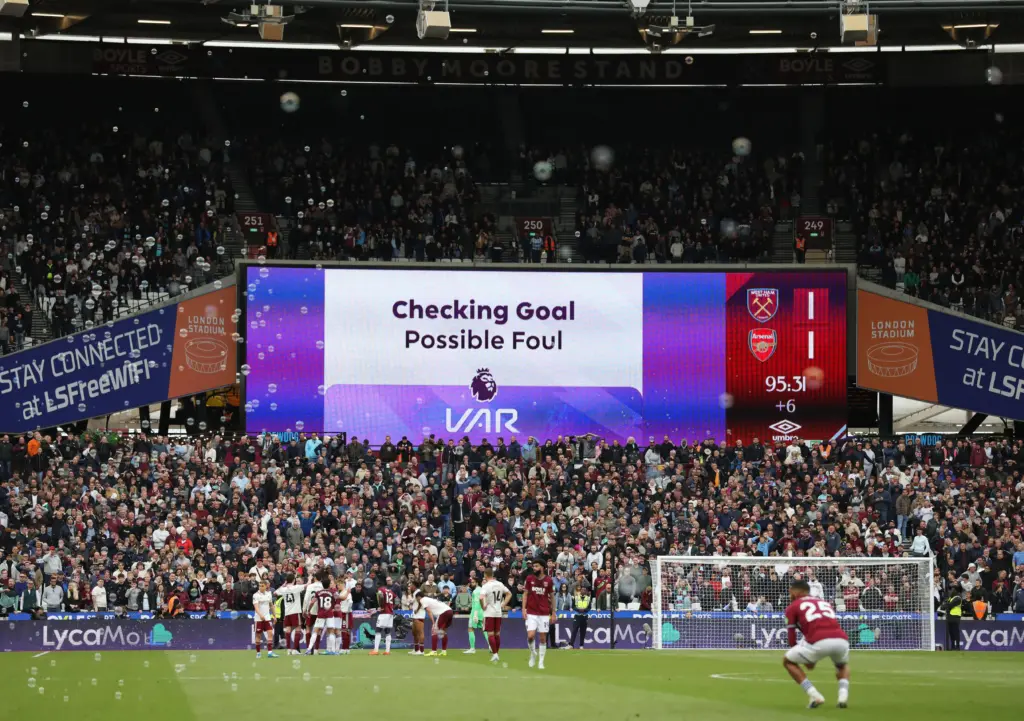
YOU MAY ALSO LIKE: VAR Controversy: Why It’s Still Football’s Biggest Talking Point
Man United’s Form: The Missing Mentality Behind Their Struggles
There is a stark contrast between the mentality of United’s current squad and the standards that defined Sir Alex Ferguson’s era. Under the legendary manager, there was a belief from the first minute to the last, regardless of the opponent or the scoreline. Even when games appeared to be slipping away, United had the resilience to keep pushing until the final whistle.
With the current crop of players, however, that mentality appears to be missing at crucial moments. It could be one of the reasons why Man United’s 26/27 season risks following the same frustrating pattern as previous campaigns. The mentality of a squad cannot be overemphasised, because talent and tactical quality can only take a team so far when the confidence, resilience and determination to respond to setbacks are lacking.
Against Brighton, the visitors’ first goal just before half-time appeared to change the entire complexion of the game. United went from being comfortably ahead to looking increasingly nervous and disjointed, eventually conceding three unanswered goals. Carrick admitted afterwards that the manner of the collapse was unacceptable, while the players were booed off the pitch at full-time.
The lack of intensity, urgency and resilience has become a collective issue, and it has contributed to Manchester United’s form becoming so difficult to trust. There is still enough time for Man United’s 26/27 season to improve, but rebuilding confidence may be just as important as rebuilding the squad. Until they develop the resilience to respond when matches turn against them, the same collapses can continue regardless of who is wearing the shirt or standing on the touchline.
Extra Time Notes
After two games and two losses, Manchester United’s next Premier League fixture takes them to Craven Cottage to face a Fulham side that have drawn with Liverpool and beaten West Ham in their last two games. A victory would do a great deal to settle the growing tension around Old Trafford and give the supporters something to hold on to after a difficult week.
However, United cannot afford another performance like the ones against City and Brighton. Tactically, Carrick will have to get his approach right, while the players must avoid the lapses in concentration that have repeatedly cost them. Their pressing will also need to be coordinated, with the entire team moving as a unit rather than leaving spaces behind for their opponent to exploit.
With Manchester United’s form already attracting increasing scrutiny, another defeat would bring even more pressure and further questions over Michael Carrick’s future. The Fulham game therefore represents another opportunity for his side to show that the problems exposed in their last two matches can be corrected and that there is still a clear path forward.
More Premier League News:
Viktor Gyokeres Goals: How Does The Swede Pick Up His Form After A Poor Start To The 2026/27 Season?
Footballers’ Wages: Exposing the Truth Behind the ‘£200k-a-Week’ Headline