
After missing out on the most prestigious individual award in football over the past few years, Kylian Mbappé’s Ballon d’Or hopes have grown even stronger this year, with his individual performances establishing him as one of the most lethal strikers and best players in the world. In every competition the Frenchman has participated in, he has made his presence felt, consistently producing the numbers that naturally put him among the leading names in the conversation. His goalscoring prowess, consistency and ability to deliver on the biggest stages have strengthened his reputation, making his pursuit of the award impossible to ignore.
For many, those numbers are enough to put Mbappé firmly among the 2026 Ballon d’Or contenders, but not necessarily enough to see him win it. His individual output gives him a strong foundation, yet goals alone cannot settle the debate over who deserves to be considered the best player in the world. When the Ballon d’Or criteria are properly considered, individual performances, team success, class and fair play all form part of the assessment.
When those factors are taken into account, Kylian Mbappé’s Ballon d’Or pursuit begins to encounter some significant obstacles. While his individual numbers are difficult to overlook, there are clear questions over whether his overall season did enough to justify him winning the award ahead of the other leading contenders.
Kylian Mbappé’s Ballon d’Or Case: Individual Brilliance Amid Real Madrid’s Trophyless Season
The biggest issue facing the Frenchman, who has been making a strong case for the award since the end of the World Cup, is not his individual numbers, but what those numbers ultimately produced. On the international stage, the 27-year-old showcased his undoubted ability, finishing the World Cup as the tournament’s top scorer with 10 goals and four assists. He also ended the 2025/26 La Liga campaign with 25 goals to win the Pichichi Award, while scoring 15 goals in the UEFA Champions League.
Those numbers have undoubtedly given Kylian Mbappé’s Ballon d’Or pursuit a significant boost, particularly because his overall goal tally compares favourably with several other prominent contenders. His 58 goals across the season alone underline just how prolific he was, while he averaged a direct goal contribution every 75 minutes and created 121 scoring chances for his teammates. On the surface, those statistics make Mbappé extremely difficult to overlook. However, there is one glaring problem: all of that individual production failed to translate into a major trophy at either club or international level.
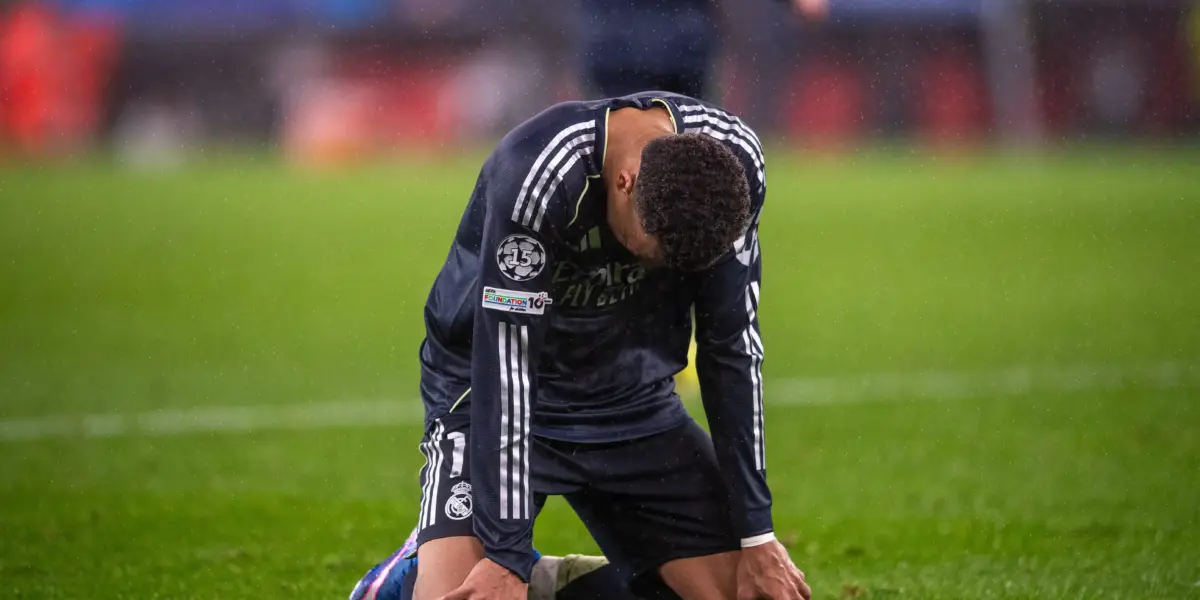
Real Madrid ended the season without a major title, while France’s World Cup campaign came to an end in the semi-finals against Spain. That leaves Kylian Mbappé’s Ballon d’Or case heavily dependent on his individual statistics rather than the kind of collective success that has traditionally strengthened a player’s claim to the award.
That creates a difficult comparison with some of the other 2026 Ballon d’Or contenders. Harry Kane, for example, helped Bayern Munich win the Bundesliga while scoring 73 goals, the second-highest single-season tally in modern football. Lamine Yamal, meanwhile, played a key role as Barcelona claimed La Liga before Spain went on to win the World Cup. Their individual performances were therefore accompanied by major silverware, giving their respective Ballon d’Or claims another dimension that Mbappé’s season simply does not have.
This is not to suggest the Real Madrid striker’s numbers should be dismissed. Scoring 58 goals in a single season, winning the Pichichi and finishing as the World Cup’s top scorer are significant achievements and an important part of his credentials. However, the Ballon d’Or is not simply an award for the player with the most impressive statistical output. When the full picture is considered — individual performances, team success and the wider criteria surrounding the award — Mbappé’s Ballon d’Or chase begins to look considerably less convincing than his remarkable numbers initially suggest.
The Contradiction Over Team Success And Individual Numbers
Class and fair play are important criteria for all 2026 Ballon d’Or contenders. While they do not necessarily concern measurable achievements on the pitch, they remain just as important as individual performances and team success when assessing a player’s overall candidacy. In this regard, Mbappé appears to have fallen short.
In recent months, Mbappé has been increasingly vocal about how he believes the Ballon d’Or should be judged. In September 2025, the Frenchman acknowledged the importance of team success, stating that winning the award “goes through team titles” and suggesting that individual brilliance alone could not guarantee the prize. At the time, those comments aligned with the wider context of the award. The Ballon d’Or is an individual honour, but football remains a team sport, meaning a player’s contribution to major collective achievements has always formed an important part of the debate.
Fast forward to this year, however, and Mbappé’s stance appears to have shifted following a season without major silverware. Speaking to journalists, he argued that the award “won’t announce a team in the envelope; they will announce a player,” placing greater emphasis on the fact that the prize ultimately recognises an individual rather than a club or national team.
There is actually nothing wrong with Mbappé defending his individual numbers or making a case for why he believes he deserves the award. The problem, however, lies in the apparent contradiction between his two positions. The importance he once placed on team success now appears far less significant when that same factor works against his own Ballon d’Or ambitions.
When Real Madrid’s success was an advantage in his own pursuit of the award, he acknowledged its importance, but after failing to win a major trophy, the emphasis shifted towards the individual nature of the prize. That change in rhetoric inevitably adds another layer to Mbappé’s Ballon d’Or hunt. The issue is not that he is advocating for himself; every leading candidate has the right to highlight his achievements. Rather, it raises questions about consistency when discussing the very criteria that should determine the winner.
YOU MAY ALSO LIKE: Alex Baena Form: Does The Electric Forward Deserve More Recognition In The Spanish National Team?
The Defensive Question Behind Mbappé’s Ballon d’Or Bid
In modern football, off-ball movement has become an essential part of a team’s tactical structure, with every player expected to contribute in some capacity. It is this area of Mbappé’s game that could prove to be a stumbling block in his pursuit of the best player in the world tag. With the ball at his feet and in the attacking phase, there are few players better than the Frenchman, as his extraordinary attacking numbers have repeatedly demonstrated.
Without the ball, however, his defensive work rate has been questioned on several occasions, raising doubts over how complete his overall contribution is. Today, a forward’s ability to press, track runners and contribute to his team’s defensive structure has become an increasingly important part of evaluating his overall influence.
Mbappé has faced criticism from analysts and pundits over his defensive work rate, particularly when playing from the left or as part of a front three. His tendency to remain higher up the pitch rather than consistently tracking back can leave additional defensive responsibility for his teammates, particularly against opponents who build attacks through wide areas.
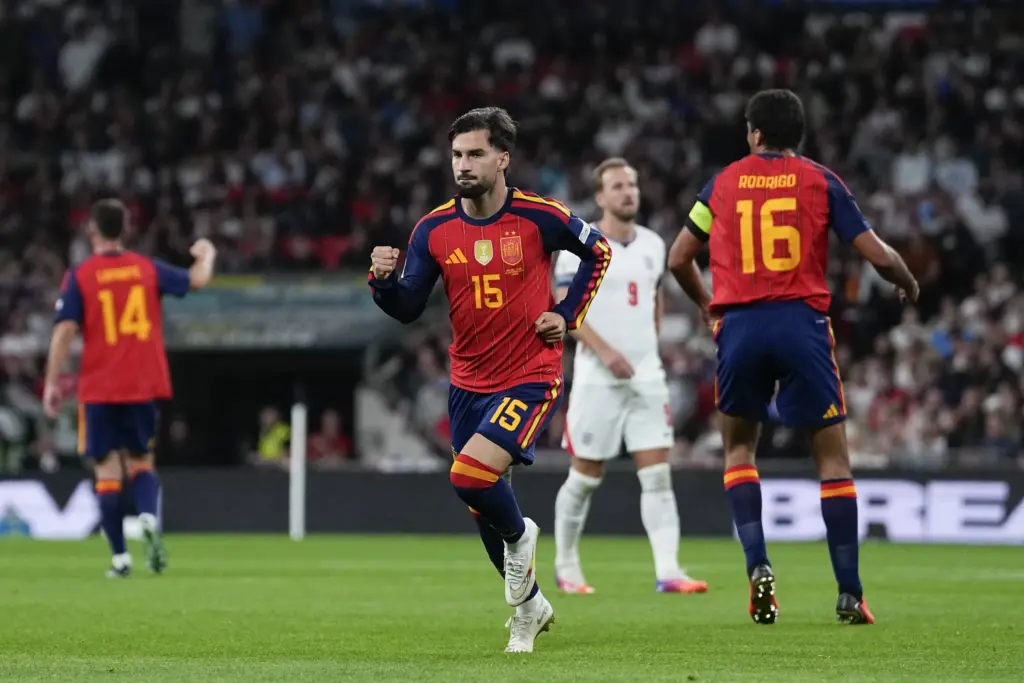
This becomes particularly relevant when comparing the Frenchman with other 2026 Ballon d’Or contenders. Take Lamine Yamal, for example. In the UEFA Nations League encounter against England, the 19-year-old recorded seven defensive contributions while also getting on the scoresheet and creating four chances, highlighting the balance between his attacking influence and willingness to contribute without the ball.
The defensive side of the game has also become increasingly important for modern wingers, with top players such as Michael Olise, Khvicha Kvaratskhelia, Luis Díaz and Pedro Neto, as well as a host of others being expected to contribute beyond their attacking responsibilities. Whether through coordinated pressing, recovering into shape or helping teammates defend transitions, wide players are now increasingly required to play a role when their team is out of possession.
That growing expectation makes the balance between attacking output and defensive contribution an important part of evaluating attacking players. While Mbappé’s quality is difficult to question, the extent of his work without the ball remains a significant point of discussion when assessing his overall contribution.
This is where the criteria to select the best player in the world become important. If individual performance is assessed as a complete contribution to team success, then defensive work rate and tactical responsibility cannot simply be overlooked. Mbappé’s Ballon d’Or glory hunt is largely built around his remarkable attacking numbers, but there are legitimate questions over whether his contribution without the ball weakens the overall picture.
Extra Time Notes
Having moved from the debate over undeserving Ballon d’Or nominees in the top 30, with players such as Raphinha left out entirely, to the question of who actually deserves the award this year, the race appears wide open. Last season’s winner, Ousmane Dembélé, faces strong competition after failing to reach the same heights he did during his award-winning campaign, potentially paving the way for a new winner.
Despite helping Paris Saint-Germain win the UEFA Champions League and reaching the World Cup semi-finals with France, the Frenchman has not produced the same level of individual impact this time around. That leaves Kylian Mbappé, Harry Kane and Lamine Yamal among the prominent names in the 2026 Ballon d’Or conversation, with each having a strong argument based on a combination of individual performances and team success.
Mbappé has set his sights on winning the award for the first time in his career, with his highest finish coming in third place in 2023. However, despite his remarkable individual numbers, there are still questions over whether he has done enough to satisfy the Ballon d’Or criteria required to secure the prestigious award.
Among the other contenders, there are players who have matched or even surpassed his individual output while also playing a decisive role in their teams’ success. That combination of individual brilliance and collective achievement could ultimately prove crucial in determining who has the strongest claim to the award.
More Football News:
England vs Spain: Reigning World And European Champions Showcase Strong Comeback Mentality
Manchester City’s Charges: Could This Be The End Of The Premier League Giants?