
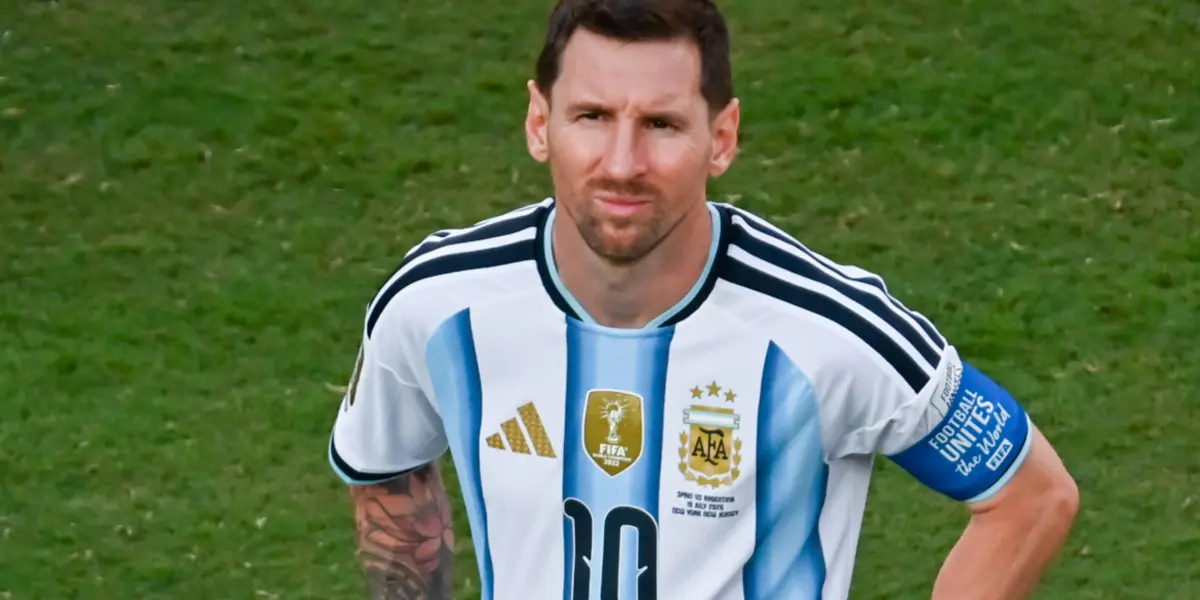
The Messi retirement we all feared is finally here. When it was first announced, the reality of it didn’t quite sink in, but now that the moment is drawing closer, the emotions are beginning to hit.
Many expected the World Cup to mark the end of his international career, but few imagined that Lionel Messi would bring his journey with the Argentina national team to a close just months after the tournament.
Across social media, die-hard fans are sharing emotional videos from the beginning of Messi’s career, reflecting on the remarkable journey that has brought him to this moment. Even rival fans are joining in, sharing memories and tributes that underline the respect the footballing icon has earned throughout his career.
It is a mixture of sadness and happiness. Sadness because one of football’s greatest ever players is finally stepping away, but happiness because the little boy from Rosario has conquered the sport and is leaving the stage on his own terms.
For football lovers around the world, the Messi retirement represents the end of an extraordinary era and an undeniably emotional moment for the sport.
Messi Retirement: The Respect That Sets Lionel Messi Apart in the GOAT Debate
Messi’s final game against Benin will bring his 21-year international career with the Argentina national team to an end. And as that chapter draws to a close, the ever-present GOAT debate is once again quietly finding its way into the conversation.
While the debate typically centres around goals, trophies, Ballon d’Or awards and individual records, there is another fascinating aspect that sets these two icons apart.
Beyond their extraordinary achievements, the Argentine icon appears to inspire a level of loyalty and admiration that extends far beyond his own fanbase. That connection has become a central part of Messi’s legacy and one of the most fascinating aspects of his career.
His teammates at both club and international level, coaches, former players, and even elite athletes from other sports frequently speak about him with a unique sense of affection and respect, and the 2026 World Cup has only reinforced that perception.
At that tournament, Messi produced historic moments of his own. His brace against Austria saw him become the outright leading goalscorer in World Cup history, surpassing German legend Miroslav Klose. He also became the first player to score in seven consecutive World Cup matches.
Yet, beyond the records, another storyline quietly emerged throughout the tournament. Watching the Argentina national team players, coaching staff and supporters interact with their captain, it was impossible not to notice the extraordinary admiration they had for him.
The respect that the eight-time Ballon d’Or winner receives goes beyond his footballing brilliance or his legacy. It raises an intriguing question at the heart of the GOAT debate, one that the Messi retirement makes even more relevant: why does he inspire such unwavering loyalty, not only from fans, but from teammates and rivals alike?
Messi vs Ronaldo: The GOAT Debate Is About More Than Statistics
For many, one of the biggest reasons the argument over which of the two legends is the better player extends beyond statistics is the stark contrast in their public personas.
Last week, former Brazil international Felipe Melo claimed that he does not see Portuguese players showing Cristiano Ronaldo the same level of respect that Messi receives from his Argentina teammates. He said:
“I really see a big difference in how players treat Cristiano Ronaldo compared to how Argentinian players treat Messi. I see much more respect. I might be wrong, but that’s what I see from the outside. I see much more respect from opponents when Cristiano Ronaldo plays.
“He even overshadowed Jorge Jesus as his idol, Cristiano Ronaldo, left the pitch, more than the supposed captain of the Portuguese national team did. And I think that was a mistake, because nobody there even comes close to Cristiano Ronaldo’s level, do you understand? Yes, it’s unacceptable. You can’t let the greatest player in history leave like that, as if nothing happened. You can’t.”
During the World Cup, Liverpool and Netherlands defender Virgil van Dijk was seen wearing an Argentina jersey with Lionel Messi’s name on the back – a rare moment that highlighted the mutual respect between the two, despite being competitors on the world stage.
It also reflected a wider trend at the 2026 World Cup, where many players continue to openly admire Messi beyond club and international rivalries.
Throughout Lionel Messi’s career, his personality has been defined by humility, quiet confidence and an unwavering focus on football. The 39-year-old, who is naturally shy and reserved, has built a reputation as someone who prefers to let his performances do the talking rather than seeking the spotlight.
Despite being one of the best footballers in history, Messi has rarely been associated with controversial interviews, public feuds or bold declarations about his own greatness. Instead of responding to criticism through the media, he has consistently answered it on the pitch.
That approach has played a huge role in shaping Messi’s legacy, with teammates and opponents alike viewing him as someone whose priority has always been football rather than personal branding.
Another factor behind the admiration he receives is his remarkable consistency. For nearly two decades, the Argentina captain has maintained elite standards through relentless work ethic and outstanding performances while avoiding unnecessary distractions.
That quiet professionalism has become a defining feature of Messi’s leadership, earning him respect inside dressing rooms and strengthening the loyalty of Messi fans around the world.
In the wider Messi vs Ronaldo discussion, this difference in personality is often overlooked. While both players possess extraordinary talent and unmatched dedication, Messi’s understated character creates the impression of authenticity.
In an era where many elite athletes actively cultivate their public image through social media and headline-grabbing statements, his preference to stay out of the spotlight feels increasingly rare. Perhaps that is one of the biggest reasons the Messi retirement has felt so emotional for so many people.
ALSO ON ETT: Harry Kane Ballon d’Or: Why Spain’s World Cup Triumph Has Put the Golden Boot King in Danger
Moments When Messi’s Selflessness Won Over His Teammates
Lionel Messi commands immense respect from his teammates because of one defining quality: his selflessness. On several occasions, he has consistently put the team first, choosing collective success over personal recognition whenever the opportunity arises.
Throughout his playing career, he has, in one way or another, positively influenced the lives of his teammates, whether by helping a young player settle into the squad or by supporting an experienced teammate through a difficult period.
These are the moments that tend to stay with players long after the final whistle, creating a level of loyalty that statistics alone cannot explain.
They become the kind of teammates who are willing to give everything on the pitch for him because he has shown that he wants those around him to succeed just as much as he wants to win himself. It is also why the Messi retirement leaves a gap in the Argentina national team dressing room that goes far beyond what he did on the pitch.
That selfless mentality has become one of the defining traits of Messi’s leadership and is a major reason why the Goat debate often goes beyond goals and trophies.
One of the best examples came during a difficult spell for Argentine striker Lautaro Martinez. The Inter Milan forward had gone more than a year and a half without scoring for Argentina, enduring a 15-match goal drought stretching back to September 2022.
His struggles in front of goal saw him lose his starting place to Julian Alvarez while facing heavy criticism from supporters and the media.
During Argentina’s friendly against Guatemala in 2024, Messi had the opportunity to complete his hat-trick after Argentina were awarded a penalty. Instead of taking the spot-kick himself, he handed the ball to Martinez in an effort to restore the striker’s confidence.
Martinez converted the penalty before later adding another goal from a Messi assist. Rather than adding another personal milestone to his collection, Messi chose to help a teammate rediscover his confidence.
“I looked at him, and he gave it to me. I thanked him, and I thank him publicly as well. It’s a gesture from a GREAT, a gentleman both on and off the field. This is very important to me,” Martinez said after the game.
Nicolas Otamendi has experienced Messi’s selflessness too. During Argentina’s friendly against Zambia in late March, the veteran defender was playing his final match on home soil before his international retirement.
With Argentina comfortably leading 2-0, they were awarded a penalty. As the designated taker, Messi could easily have stepped up himself. Instead, he called Otamendi forward from defence and insisted that he take the penalty.
Otamendi initially hesitated, questioning the decision, but Messi playfully forced the ball into his hands. The defender converted the spot-kick to make it 3-0, creating one of the most memorable moments of his international career.
It was another gesture that earned Messi not just respect, but genuine affection from teammates and supporters alike.
That same humility followed him to Inter Miami. Shortly after arriving, Messi was handed the captain’s armband. When the club won its first trophy, he searched for former captain DeAndre Yedlin before the presentation.
He then handed Yedlin the captain’s armband so they could lift the trophy together, ensuring the moment was shared rather than making it entirely about himself. It was another small gesture that perfectly reflected the values behind Messi’s legacy.
How Messi’s Character Built Unbreakable Respect in the Argentina National Team Dressing Room
To almost every teammate Messi has played alongside, the story is remarkably similar. They praise not only his footballing ability but also his character.
They speak of a man who respects everyone, never behaves as though he is above anyone else and rarely lets his global fame change the way he treats people.
Rodrigo De Paul has often spoken about this side of Messi’s character. In one interview, he explained that Messi never puts himself first but always prioritises the team. He described him as humble, respectful and approachable, adding that this is what true leadership looks like.
Alexis Mac Allister has also revealed just how much respect Messi commands inside the Argentine dressing room. He once explained that everyone jokingly called him “ginger,” something he did not particularly enjoy.
When Messi noticed, he simply told the squad to stop using the nickname. According to Mac Allister, nobody dared say it again. It was a small moment, but one that showed the influence Messi carries without ever raising his voice.
Even now, in Argentina’s 2026 World Cup campaign, where they have already secured qualification for the round of 32, Messi has continued to make headlines after scoring a hat-trick in the opening match, yet his humility has remained unchanged throughout.
Following the first victory, Thiago Almada offered Messi his seat on the substitutes’ bench, but the Argentine captain politely declined and chose to sit on the floor instead. It was another simple act that reinforced why the respect his teammates have for him continues to grow, even after everything he has achieved.
It is also why, as the Messi retirement sinks in, the stories his teammates tell are about the person as much as the player.
MORE FOR YOU: 2026 Premier League Summer Signings: The Big Names Yet to Make Their Mark

Beyond the Trophies: Why Messi’s Argentina Teammates Adore Him
In hindsight, even the Messi retirement can be viewed as another act of respect towards the next generation of Argentina national team players.
At 39, Messi could have continued for several more years, chasing more international trophies such as the Copa América and Finalissima, as well as partaking in the 2030 World Cup qualifiers while allowing the team to remain built around him. Instead, he chose to step aside.
In his farewell message, Messi explained that he had given everything he could and highlighted the young players coming through who deserved an opportunity to take their place in the team. That same selflessness was evident when he allowed Lautaro Martínez and Nicolás Otamendi to take penalties that could easily have been his moment.
Messi has repeatedly shown a willingness to put someone else’s moment ahead of his own. It is that humility and selflessness, alongside everything he has achieved on the pitch, that has helped earn him the love and admiration of his teammates, fans and coaches.
These are just a few of the countless things Messi has done for his international teammates.
He never reminds them of everything he has won, never boasts about his achievements and never carries himself with a sense of superiority. He treats everyone with respect, regardless of age or status.
That is why so many of his Messi teammates speak about him with such admiration. When Argentina’s players run, fight and sacrifice for their captain, it is not because he constantly reminds them of what he has done for them. It is because of how he has consistently treated them over the years.
Extra Time Notes
The GOAT debate will probably never have a universally accepted answer. The Messi vs Ronaldo argument will continue to revolve around individual achievements, statistics, and records for years to come.
But if the discussion shifts from footballing ability to the respect and loyalty a player inspires, Messi’s legacy may offer another perspective. His greatest argument may not be found on a statistics page at all.
It may be found in the words and actions of the people who know him best: the teammates who played alongside him, the coaches who trusted him, the rivals who admired him and the millions of fans who followed his journey.
More International Football News
Argentina Says Goodbye to Lionel Messi With Tears and Fireworks
Spain No.10: Should Fermin Lopez Get More Opportunities for the National Team?