

Chelsea were two down, and Stamford Bridge had already started turning on them; however, Liam Rosenior’s in-game management was something no one anticipated.
The scoreline mattered, but the bigger issue was why Chelsea looked like that in the first place.
The Blues had been rotated heavily, one of those “manage the week” line-ups shaped by circumstance rather than rhythm.
There was Champions League football in the legs and a Carabao Cup semi-final second leg against Arsenal waiting around the corner.
On paper, it all made sense. Protect bodies, spread minutes, and get through the stretch.
Football, though, does not reward logic when it produces chaos.
By half-time, the gamble had blown up.
West Ham were 2–0 up, and the atmosphere had gone sour. Not the odd groan or frustrated sigh, but proper boos. Loud, collective, and directed at a group that looked stunned by their own performance as it walked off.
That is why the second half of Chelsea’s comeback vs West Ham was never just about scoring goals.
It was about a reset, and Liam Rosenior’s in-game management came through.
In a match that was already slipping away, Liam Rosenior’s in-game management and tactical changes became the turning point, and Chelsea’s comeback against West Ham suddenly had a different feel to it.
Liam Rosenior’s In-Game Management And The Value Of Intervention
This is what has stood out early under Liam Rosenior.
Chelsea are not flawless, and the first half against West Ham made that painfully clear. The difference is what happens once a problem arises.
The Blues have lived through too many spells where a bad half becomes a bad night because nobody wants to admit the game is wrong.
The bench watches, waits, and hopes the original plan eventually clicks. When changes finally come, they are either panic substitutions, come far too late, are too obvious, or they are simply too reactive.
Liam Rosenior’s in-game management has looked nothing like that.
When the match needs intervention, he goes for it, and that approach is exactly why Chelsea’s comeback vs West Ham did not feel like luck.
He is quick to recognise when the match is drifting in the wrong direction and even quicker to intervene.
This is why the early optimism is not really about results or league position, but rather about forming habits and players reacting with clarity because their manager does the same.
YOU MAY ALSO LIKE: Carabao Cup Semi-Final Second-Leg: Four Ways How Chelsea Could Stage A Mesmerizing Comeback
Chelsea vs West Ham: First Half Findings
Chelsea’s biggest issue was not just the two goals conceded, but it was just how helpless they looked every time possession changed hands.
Their wing play was ineffective when they had the ball and reckless when they lost it, the worst possible mix against a West Ham side that wanted turnovers and space to attack.
Chelsea tried to build down the flanks, but the move died the same way, and the alarm bells started ringing.
Loose touches, forced pass, dribbling into traffic, and then, the ball was turned over. Once West Ham spun the game, Chelsea were not stretched; instead, they were exposed.
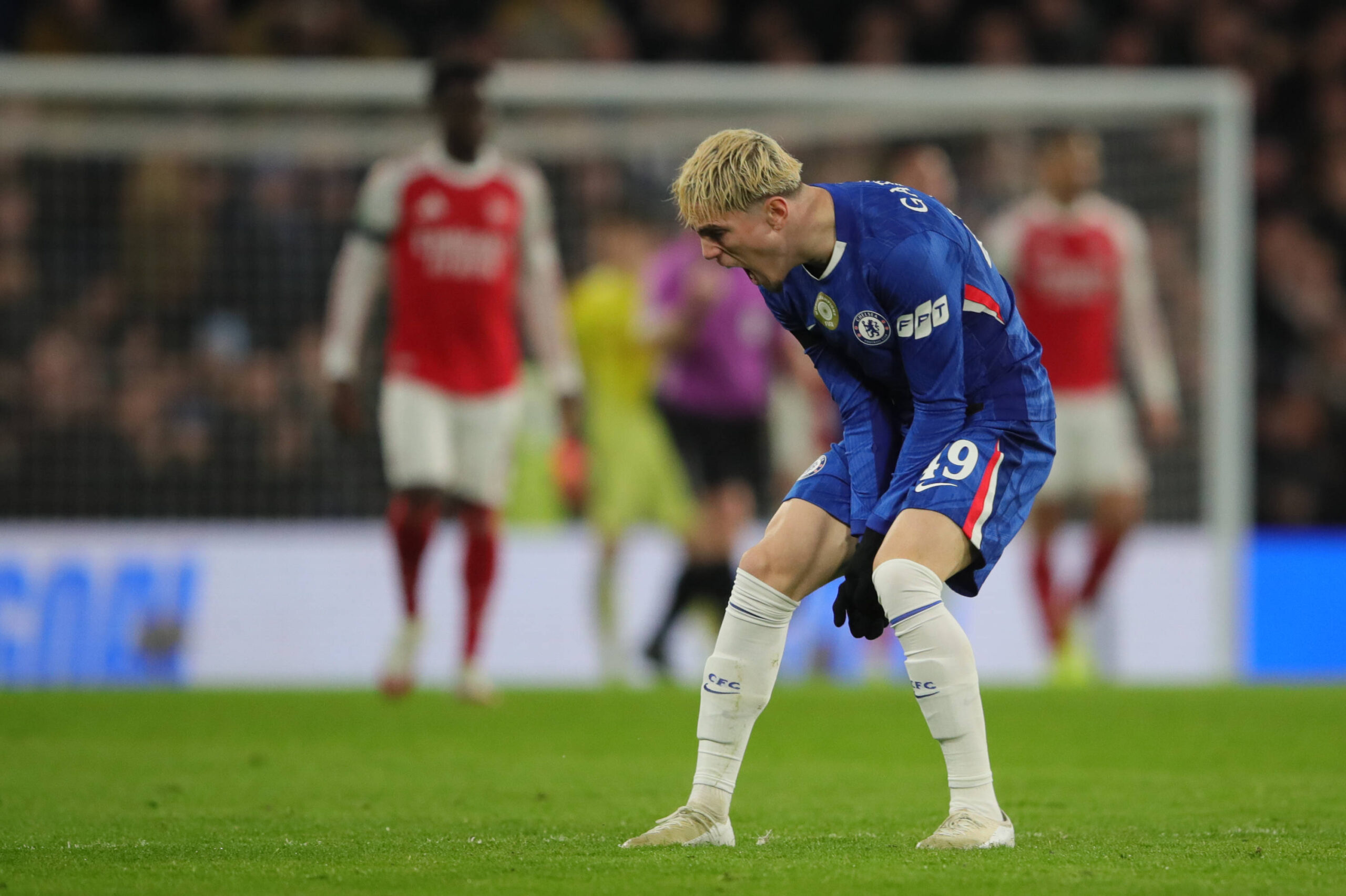
On the left, Alejandro Garnacho endured a dreadful half.
He lost the ball repeatedly in dangerous areas, killing attacks and feeding West Ham’s favourite moments.
Worse still, when defensive cover was needed for Jorrel Hato, it rarely arrived. The Dutchman was left isolated, dealing with wide threats without consistent support.
On the opposite flank, West Ham always had an escape route. Crysencio Summerville was a constant outlet, quick, direct, and difficult to contain once he had space to run into.
Chelsea could not slow him down, could not double up effectively, and could not stop the same sequence repeating.
That was what the boos were really about. The scoreline hurt, but the predictability was worse.
The Pivot: Chelsea Half-Time Substitutions That Changed The Game
This is where Liam Rosenior’s in-game management paid huge dividends.
At half-time, there were no speeches about patience or waiting for momentum. The response was immediate. Chelsea’s half-time substitutions arrived in a triple change: João Pedro, Marc Cucurella and Wesley Fofana.
The most obvious call was Garnacho off for João Pedro. It was an acknowledgement that the left side had been a problem in every phase of the game.
João Pedro instantly gave Chelsea something they had lacked for 45 minutes with control and security as an outlet that could connect play and prevent every wide move from turning into a West Ham counter.
Cucurella added urgency and edge, while Fofana allowed Chelsea to squeeze the pitch higher and win the ball back sooner.
The spaces West Ham had enjoyed having in the first half began to disappear. The counters that felt inevitable in the first half became harder to launch, then harder to sustain, then almost nonexistent.
Crucially, these were not just good ideas in theory. Rosenior’s tactical changes became the framework for the comeback itself.
Fofana helped provide the platform and territory, Cucurella dragged Chelsea level, and João Pedro delivered the decisive moment, the pull-back that allowed Enzo Fernández to win it in stoppage time.
Chelsea did not stumble into a rescue.
They were coached into one.
The Pattern And The Point: This Isn’t A One-Off, It’s The New Chelsea Habit
What elevates this Chelsea comeback vs West Ham beyond drama is how familiar the method already feels.
The same pattern appeared in the 3-2 Champions League win against Napoli, when the tempo and pressure exposed Chelsea early.
Instead of allowing the discomfort to turn into panic, Rosenior intervened quickly.
Adjustments were made, transitions were limited, and the match was stabilised before Napoli could turn control into separation.
That is Rosenior’s tactical changes in their purest form: problem identified, solution applied, match steadied
This is the all-important evolution.
Chelsea did not simply fight back, but the Blues are starting to look like a team with a coach who refuses to let a match sit in the wrong shape and hope the players sort it out.
Sometimes it takes bravery to chase a deficit. Sometimes it takes calm to protect a lead. Either way, the principle remains consistent. Spot the issue early and fix it early.
Chelsea are still a work in progress, but they no longer feel trapped inside their mistakes.
After years of waiting for matches to save them, that shift from hope to intervention, driven by Liam Rosenior’s in-game management and tactical changes, may be the most important change of all.
Main Photo
Credit: IMAGO/Sportimage
Recording Date: 31.01.2026