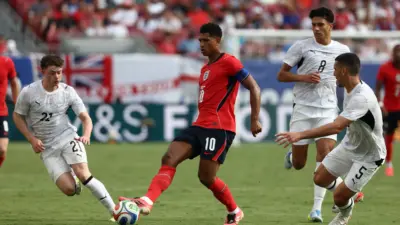


The World Cup has never felt like just another football competition. Every four years, it seems to produce players who step out of the ordinary and leave something lasting behind.
It is not always the top scorer or even the captain of the winning side who stands out, but often the one who carries their team through the pressure and expectation. Some moments are defined by brilliance, others by controversy, yet certain players end up shaping the entire feel of a tournament.
From Zidane’s class in 1998 to Messi finally lifting the trophy in 2022, each World Cup can often be remembered through a single figure.
While football fans now have access to detailed statistics and Premier League betting odds when assessing players and teams, the World Cup has repeatedly shown that individual performances can defy expectations.
Six World Cup Game Changers
Zinedine Zidane, 1998
Zinedine Zidane arrived at the 1998 World Cup with talent already known in France, but it was on home soil that he truly became a global name.
France went on to win their first-ever World Cup, and Zidane played a major role in that success. He scored twice in the final against Brazil, both from corners, as France managed to win 3-0 on home soil in Paris.
Those were his only goals of the entire tournament, but his impact from midfield was what made it even more special, setting the tempo of the games and creating plenty of opportunities for teammates. He was widely seen as the player who shaped France’s squad, taking a lot of credit for their success.
Ronaldo, 2002
Ronaldo’s 2002 World Cup is still seen by many as a story of redemption.
After a long spell of injuries that almost took him out of the game completely, he arrived in Japan and South Korea with something to prove. He went on to score eight goals in the tournament, finishing as the top scorer and guiding Brazil to their fifth World Cup title.
In the final against Germany, he scored twice in a 2-0 win, delivering on the biggest stage once again. His movement inside the box was sharp and instinctive, and at times he looked impossible to contain, shaping Brazil’s entire run through the tournament.
READ MORE: Premier League Matchday 8: Three Key Takeaways as Aston Villa Give Man City Their First League Loss
Zinedine Zidane, 2006
Eight years after his first triumph, Zidane once again became the main figure of a World Cup, this time in a very different way.
At 34, he led France through a difficult tournament with moments of real quality, especially in the knockout stages. He scored a composed penalty in the final against Italy, and for long periods controlled the tempo of the match.
However, the ending was dramatic, with his red card in extra time after an incident with Marco Materazzi. Even so, he was awarded the Golden Ball for the best player of the tournament, reflecting just how influential he had been throughout.
Diego Forlán, 2010
Diego Forlán was not the biggest star at the 2010 World Cup, but he quickly became one of the standout names at the tournament.
He scored five goals for Uruguay as they managed to reach the semi-final, their best run in decades. The way he mastered the infamous Jabulani ball was what made him stand out from other players, taking advantage of the new, never-before-seen ball shape and technology.
Uruguay was not expected to go as far as they did, but the forward’s performance played a huge role in gaining belief and momentum, winning the Golden Ball and ending as the tournament’s best player.
James Rodríguez, 2014
James Rodríguez made his breakthrough on the world stage in 2014 and left Brazil as the tournament’s most exciting player.
He scored six goals in five matches, taking home the Golden Boot despite Colombia only managing to make it to the quarter-finals. His volley against Uruguay remains one of the most iconic goals in World Cup history, which is one of the reasons he is so commonly associated with this campaign.
Playing just behind the striker, he combined his creativity and clinical finishing, becoming not just a goalscorer, but also a playmaker. Even though Colombia did not reach the latter stages, he was the face of the tournament in Brazil, attracting attention from all around the world.
YOU MAY ALSO LIKE: The Next Manchester United Head Coach Will Inherit Three Inescapable Problems From Day One

Kylian Mbappé, 2018
Kylian Mbappé truly broke through at the 2018 World Cup in Russia, where he announced himself on the global stage as one of the game’s most exciting young players.
At only 19, he scored four goals and became an important part of France’s run to the title. His pace and direct running caused constant problems for defenders, with few teams able to deal with his movement. He also found the net in the final against Croatia, becoming the first teenager since Pelé to score in a World Cup final.
France were strong throughout the tournament, but Mbappé’s sharpness in attack gave them an extra edge when it mattered most.
Lionel Messi, 2022
Lionel Messi finally completed his international journey in Qatar, producing the defining World Cup of his career.
He scored seven goals and provided three assists as Argentina went on to win the whole thing. He found the net in every knockout round and twice in the final against France, ending 3-3 before Argentina won on penalties.
His leadership and performances were key to guiding his country to the World Cup title, capping off his incredible career that only needed this prestigious trophy to complete it.
More World Cup News
World Cup 2030: Everything We Know So Far About Hosts, Dates, Qualification and Teams
2030 World Cup Final Venue Race Down to Morocco and Spain as FIFA Decision Nears