
With so many of football’s enduring superstitions, every supporter knows one, even if they refuse to admit it. The mate who will not wash a shirt during a winning run, the season-ticket holder who treats seat 114 as sacred ground, and the fan who takes the long route to the stadium because the team once won 4-0 after that particular walk.
Most of them know, perfectly well, that a scarf cannot stop a counter-attack. That is almost beside the point. Matchday habits make the hours before kick-off feel familiar. They give supporters something to do while the nerves build and the possible scorelines start playing in their heads.
Football’s Enduring Superstitions: Ritual Is Not The Same As Routine
There is a useful difference between a routine and a superstition, although football tends to blur it. A warm-up has a practical purpose. Leaving home early helps with traffic. Wearing the same socks because they were present for last Saturday’s win adds a different sort of logic: an ordinary object has been recruited into the story of the result.
The categories soon become tangled. That longer route may avoid a crowded station, but perhaps it also passes the pub where everyone met before a famous cup tie. A favourite seat offers a good view and holds a stack of memories. After enough matches, efficiency, and nostalgia, superstition can occupy the same few square meters.
Then there is the order of things. Coffee. Shirt. Message the group. Check the weather. Play the same song on the way out. None of it troubles the opposition, yet the sequence helps the day click into place. It is the supporter’s own warm-up.
Football’s Enduring Superstitions: Uncertainty Gives Superstition Its Grip
Football leaves plenty of room for this kind of thinking. A side can dominate for 89 minutes and concede from a deflection. A referee can miss something. A substitute can change the mood with his first touch. Preparation matters enormously, but the afternoon never follows a script.
For supporters, that uncertainty comes with an awkward detail: they care deeply and control very little. Singing can lift the ground, but nobody in row 20 chooses the formation or takes the late penalty. Small rituals fill that gap. They make waiting feel active rather than helpless.
This is more than terrace folklore. A qualitative study of football-fan superstition published in Frontiers in Psychology examined habits connected with clothing, routes, homes, and fixed places in the stadium. The researchers linked those behaviours to the search for order, the strain of uncertainty and the way supporters express identity. They did not find that fans were secretly steering results from the sofa.
The fact that many rituals begin in the morning makes sense. Anticipation is not dead time before the real event; it is part of the event. Repeating a known sequence cuts down the fuss, settles the mind, and creates a bridge between an ordinary Saturday and the moment the teams emerge.
Football’s Enduring Superstitions: Luck Is Also A Design Language
Sport does not own the language of luck. It appears throughout entertainment because a horseshoe, a burst of gold, or a treasure chest communicates possibility before anyone has read an explanation. We recognise the code at a glance.
That visual vocabulary is easy to spot in catalogues such as Jackpot City’s online slots, where differently themed titles use familiar signs of fortune and discovery. These lobbies rely on varying volatility models, return-to-player specifications, and software mechanics that organise diverse mathematical designs into distinct themes. There is an interesting cultural echo here, but not a mechanical one. A digital game follows its programmed rules. A football shirt becomes ‘lucky’ because somebody wore it during a comeback and kept the story alive.
The same word is doing different work. ‘Luck’ may describe a wicked deflection, set the mood for a game, or simply express a supporter’s hope before an away fixture. In each case it gives uncertainty a recognisable face. That shared language is why the symbols travel so easily between sports, stories, and games.
YOU MAY ALSO LIKE: Cody Gakpo Form: Why The Flying Dutchman Deserves A Starting Berth For Liverpool

Football Enduring Superstitions: Private Habits Become Shared Football Culture
One person’s odd habit can become a group tradition surprisingly quickly. Friends meet beneath the same clock. They enter through the same gate. Somebody repeats the joke that was funny three seasons ago, and everyone complains if it is forgotten. By kick-off, dozens of tiny cues have confirmed that this is their matchday.
Our look at Germany’s distinctive supporter culture shows how strongly timing, atmosphere, and established customs can shape a fan base’s idea of itself. Not every tradition is a superstition, of course. The connection lies in repetition and recognition: people know what is supposed to happen next, and a change can feel larger than it looks from outside.
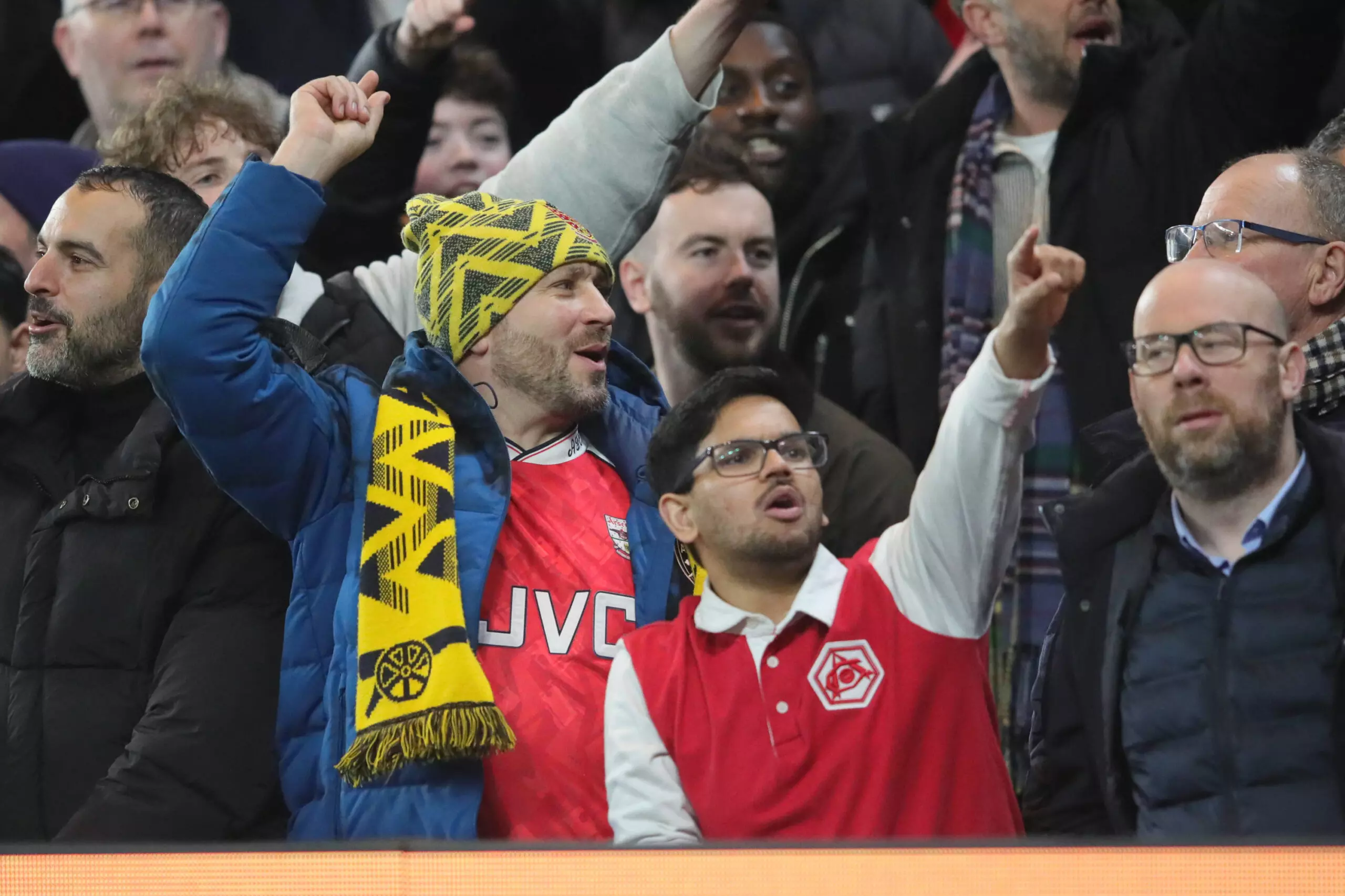
These habits also carry history in compact form. A café recalls an old away trip. A battered scarf belonged to someone who first took its owner to the ground. A song brings back a player who has long since retired. The objects are not powerful by themselves. They matter because football supporters are excellent archivists of feeling.
Football’s Enduring Superstitions: Why The Ritual Survives A Defeat
Logically, a lucky shirt should lose its job after the first defeat. Sometimes it does. It gets pushed to the back of the wardrobe, a seating arrangement is changed, or a new route is tested. Just as often, nothing happens. The habit survives the evidence against it.
That is because the score was never its only purpose. Big wins produce vivid memories, while routine losses blur into one another. Repetition makes the object familiar, and familiarity becomes comforting. Eventually, nobody needs to argue that the ritual causes anything. It is simply how the day is done.
This is the lovely contradiction at the heart of football superstition. A supporter can know that moving seats will not affect a striker’s finishing and still feel uneasy about moving. Knowledge and feeling do not always keep the same league table. The ritual brings rhythm, memory, and companionship to an unpredictable sport. Frankly, matchday would be poorer without a few harmless peculiarities.
More Premier League News
Reece James Position: Why A Tweak To His Role Can Significantly Benefit Chelsea
Moises Caicedo Injury: Chelsea Unable To Solve Double Pivot Problem Without Their Ecuadorian Engine