
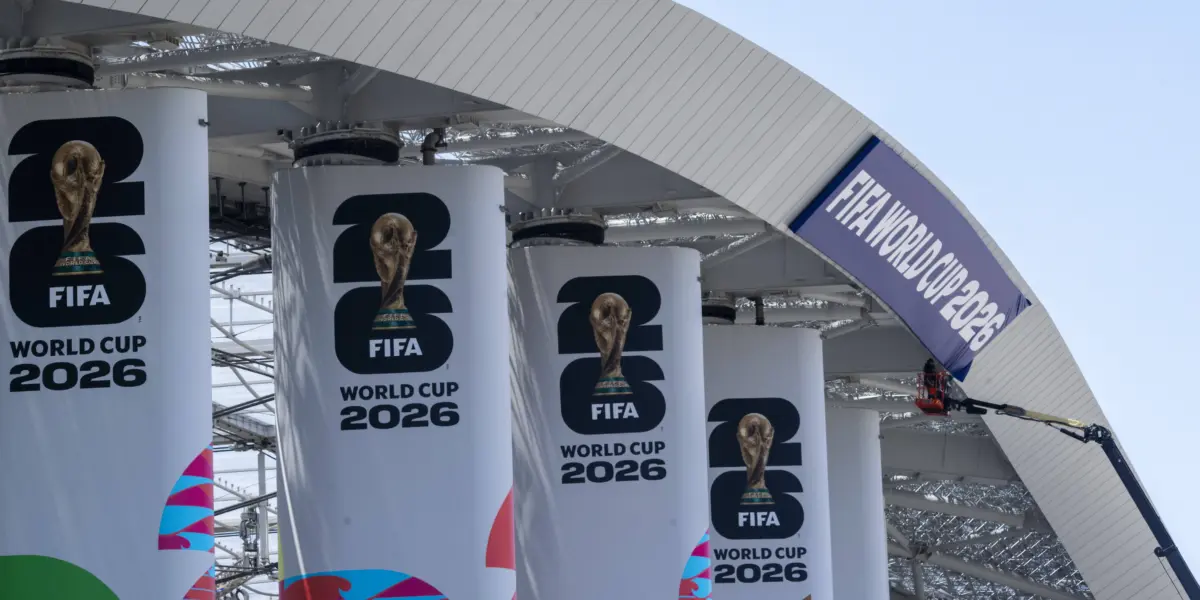
The 2026 FIFA World Cup is less than 13 hours away, but unlike previous editions, the build-up to football’s biggest tournament has been accompanied by an unusual sense of concern rather than pure excitement.
Traditionally, the World Cup brings a unique atmosphere of anticipation, joy, and celebration as fans around the globe prepare to witness the pinnacle of international football.
However, this year, much of that enthusiasm appears to have been overshadowed by growing worries surrounding the tournament’s organisation and host nations, which have fuelled fan concerns ahead of the 2026 World Cup.
For a competition with such historic significance, the focus should be on the milestones set to define it.
The 2026 edition will be the first in history to feature 48 teams, expanding from the traditional 32-team format, while also becoming the first tournament to be jointly hosted by three countries: the United States, Canada, and Mexico.
The expansion offers greater opportunities than ever before, allowing more nations to participate and giving players from across the world a bigger stage on which to showcase their talents.
Yet, instead of discussions centering on the football itself, much of the conversation in recent days has revolved around issues involving fans, players, staff members, and even tournament officials.
As a result, criticism of the host nations – particularly the United States – has intensified, with some observers questioning whether the country is adequately prepared to host an event of this magnitude.
Many of the headlines in recent weeks have stemmed from visa-related restrictions sparking World Cup controversy.
US World Cup immigration concerns have become a major talking point ahead of the tournament, and under Donald Trump’s renewed focus on tightening immigration enforcement and curbing illegal entry, there has been what some fans describe as an unusually strict approach toward several nationalities.
Why the Choice of the United States as the 2026 World Cup Host Has Sparked Backlash
Memories of the Club World Cup in the United States remain fresh among supporters, and not always for the right reasons. The tournament was overshadowed by several non-football-related incidents that raised concerns about the country’s readiness to host major international competitions.
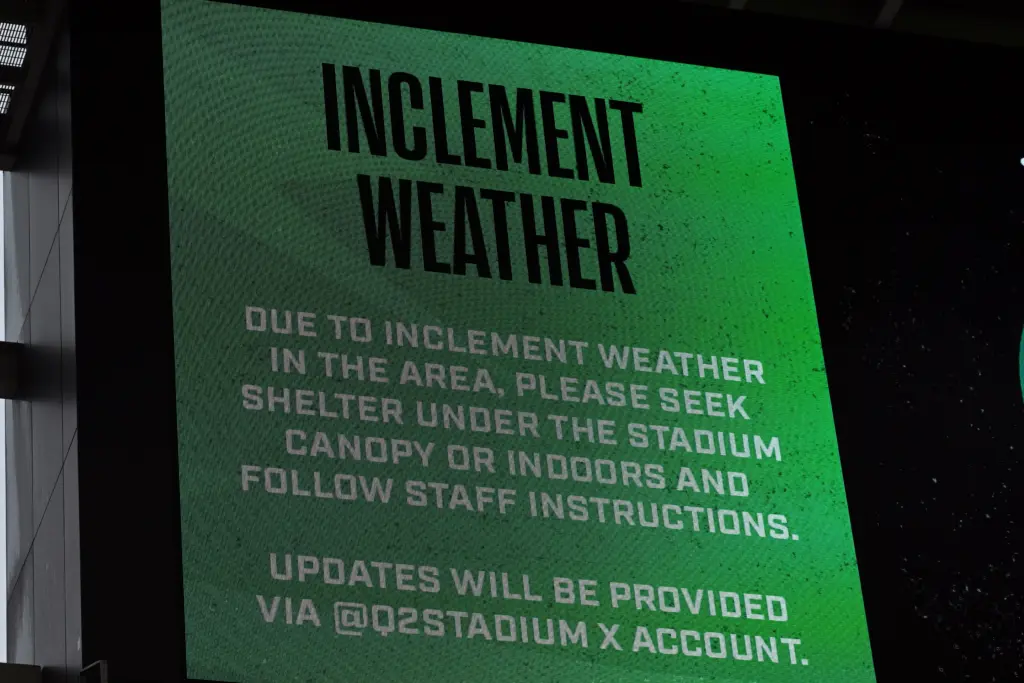
One of the biggest issues was the repeated disruption caused by severe weather conditions.
A total of six matches were temporarily suspended due to lightning storms, highlighting a challenge that could resurface during the 2026 FIFA World Cup.
With many matches set to be played across the United States, concerns have grown that weather-related interruptions could once again affect the tournament and the overall fan experience.
These fears have led many supporters to question the decision to stage the World Cup in a country where weather disruptions have already proven problematic.
For traveling fans who invest substantial amounts of money in flights, accommodation, and match tickets, the possibility of delays, cancellations, or other unforeseen complications is a major source of anxiety.
Adding to those concerns are the latest travel and entry restrictions that could impact supporters from certain countries. With some fans potentially facing difficulties entering the United States despite making significant financial commitments, frustration has continued to grow.
As a result, a section of the football community has already begun describing the 2026 World Cup as one of the most controversial and potentially problematic editions in the tournament’s history.
2026 FIFA World Cup: The Major Events and Controversies of the Last 48 Hours
1) While his teammates departed for the U.S., authorities placed Embolo’s Electronic System for Travel Authorisation (ESTA) under a manual review.
The background of the review stems from a historic Swiss court ruling. In 2023, Embolo received a suspended fine for making multiple threats during a 2018 altercation in Basel.
Under strict US continuous immigration vetting, this criminal record triggered an automatic flag in the system. After spending three days with the immigration authorities, he was later cleared and was able to join his team.
2) Iraqi national team captain Aymen Hussein was held for questioning upon entering the United States.
While the rest of the Iraqi delegation passed through customs normally, Hussein was pulled aside into a secondary screening room for an interrogation that lasted nearly seven hours.
The striker, who scored the historic goal that secured Iraq’s first World Cup appearance in 40 years, faced extensive questioning upon arriving at Chicago O’Hare International Airport.
During the detention, the security personnel conducted thorough administrative vetting, which included a complete manual search of his mobile phone and social media profiles.
It was not until the Iraqi officials worked with airport authorities that he was released, but he had missed the team’s initial transport to their base.
3) Due to political tensions between the US and Iran, the national team experienced severe logistical disruptions and were given strict visa policies.
The team spent an extended period at a Consulate in Turkey trying to secure visas for their entire travelling party.
Ultimately, at the end of the procedure, 13 to 15 key delegation members – which included the team’s medical staff, technical assistants, and the president of the Iranian Football Federation, Mehdi Taj – were denied entry visas.
Under the specific terms mandated by US immigration, the team is under strict “match-day only” entry conditions.
This means the squad must train in Mexico, fly or commute across the border into US host cities (such as Los Angeles and Seattle) shortly before kick-off, and immediately fly back to Mexico once the game finishes, with no permitted overnight stays on American soil.
4) Somali referee Omar Artan, who was named CAF’s Best African Referee of 2025, was denied a visa and the chance to become his country’s first-ever official to referee at a men’s FIFA World Cup finals.
Upon clearing U.S. Customs and the Border Protection (CBP) flagged him for secondary screening. He was subjected to an 11-hour interrogation and held in a detention cell.
He was later deemed “inadmissible”, stripped of his travel authorisation, and put on a return flight back to Turkey.
The Department of Homeland Security (DHS) later revealed that the reason behind his denial into the U.S. was due to “vetting concerns.” But later, an anonymous senior US official later confirmed that Artan was denied entry due to an alleged “association with suspected members of terror organisations.”
The deportation of Artan has spread throughout social media and has quickly become one of the biggest examples of the ongoing pre-World Cup controversy.
YOU MAY ALSO LIKE: World Cup Weather Concerns Grow Ahead of 2026 Tournament as Heat and Storms Threaten Games
5) Uzbekistan national team head coach and 2006 Ballon d’Or winner Fabio Cannavaro appeared visibly stunned and uncomfortable after his squad encountered unexpected security checks upon arriving the Icahn Stadium in New York City on Monday.
The Uzbek delegation had travelled to the venue by team bus ahead of a pre-World Cup friendly against the Netherlands.
However, instead of being escorted directly into the stadium’s locker rooms, as is customary for international teams, players and staff were stopped outside the stadium gates by local law enforcement and security personnel.
Members of the squad were instructed to place their personal luggage and equipment bags on the pavement while security officers conducted thorough inspections.
Armed handlers then guided bomb-detection and narcotics-sniffing dogs over the team’s belongings as part of a security sweep.
Footage of the incident quickly spread across social media, generating widespread discussion about the stringent security measures being enforced in several US host cities ahead of the 2026 FIFA World Cup.
The controversy intensified after fans and journalists noted that the Netherlands delegation, which arrived at the same venue for the same match, reportedly did not undergo similar public screening procedures.
6) Some Scottish supporters, despite being eligible to enter the US visa-free under the ESTA program, had their travel authorisations revoked just days before departure.
Many supporters had received ESTA approval weeks before their planned trip, with some obtaining authorisation more than a month in advance.
However, in a shocking turn of events, several fans discovered that their status had suddenly changed from “Approved” to “Pending” just days before their scheduled flights to the United States for Scotland‘s opening World Cup match against Haiti in Boston.
The situation worsened when those same applications were subsequently updated to “Travel Not Authorised,” effectively preventing the affected supporters from entering the country.
Adding to the frustration was the lack of any official explanation. In line with standard US immigration procedures, neither the applicants nor US authorities provided specific reasons for the sudden reversal, leaving many fans confused and scrambling for answers just days before the tournament.
7) For many football supporters, attending a FIFA World Cup and witnessing the world’s best players compete on the biggest stage is a dream come true.
However, due to the strict entry and visa restrictions imposed by the United States, many fans who had already purchased match tickets, booked flights, and secured accommodation found themselves facing significant financial losses after their visa or travel authorisation applications were rejected.
To make matters worse, a large portion of these expenses were non-refundable, leaving supporters not only devastated at missing the tournament but also burdened with costs they had little chance of recovering.