
Journalist – “Would you prefer to stay at the club in January or play the AFCON?”
Haller – “This question shows the disrespect for Africa,” Haller said. “Would this question ever get asked to a European player ahead of the Euros? Of course I will go to AFCON to represent Ivory Coast – that is the highest honour.”
This was the conversation between a European journalist and former Ajax striker Sebastian Haller in 2022, when he was pressed on whether he would prefer to remain at the club or attend the AFCON. Three years later, little has changed regarding how outsiders view the competition.
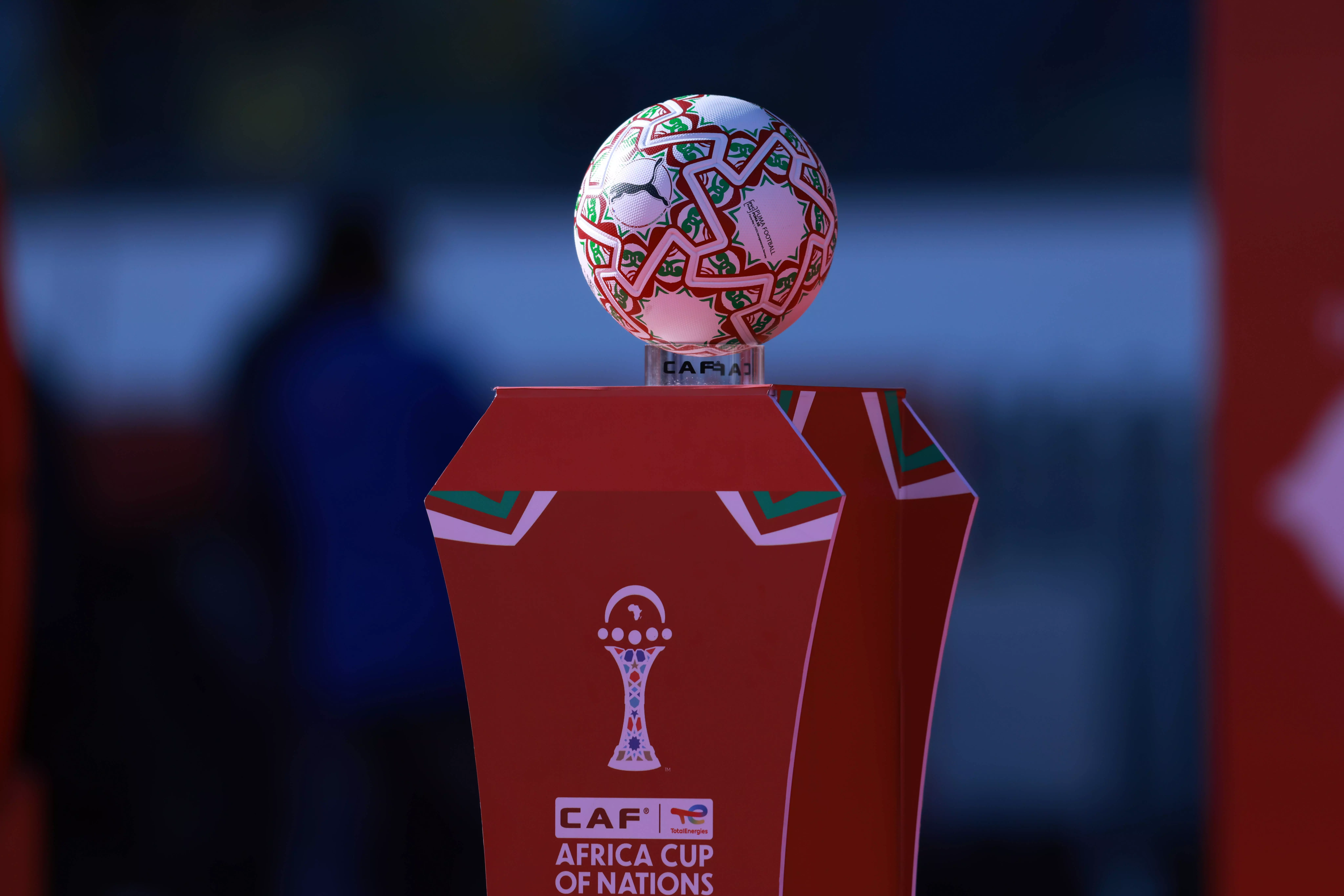
Since 1968, the Africa Cup of Nations, traditionally held every two years (set to move to a four-year cycle from 2028) has consistently delivered scintillating performances, high drama, elite quality and stories that rival any major international tournament in world football. From packed stadiums, passionate fans, elite talent on display, to unpredictable outcomes, all these, are hallmarks of the competition.
Yet, despite its rich history and ever-growing quality, the competition continues to be undervalued and misunderstood in much of Europe.
This lack of respect is not just unfair; it stems from outdated perspectives of the competition and a deeply rooted structural bias that continues to undervalue African football.
Persistent Stereotypes and Outdated Narratives
One of the key reasons African football – not just AFCON – continues to struggle for recognition among European counterparts is the persistence of long-held stereotypes that have shaped perceptions from the very beginning. A belief that African football is chaotic, disorganised and game play is mostly physical with little to no technical or tactical input. These narratives ignore how far African football has evolved.
Modern AFCON is defined by elite tacticians and players who have developed and refined their skills at the highest levels of European football, operating within well-organised national teams. Countries such as Nigeria, Egypt, Senegal, Morocco, and Algeria now combine athleticism with tactical discipline, structured pressing systems, and technical quality that rivals any international side.
And proof of this upgrade was visible at the 2022 World Cup, where African nations showed quality and finished in the competition with seven wins after defeating European heavyweights. Cameroon defeated Brazil 1-0, and Ghana defeated South Korea 3-2.
Morocco, which became the first African side to reach the semifinals of the World Cup, achieved multiple victories against European teams en route to that historic run. The Atlas Lions defeated Belgium 2-0, Canada 2-1, beat Spain on penalties in the round of 16 and also secured a 1-0 victory over Cristiano Ronaldo’s Portugal in the quarter-finals.
Senegal defeated the host nation Qatar 3-1 and Ecuador 2-1 to advance from their group. Tunisia defeated the defending champions and eventual finalists, France, 1-0 in their final group stage match.
With these impressive results, it’s still mind-boggling that the AFCON is still not given its deserved respect. Yet, just one mistake, refereeing controversy, or logistical challenge is often amplified to define the entire tournament, something rarely done in European competitions.
Double Standards: How AFCON Is Undervalued Compared to Other Continental Tournaments
European competitions like the UEFA Champions League, Europa League, and domestic leagues are held in the highest regard. Due to this, international tournaments outside Europe – where clubs risk losing their star players – are often seen as disruptions rather than celebrated for the richness they bring to global football. This perception of AFCON subtly diminishes the tournament, portraying it as an inconvenience rather than the important, prestigious competition that African players aspire to win.
Ironically, when Asian players leave clubs for the AFC Asian Cup, the narrative is entirely different: national duty is honoured, not questioned. For instance, the 2023 Asian Cup (held in early 2024) saw more than 50 Premier League players called up for the competition.
YOU MAY ALSO LIKE: Kylian Mbappe Fails to Break Ronaldo’s Record in Final La Liga Game of the Year, but Other Milestones Remain Within Reach

The Media’s Role in AFCON’s Undervalued Global Image
The Media also plays a big part in why the AFCON competition still doesn’t appeal to many other nations. Take, for example, global viewership. AFCON 2023 attracted between 1.4 and 2.2 billion viewers, which represents roughly 28% to 44% of the audience drawn by the UEFA European Championship (Euros 2024), which exceeded five billion viewers.
Despite AFCON’s rapid visibility growth – boosted by partnerships with over 30 European broadcasters – the tournament still reaches a significantly smaller portion of the global football audience compared to the Euros.
Media attention plays an enormous role in shaping perception. In Europe, AFCON coverage is often reactionary, or framed around negative talking points like fan turnout, refereeing errors, upsets, or off-field problems.
On rare occasions, European sports networks (TV or radio) consistently cover AFCON games with the same in-depth analysis and attention afforded to the Euros or Copa America.
Conclusion
Arsenal’s iconic manager, Arsene Wenger, attended the 2023 AFCON final between Nigeria and Cote d’Ivoire. After the match, when asked about the quality of the tournament, he said
“I would say that there have been remarkable improvements since the last tournament on the pitch, off the pitch, the organisation, the quality of the pitches, the level of organisation on the pitch as well, and the commitment was intense.”
“Overall, it was a tournament of the small margins between the teams.”
“I must say, as well, it shows that information travels very quickly, and the phenomenon that we have seen there is that there was little space to play. The compactness of the team was what we had already seen in Doha at the 2022 Fifa World Cup. And, it looks to be a trend in the world, that teams don’t give space away.”
AFCON is more than just a “little” football tournament outsiders see it to be. It is a cultural event that brings together a continent. For players, lifting the trophy brings a sense of fulfilment and fuels national pride – a feeling club honours wouldn’t bring.
Perhaps, instead of Africans continually trying to prove to Europeans that we have raised our standards over the past decade to earn their respect, we should look inward and question why we need their validation this bad. AFCON continues to grow in quality, organisation, competitiveness, and global relevance, regardless of how it is perceived from the outside.
As African nations keep excelling on the world stage and silencing doubters at successive World Cups, and as AFCON consistently produces world-class stars, the narrative surrounding the tournament will inevitably change. Until then, the focus must remain on staying the course – improving structures, celebrating our identity, and showcasing the beauty, passion, and intensity of African football – while reminding the world that footballing excellence does not begin and end in Europe.
AFCON doesn’t need Europe’s approval to matter. It already does.
Main Photo
Credit: IMAGO / Sebastian Frej
Recording Date: 22.12.2025