

The Premier League has built its reputation on intensity, unpredictability, and moments that define entire seasons.
Titles are won by a handful of points. Relegation is often decided on the final day. European qualification can hinge on a single goal difference.
At this level, the gap between teams is rarely about quality alone. It is about the fine margins in the Premier League, the small, often overlooked moments shaped by probability rather than dominance.
When One Moment Changes Everything
Every Premier League season delivers examples where a single moment reshapes the table. A missed penalty in April. A deflected goal in stoppage time. A red card that forces a team to defend for 70 minutes.
Clubs like Manchester City, Arsenal and Liverpool have often been separated by the smallest of gaps in recent title races. In these situations, it is not always sustained superiority that decides outcomes, but isolated moments that carry disproportionate weight.
A late winner might only represent one shot out of many, but its timing transforms its importance. The probability of scoring in that moment may be low, but when it happens, it defines the narrative.
Take Arsenal, for example. They have had the upper hand in the 2025/26 Premier League title race, but some moments have thrown them off track, and allowed Manchester City to edge closer to them.
Against Bournemouth on Saturday, April 11, the Gunners conceded a late goal to lose the game 2-1 at home, in a crucial part of the season. Now, Man City are only six points behind them with a game in hand.
Arsenal conceded that goal, with Martin Zubimendi not taking notice of Alex Scott’s run, which went from a casual jog to a full sprint, allowing him to put the goal into the back of the net. It’s moments like that that Arsenal will want to avoid when they face Pep Guardiola’s men in the next Gameweek.
xG and the Story Beneath the Scoreline
The rise of expected goals (xG) has given fans and analysts a clearer way to interpret these fine margins. Rather than focusing solely on results, xG looks at the quality of chances created.
Teams like Arsenal have, at times, produced high xG numbers without converting them into goals. On paper, their performances suggest control and attacking efficiency. In reality, matches can still be lost.
This disconnect highlights a key truth: football is governed by probability, but played within limited time. Over 38 games, patterns tend to balance out. Within 90 minutes, variance can take over.
We can go back to Arsenal’s home defeat to Bournemouth on April 11 as a clear illustration.
The Gunners created chances worth around 2.32 xG to Bournemouth’s 1.19, dominating the underlying quality of opportunities and even equalising from Viktor Gyokeres’ penalty. Yet they lost 2-1 after Junior Kroupi’s early strike and Alex Scott’s 74th-minute winner.
It’s the perfect example of how xG can tell one story of control while the final scoreline shows variance winning out in a single 90 minutes.
READ MORE: Tottenham Hotspur Relegation Battle: Are Europe’s Top Clubs Facing The Same Risk?
Decision-Making in Real Time
Managers operate in this space constantly. Every substitution, tactical shift, or formation change is influenced by how they interpret probabilities in the moment.
Should a team protect a narrow lead or push for a second goal? Should a striker be replaced early or trusted to find a breakthrough? These are not purely instinctive decisions. They are judgments based on risk and likelihood.
In high-pressure matches, these decisions often define outcomes. A single tactical adjustment can increase or decrease the probability of success in subtle but meaningful ways.
When Michael Carrick took over from Ruben Amorim at Manchester United, he turned Benjamin Sesko into a super sub. Sesko has often come on as a late substitute in the Premier League, adding fresh legs and goals late in United’s games, influencing the final result.
Understanding the Framework Behind Outcomes
What makes the Premier League compelling is not just its unpredictability, but the structure beneath it. Matches may feel chaotic, but they are shaped by patterns, shot quality, positioning, momentum, and decision-making.
This structured uncertainty is not unique to football. It exists in other environments where outcomes are influenced by defined systems.
In a Premier League context, probabilities are expressed through metrics like xG and match odds. In other structured systems, such as a UK casino, outcomes are similarly shaped by known variables, odds, payout models, and statistical distributions.
The comparison is not about equating the experiences, but about recognising a shared principle: results are rarely random in isolation. They are part of a broader framework that determines how likely certain outcomes are over time.
This perspective shifts how matches are understood. Instead of asking why a team lost, the more relevant question becomes whether the outcome aligned with the probabilities suggested by performance.
Take Brentford’s 2025/26 campaign as a perfect illustration. The Bees have ranked among the top five sides for expected goals generated per game (1.59 xG/90 across 32 matches) while conceding at a solid rate, yet early-season variance in finishing and goalkeeping kept results erratic and them hovering around mid-table.
As the campaign entered its final stretch in April, those underlying probabilities began to align exactly with the framework of shot quality, positioning and decision-making, steadily lifting Brentford into a comfortable position.
It shows how the Premier League’s structured system ultimately governs long-term outcomes, even when short-term variance masks the picture, just as payout models and odds do in a UK casino.
Momentum and Probability Swings
Football is dynamic, and probabilities change throughout a match. A goal does more than alter the score. It reshapes the entire game.
When a team takes the lead, the probability of winning increases significantly. The opposing team must then take more risks, which can create opportunities at both ends of the pitch. This is why late goals, counterattacks, and defensive errors become more likely in certain phases of a match.
These shifts are not random. They are responses to changing conditions, where teams adjust their behaviour based on the evolving probability landscape.
Take Liverpool’s 1-0 win over Nottingham Forest earlier in the 2025/26 season. With the score level deep into stoppage time, Alexis Mac Allister’s 97th-minute strike turned one point into three.
The Reds have won three matches with last-minute or injury-time goals while also conceding eight Premier League goals in the 90th minute or later this season.
Once a goal goes in late, the trailing team is forced to chase, opening space for counterattacks and defensive errors at both ends. That one moment dramatically tilts the probability of victory, turning a likely draw into a decisive result and showing how momentum reshapes the entire game in real time.
The Importance of Marginal Gains
Top Premier League clubs invest heavily in marginal gains, small improvements that can influence outcomes over time. This includes everything from player positioning and set-piece routines to recovery strategies and data analysis.
The reason is simple: when margins are tight, even minor advantages can make a difference. A slightly better defensive line can prevent a goal. A marginally improved finishing rate can turn draws into wins.
Over a season, these small edges accumulate. They may not always be visible in a single match, but they shape long-term success.
Take Arsenal‘s focus on set-piece routines this season. By hiring dedicated specialists and refining delivery and movement patterns, they have turned dead-ball situations into a repeatable edge in a league where set-piece goals now account for over 25% of all strikes.
In several tight 2025/26 fixtures, these marginal gains have converted potential draws into vital wins, quietly piling up the points that keep them top of the table despite the closeness of the Premier League title race.
Why the Best Team Doesn’t Always Win
One of the defining characteristics of football is that the better team on paper does not always win on the day. A team can dominate possession, create more chances, and still lose due to a single moment.
This is where probability and variance intersect. Over time, stronger performances tend to produce better results. But in individual matches, variance allows for unpredictability.
This balance is what keeps the Premier League compelling. It rewards consistency over a season, while still allowing for unexpected outcomes in individual games.
Take Chelsea’s away trip to Manchester United earlier in 2025/26.
The Blues started the game strongly and were favourites on paper, having been in a better position than United at that stage of the season, but goalkeeper Robert Sanchez received a straight red card inside five minutes for a challenge on Bryan Mbeumo.
Reduced to ten men, Chelsea‘s probabilities of winning or even drawing collapsed early on; United capitalised to lead 2-0 before half-time and held on for a 2-1 victory.
The red card turned a balanced contest into an uphill battle that even a superior squad couldn’t overcome in 90 minutes.
Data and the Modern Game
The increasing use of data has transformed how football is analysed and understood. Broadcasters and analysts regularly reference insights from organisations like BBC Sport, which help contextualise performances beyond the final scoreline.
Statistics such as shot maps, pressing intensity, and chance quality provide a deeper understanding of how matches unfold. They do not remove uncertainty, but they make it easier to interpret.
For fans, this adds another layer to the experience. Matches are no longer just watched. They are analysed, debated, and understood through multiple perspectives.
Take BBC Sport’s mid-season xG deep-dive in January 2026. Their analysis showed Arsenal posting the league’s strongest xG difference despite occasional dropped points, while highlighting how Manchester City’s underlying numbers kept them firmly in the title hunt even when results fluctuated.
Fans and pundits could suddenly see beyond the Premier League table to the real story: Arsenal’s control was sustainable, but City’s efficiency meant the race would go down to the wire – turning every weekend’s fixtures into a probability puzzle.
YOU MAY ALSO LIKE: Nottingham Forest vs FC Porto: All To Play For In The UEFA Europa League Quarter-Final Second Leg

The Balance Between Structure and Drama
The Premier League thrives on its ability to balance structure and drama. It is a competition shaped by data, tactics, and probability, but defined by moments that feel spontaneous and emotional.
A last-minute goal at Anfield. A crucial save at the Emirates. A controversial decision at the Etihad. These are the moments that fans remember, even though they are part of a larger, structured system.
This duality is what makes football unique. It is both predictable and unpredictable, structured and chaotic.
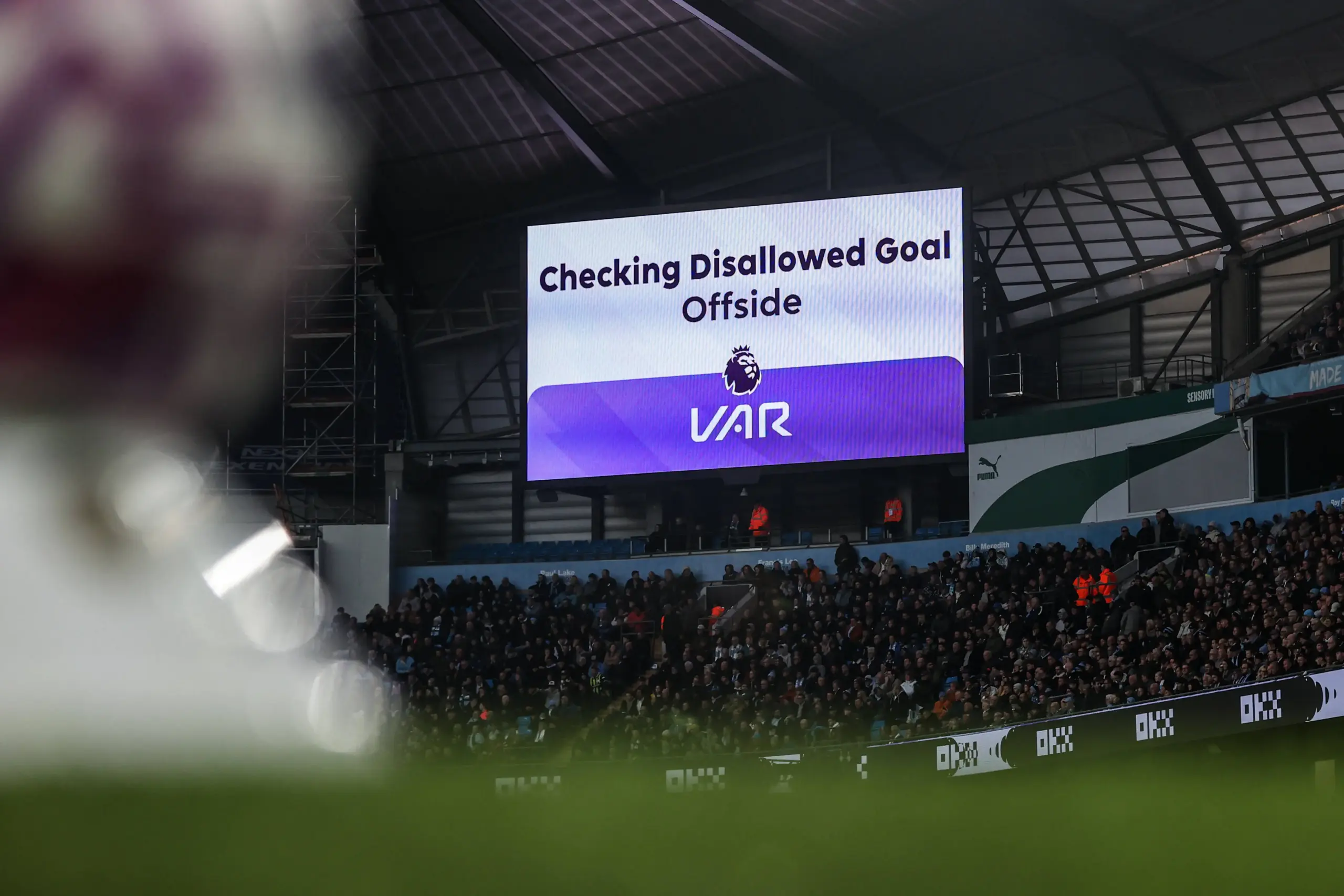
Take the VAR drama in Bournemouth’s 2-2 draw with Manchester United in Gameweek 31. Two key red-card calls went under the microscope – one for a potential hair-pull and another for a late challenge – with VAR ultimately upholding decisions that left both sets of fans furious.
The calls swung momentum in real time, turning a routine fixture into a flashpoint that dominated debate long after the final whistle and reminded everyone that even the most structured technology can’t eliminate the raw drama of split-second human judgment.
Seeing the Game Differently
Once you begin to view the Premier League through the lens of probability, the game changes.
A missed chance is no longer just frustration. It is a low-probability event failing to convert. A late winner is not just dramatic. It is a rare outcome occurring at the most decisive moment.
This perspective does not take away from the excitement. It enhances it. It provides context to the chaos and explains why the smallest margins can have the biggest impact.
In the end, the Premier League is not just a competition of skill and tactics. It is a competition of probabilities, where every pass, shot, and decision contributes to an outcome that is never guaranteed, but always shaped by the numbers behind the game.
Main Photo
Credit: IMAGO /News Images
Recording Date: 03.11.2025