
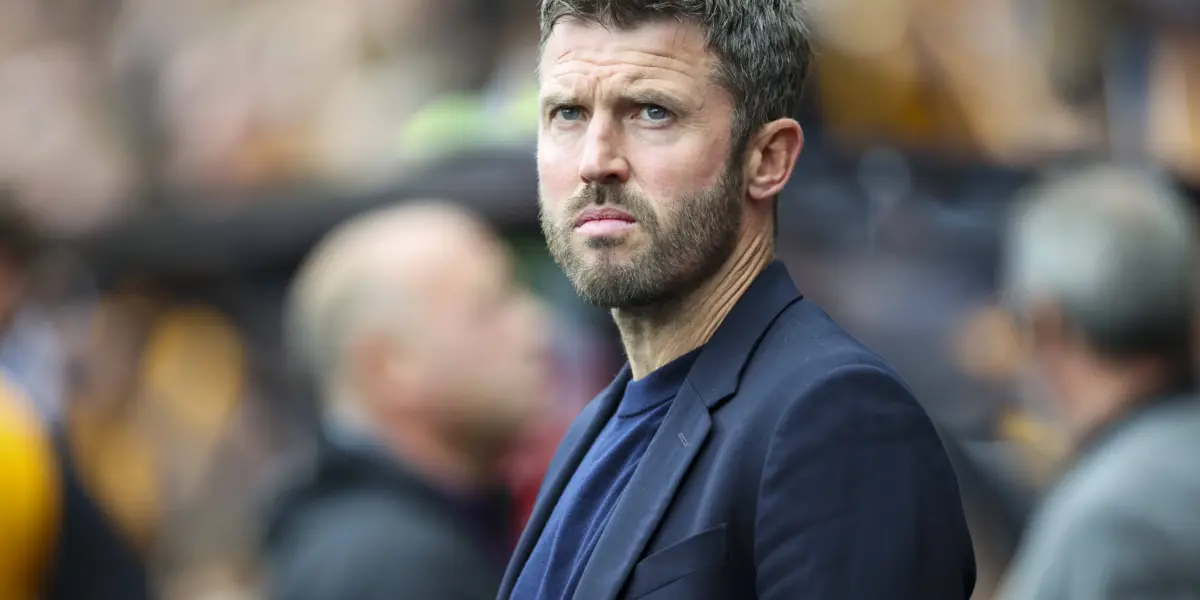
Manchester United’s Premier League title aspirations have already suffered multiple blows just three games into the new season, with the latest coming in the form of a last-gasp equaliser against a stubborn Everton side.
For a club that entered the campaign with renewed optimism following a remarkable turnaround under Michael Carrick, the early results have provided a timely reality check.
At the end of last season, optimism filled the air around Old Trafford. There was a growing belief that greater things could be on the horizon with Carrick in charge, particularly after Manchester United fans finally saw glimpses of the team they had grown accustomed to watching in years gone by.
The mood had changed, and for the first time in a while, there appeared to be genuine reasons for supporters to believe that the club was heading in the right direction.
Ruben Amorim’s spell as Manchester United head coach lasted just over 14 months and was marked by a frustrating lack of consistency. His tenure often felt like two steps forward and ten steps back, leaving the club desperately craving stability. When Michael Carrick took over, however, the former midfielder provided exactly what Man United had been missing.
The Englishman won 11 of his 16 games in charge, restored confidence within the squad and ultimately guided the club back into the Champions League.
Credit where it is due: he inherited a team that had endured a turbulent period and managed to give it a sense of direction at a crucial stage of the campaign.
His impressive spell as interim manager eventually earned him the opportunity to become the permanent head coach of the Red Devils, entering the 2026/27 season with expectations naturally rising.
However, fighting for a place in the Champions League is one thing; competing in the Premier League title race is an entirely different challenge.
The early weeks of Manchester United’s 2026/27 season have already highlighted that distinction. Carrick may have made United more stable and competitive, but the performances and results so far suggest there are still significant gaps between this team and the level required to sustain a genuine title challenge over 38 Premier League games.
That does not erase the progress Carrick has made. Instead, it puts his work into perspective. United are clearly moving in a more positive direction, but whether they are ready to challenge for the biggest prize in English football is another question entirely.
The ambition may be returning to Old Trafford, but Manchester United’s title chances will ultimately be determined by consistency, squad depth and the ability to compete with the Premier League’s best sides week after week.
Manchester United’s Premier League Title Race: The Financial and Depth Disparity
This season, one of the biggest reasons Manchester United’s Premier League title hopes remain questionable is the gap between their squad depth and that of their closest rivals.
While United have taken a more calculated approach under INEOS, other Premier League contenders have spent heavily to build squads capable of competing on multiple fronts.
In the just-concluded summer transfer window, Manchester United spent roughly £148 million, with the £70 million arrival of former Brighton midfielder Carlos Baleba among the headline additions.
In comparison with the traditional top-four clubs, that figure represents a stark contrast to what United’s rivals spent during the summer.
Manchester City’s record £458 million spending spree demonstrated their determination to build on the foundation left by Pep Guardiola while giving new boss Enzo Maresca the resources to shape the next chapter of the squad.
The Cityzens alone spent close to £325 million on midfield reinforcements, while Chelsea and Tottenham Hotspur also surpassed the £300 million mark.
Liverpool, meanwhile, strengthened an already formidable squad with the addition of talented PSG attacker Bradley Barcola, giving them another high-quality option and considerably greater depth to call upon when the Premier League title race heats up.
That disparity becomes particularly important when considering the demands of a 38-game Premier League campaign alongside Champions League football. A strong starting XI can take a team a long way, but winning the Premier League requires quality beyond the first-choice players.
United may have an impressive core featuring Kobbie Mainoo, Youri Tielemans and Bruno Fernandes, but there are still areas where Carrick’s squad looks vulnerable.
The lack of a reliable natural left-back option behind the injury-prone Luke Shaw is one obvious concern, while Benjamin Šeško does not appear to have an established elite-level alternative capable of maintaining the same threat should he be unavailable.
For a club hoping to end the season as Premier League champions, those weaknesses could become costly. Manchester United’s Premier League title ambitions will not be decided by the quality of their best XI alone; they will be tested by what happens when injuries, suspensions and fixture congestion inevitably force Carrick to rotate.
This is where Manchester United’s Premier League title challenge could ultimately fall short. Their rivals have invested heavily in creating squads with multiple high-level options, while United still have areas where one injury could significantly weaken the team.
Over the course of a demanding season, that lack of depth could prove to be the difference between competing for the crown and simply fighting for Champions League qualification.
2) Deep-Seated Defensive Vulnerability
Over the years, Sir Alex Ferguson’s famous philosophy that “attack wins you games, defence wins you titles” has been validated time and time again.
A championship-winning team needs more than attacking quality; it needs a defensive foundation capable of surviving the pressure of a 38-game Premier League campaign.
More often than not, teams with the best defence go on to win the Premier League. In fact, even when the absolute stingiest defence doesn’t lift the trophy, a staggering 80%+ of all Premier League champions finish their campaigns with either the best or second-best defensive record in the land.
This is where Manchester United’s Premier League title ambitions face another major obstacle. The Reds have developed a worrying habit of conceding goals and failing to close out matches when they have the advantage.
Since the start of the new season, Carrick’s men have conceded two goals in each of their three games. While three matches are hardly enough to define an entire campaign, the pattern is difficult to ignore, particularly for a side hoping to remain in the Premier League title race when the season reaches its climax next May.
Sunday’s 2-2 draw with Everton provided perhaps the clearest example. United appeared to have done enough to leave the Hill Dickinson Stadium with all three points, only to surrender their advantage deep into stoppage time when former Arsenal defender Maitland-Niles scored a 96th-minute equaliser.
Earlier defensive mistakes had also contributed to Everton’s first goal, including Lisandro Martínez’s poor touch that presented the hosts with an opportunity.
These are precisely the kinds of moments that separate title contenders from champions.
In a Premier League title race, difficult away trips, stubborn low blocks and periods of poor form are inevitable. The best teams, however, find a way to navigate those challenges, protect narrow leads and grind out crucial results even when they are far from their best.
If those habits persist, Manchester United’s title chances could suffer significantly, because no team can afford to repeatedly throw away points and expect to remain in contention for the Premier League crown.
YOU MAY ALSO LIKE: Alexander Isak Brace: Is The Swedish Striker Getting Back To His Best After A Tough 2025/26 Premier League Season?

3) Man United’s Reliance on Individual Brilliance Could Prove Costly in the Premier League Title Race
When Michael Carrick took over from Rúben Amorim, his immediate success was built on defensive discipline, counter-attacking efficiency and a renewed sense of belief within the squad. However, sustaining that formula over a full season is a completely different challenge.
Manchester United still appear too dependent on individual brilliance to win games, whether it is PFA Players’ Player of the Year Bruno Fernandes producing a game-changing moment or Benjamin Šeško rising highest to score a crucial header in the dying minutes.
While having match-winners is an invaluable asset, an overreliance on individual players can become a serious weakness over the course of a long season. Those moments can decide individual matches, but a genuine title-winning side needs a more dominant and repeatable attacking structure.
That could become a major problem in the Premier League title race. Against elite pressing sides such as Arsenal and Manchester City, United’s conservative build-up and occasional struggles to progress the ball cleanly from the back could severely limit their ability to control matches.
If Carrick cannot develop a more consistent possession-based approach, Manchester United’s title chances may ultimately be restricted by their reliance on moments rather than sustained control.
For Carrick to mount a realistic title challenge, he must find a way to make United less reliant on individual brilliance and more capable of controlling games through a cohesive and dominant team structure.
More Premier League News
Liverpool’s Right-Wing Problem: Is Rapid Victor Munoz The Answer To The Reds’ Issues?