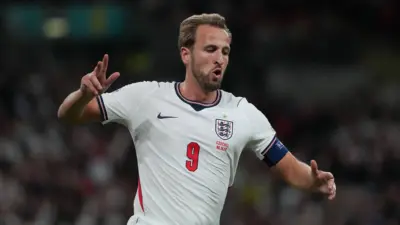

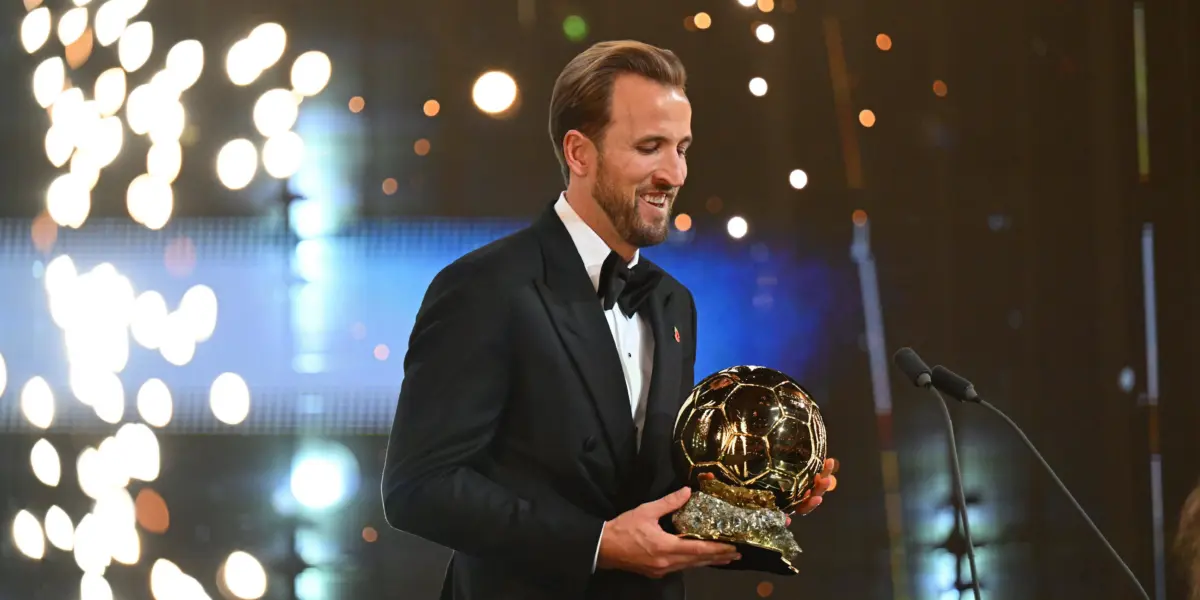
Harry Kane’s triumph as the Ballon d’Or 2026 winner has brought one of football’s most persistent debates back into focus: should the sport’s most prestigious individual award, handed to the best player in the world, reward extraordinary statistics or the players who deliver the biggest trophies?
The Bayern Munich striker’s remarkable goalscoring output made him a formidable contender, but his victory over Barcelona sensation Lamine Yamal raises an important question about what ultimately separates the winner from the other contenders.
Among them was Kylian Mbappé, who finished second ahead of Lamine Yamal despite scoring 58 goals for club and country during the 2025/26 campaign without winning a major trophy. Yamal, meanwhile, collected three titles, including the World Cup, while playing a key role in his teams’ achievements.
The contrasting fortunes of the two players raise questions about how voters interpret the Ballon d’Or’s official criteria. While collective performances and trophies won remain an important consideration, do individual performances and a player’s decisive qualities rank first among the three criteria?
Mbappé’s second-place finish, despite his lack of silverware, provides an interesting example of how individual output can strengthen a player’s candidacy even when team success is absent.
The Kane vs Yamal debate offered two contrasting arguments. Kane’s extraordinary goalscoring record demonstrated the value of individual productivity, while Yamal’s creativity and achievements with Barcelona and Spain provided a compelling case for collective success.
With the former Tottenham striker now crowned the winner, the focus shifts from who deserved the award to why his achievements proved more persuasive to voters.
The Case for Goals: Why Harry Kane Won the Ballon d’Or 2026
Harry Kane has built a formidable case for the award through sheer individual output. He recorded an astonishing 73 goals for club and country during the 2025/26 campaign, including 61 for the German champions and 12 for England.
His remarkable consistency helped Bayern secure the Bundesliga title and the DFB-Pokal, while his goalscoring exploits earned him the European Golden Boot.
His contribution to England’s World Cup campaign further strengthens his candidacy. Kane scored six goals at the 2026 FIFA World Cup, helping the Three Lions reach the semi-finals before they secured third place. Although England fell short of the final, his individual performances remained a significant achievement in a tournament where the margins between success and disappointment were exceptionally narrow.
Away from his goals, Kane’s all-round play has also been exceptional. The former Tottenham striker is widely recognised for his ability to drop deep into midfield, dictate the tempo, pick out incisive passes and link up play.
His assist for Alphonso Davies against Arsenal in the UEFA Champions League perfectly illustrates this side of his game, highlighting a level of vision and creativity that extends far beyond his responsibilities as a traditional centre-forward.
Ultimately, Kane’s combination of prolific goalscoring, consistency and creative contribution provides a compelling explanation for his Ballon d’Or 2026 triumph. His performances demonstrated that his influence extended beyond putting the ball in the net, making him a decisive figure in Bayern’s campaign and strengthening his case as the best player in the world.
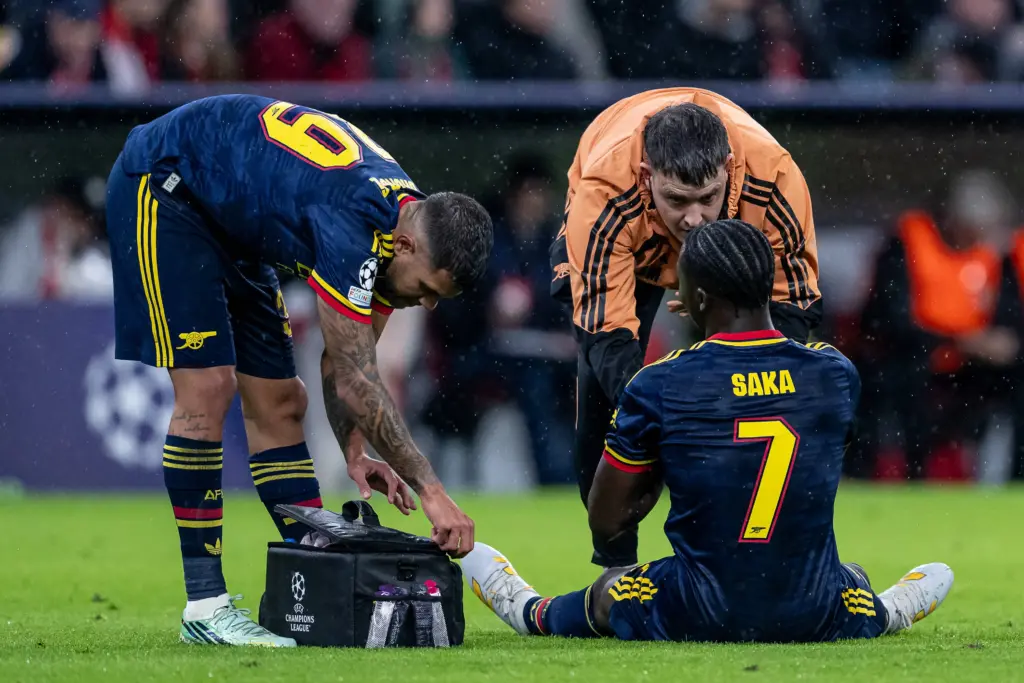
READ MORE: Bukayo Saka Injury: Which Arsenal Players Can Benefit From This Blow?
The Case for Glory: Why Lamine Yamal Lost Out to Harry Kane
From the age of just 16, Lamine Yamal’s performances had convinced many football fans that it was only a matter of time before he was crowned the best player in the world. Three years later, Yamal has finished third in the Ballon d’Or rankings, following his second-place finish last year, making him the first player under 20 to finish in the top 10 for three consecutive seasons.
However, given his continued development and impressive performances, there is hope that he could eventually fulfil that early prediction and claim the title of the best player in the world.
Now 19, Yamal has established himself as one of Barcelona’s most influential attacking players, contributing more than 110 goals and assists across competitions since his breakthrough.
His mesmerising dribbles, close control and ability to glide past defenders have made him a constant threat in the final third, while his creativity and attacking influence have established him among the world’s elite players.
During the 2025/26 season, Yamal recorded 41 goal contributions in 47 appearances, helping Barcelona secure both the La Liga title and the Supercopa de España. His involvement in Spain’s World Cup triumph further strengthened his credentials, giving him a compelling case for football’s most prestigious individual award.
However, despite his impressive individual performances and success with both club and country, Yamal finished behind Harry Kane in the Ballon d’Or 2026 race. The result is particularly intriguing because the Bayern Munich striker also enjoyed a trophy-laden campaign, winning the domestic treble, which included retaining their Bundesliga title.
He also finished as the league’s top scorer for the third consecutive year and added 14 goals in the UEFA Champions League, before helping England reach the World Cup semi-finals.
The difference between their respective cases, therefore, goes beyond trophies alone. While Yamal’s 41 goal contributions, creativity and influence in attack demonstrated his importance to Barcelona, Kane’s extraordinary goalscoring record offered a compelling measure of individual productivity. The England captain registered 73 goals for club and country, giving him a statistical advantage that could help explain why he ultimately secured the award.
While Yamal helped Spain lift the 2026 FIFA World Cup and Kylian Mbappé delivered an impressive individual campaign, scoring 22 goals to become the competition’s outright top scorer, Kane’s consistent goalscoring throughout the season, coupled with his role in guiding England to the World Cup semi-finals, may have given him the edge under the Ballon d’Or’s individual performances and decisive qualities criterion.
Ultimately, the Kane vs Yamal debate shows the difficulty separating two outstanding campaigns when both players have contributed to major successes.
Yamal’s achievements demonstrate that creativity, attacking influence and collective glory can make a compelling case for the Ballon d’Or, but Kane’s victory raises the question of whether extraordinary goalscoring output can provide the decisive advantage when the leading contenders have also enjoyed significant team success.
What the Ballon d’Or 2026 Result Tells Us About Voting Criteria
The Ballon d’Or voting system has undergone significant changes over the past couple of years, particularly in how players’ performances are assessed. Before 2022, the award was based on achievements across a calendar year, which means voters had to compare performances from two different halves of a football season.
In 2022, France Football changed the rules to align the evaluation period with the entire European football season, providing a clearer picture of each player’s overall campaign.
For the Ballon d’Or 2026 winner, the assessment period runs from August 3, 2025, to July 19, 2026, covering the entire 2025/26 season and major international competitions, including the 2026 FIFA World Cup.
This means performances outside that window do not count towards this year’s award, even if a player has enjoyed an exceptional start to the following campaign. This change has been highly rated because it allows voters to assess a player’s consistency across an entire campaign rather than placing too much emphasis on a few months of exceptional form.
YOU MAY ALSO LIKE: Manchester United Recruitment Problems: Why Spending Money Is Not Enough
Extra Time Notes
Harry Kane’s Ballon d’Or 2026 triumph has added another chapter to football history, but his victory has not been universally accepted by fans and pundits. Some believe Lamine Yamal deserved to be crowned the world’s best player, pointing to his contributions to Spain’s World Cup triumph as a major argument in his favour.
Others have questioned Kane’s claim to the award, arguing that he was not necessarily the standout individual across several major competitions during the 2025/26 season. Comparisons with Jude Bellingham’s performances at the World Cup and Michael Olise’s impact in the Bundesliga have further fuelled the debate over whether Kane was the most deserving winner.
But by winning the prestigious award, Kane is officially the best player in the world and becomes the first Englishman to claim the Ballon d’Or since Michael Owen in 2001, ending a 25-year wait.
For Lamine Yamal, finishing in 3rd place this year represents another near miss after his second-place finish in the previous edition.
Beyond these individual milestones, Kane’s victory raises a bigger question about what France Football’s award values most. Did his extraordinary goalscoring consistency prove more persuasive than Yamal’s creativity and achievements with Barcelona and Spain, or was the deciding factor the overall impact of their respective campaigns?
More Ballon d’Or News
Alexia Putellas Ballon d’Or Three-Peat Winner: What Makes Her So Special?