
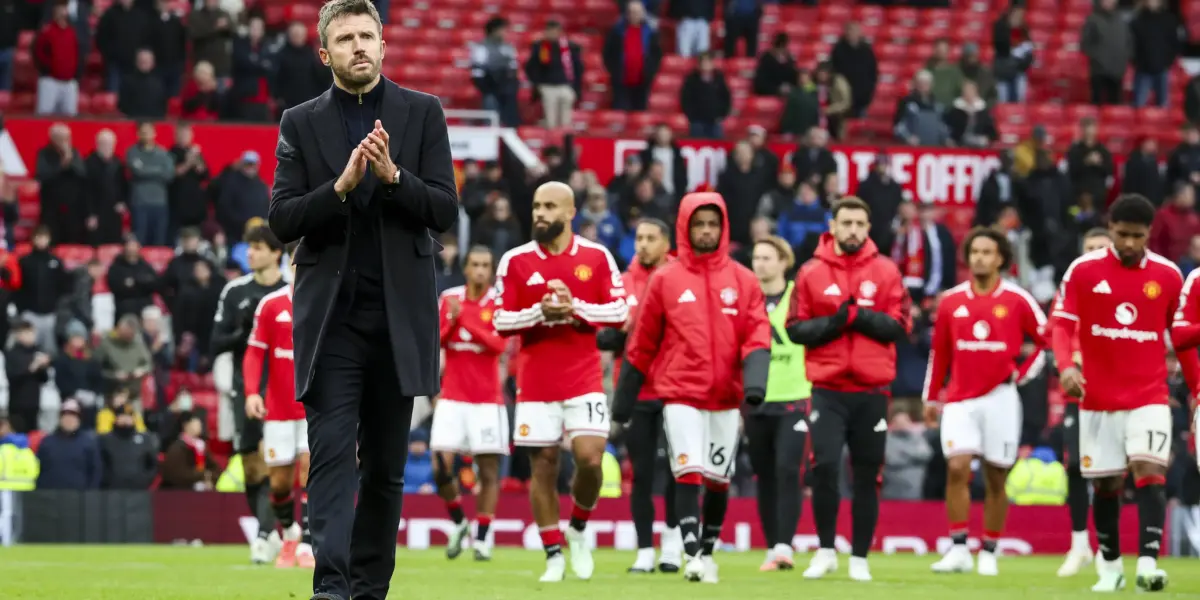
Michael Carrick will remain in charge of Manchester United for their Premier League clash against Chelsea on Saturday, October 31, despite growing pressure following a difficult start to the 2026/27 season.
The Manchester United manager has found himself under fire after winning just two of his 12 games across all competitions, with the club’s hierarchy reportedly discussing his future following Sunday’s 3-0 defeat to Bournemouth.
Carrick first took charge in January 2026 and managed to turn the club’s season around, guiding them to an impressive third-place finish. However, his permanent appointment has not gone according to plan, with the Red Devils struggling to find consistency.
Man United are 16th in the Premier League table with seven points from eight games, just one point above the relegation zone. They have also struggled in Europe, suffering a 4-1 defeat to Italian side Como before losing to Bournemouth four days later.
For a club with Manchester United’s history and expectations, these results have understandably raised questions about whether Carrick is the right man to lead the team forward.
Manchester United Manager Michael Carrick Under Pressure
According to reports, director of football Jason Wilcox and chief executive Omar Berrada met at Carrington on Monday to discuss Carrick’s future.
With the Manchester United manager continuing to lead training, he has been given another opportunity to turn things around, although his long-term position remains uncertain.
Eddie Howe and Julian Nagelsmann have emerged as potential replacements should the club decide to make a change. However, replacing Carrick would not automatically solve the problems that have affected Man United this season.
The Manchester United manager arrived with positive momentum after his interim spell, but replicating that success on a permanent basis has proved difficult.
One of the biggest concerns is the team’s inability to build on positive results. Six defeats in 12 matches suggest that Manchester United have struggled to maintain the standards required to compete consistently, while their league position highlights the consequences of those performances.
Carrick’s tactical decisions must also come under scrutiny, particularly if the team continues to struggle defensively and fails to control games against different opponents.
The Manchester United manager was appointed to bring stability and build on the progress made during his interim spell. However, he must show that he can adapt his approach when things are not working.
While the players must take responsibility for their performances, Carrick is ultimately responsible for preparing the team, finding the right balance and making the necessary adjustments during games. If Manchester United continue to struggle in these areas, questions about his tactical approach will only grow louder.
Recruitment is another issue that cannot be overlooked. Manchester United’s struggles are not simply about who is in the dugout, but also whether the squad has the right balance to compete consistently.
If key areas have not been adequately addressed in the transfer market, Carrick may be working with a squad that does not fully suit his preferred approach. That can limit his options, particularly when injuries force him to make changes or when the team needs a different solution during a difficult game.
However, recruitment problems do not completely absolve the Manchester United manager of responsibility. He must still find ways to get the best out of the players available to him, while the club’s hierarchy must ensure that future signings address the team’s most pressing needs rather than simply adding more players to the squad.
YOU MAY ALSO LIKE: Alexia Putellas Ballon d’Or Three-Peat Winner: What Makes Her So Special?

Chelsea Clash Presents a Crucial Opportunity
The Manchester United manager now faces a difficult test against Chelsea at Stamford Bridge, with the result potentially influencing how the club’s hierarchy approaches his future.
Chelsea have also experienced inconsistent performances, but they sit fifth in the Premier League table with 13 points. Xabi Alonso’s side will be without Joao Pedro, who is expected to miss several weeks with an injury, while goalkeeper Emiliano Martinez is also unavailable after fracturing his jaw.
These absences could provide Carrick with an opportunity, although the Manchester United manager cannot afford to rely solely on Chelsea’s injury problems.
Instead, Carrick needs his players to show greater discipline, improve their defensive organisation and take their chances when they arise. The Red Devils have conceded too many goals during their difficult run, and another poor defensive display could make it increasingly difficult to secure a positive result.
Carrick’s team selection and tactical approach will also be important. Chelsea’s injury problems could give Manchester United an advantage, but the Manchester United manager must ensure his side can exploit those weaknesses.
The Manchester United manager must also find a way to restore confidence within the squad. Results have not been good enough, and the pressure surrounding his position will only make it harder for the players to perform if they cannot respond collectively.
Saturday’s fixture stands as an opportunity for Carrick to demonstrate that the progress made during his interim spell was not temporary and that he can still guide the club in the right direction.
Extra Time Notes
The club hierarchy’s decision to keep Carrick in charge for the Chelsea game gives the Manchester United manager another chance to prove himself, but the pressure is unlikely to disappear after one positive result.
His third-place finish during the previous campaign showed what he could achieve with the squad, yet his permanent spell has raised questions about his tactical decisions and whether he can find consistent solutions when the team struggles.
However, Manchester United’s problems cannot be placed entirely on the manager. Recruitment and squad construction also matter, particularly if key areas have not been adequately addressed.
The players must deliver on the pitch, Carrick must make the right tactical decisions, and the club’s hierarchy must ensure the squad is built to compete.
Ultimately, Man United must decide whether Carrick can address these issues and lead a long-term recovery or whether a change in the dugout is necessary. The Chelsea clash may not settle that debate, but it could provide a clearer indication of whether the current problems are beginning to improve.
More Premier League News
Manchester United Recruitment Problems: Why Spending Money Is Not Enough
Bukayo Saka Injury: Which Arsenal Players Can Benefit From This Blow?