
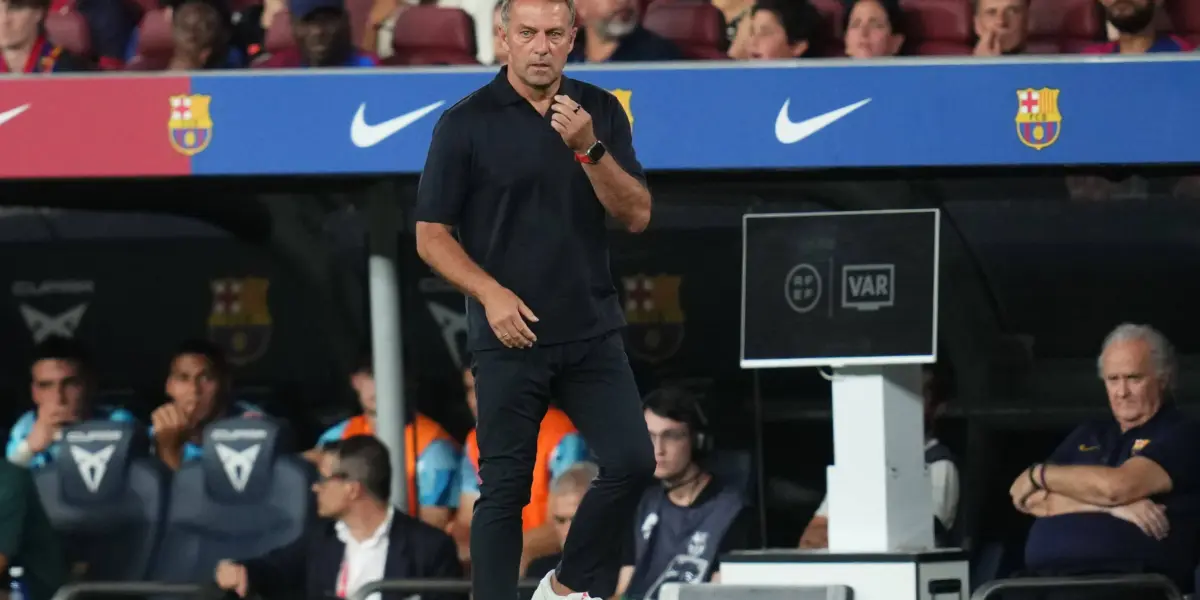
Barcelona’s Champions League run in the 2026/27 campaign got underway on Wednesday, August 11, with a commanding 5-1 victory over Feyenoord, immediately putting Hansi Flick’s team, among other clubs being touted as potential Champions League favourites this season.
Just over two years into the German’s tenure at the Catalan giants, one reality is becoming increasingly difficult to ignore when analysing Barcelona’s Champions League chances: the evolution of the team.
This is a side that appears far more tactically mature than it was at the same stage last season, with Flick’s ideas becoming increasingly evident in the way Barcelona control games and exploit their opponents.
Despite the number of European giants with the quality and experience required to win the competition, Barcelona are beginning to look increasingly comfortable among the teams capable of reaching the final at the Estadio Metropolitano in Madrid.
The most encouraging aspect is not simply the quality available in attack or the individual brilliance scattered throughout the squad. It is the way Flick’s team is beginning to understand when to accelerate, when to control games and how to exploit spaces without losing its overall structure.
The German has also managed to improve the defensive contribution of his attacking players, with the statistics showing that Barcelona’s front line has increased its pressing intensity and defensive output this season.
That added work without the ball has given the team greater balance, allowing Barcelona to win possession higher up the pitch while putting less pressure on the defence to deal with every transition. It is another clear indication of how Hansi Flick tactics are beginning to evolve this Barcelona side into a more complete and difficult team to play against.
1) The New Identity Behind Barcelona’s Champions League Push – Ditching Slow Possession
Barcelona are synonymous with the tiki-taka style of football, built around quick one-touch passing, prolonged possession and patiently moving the ball around opponents until an opening appears.
Under Hansi Flick, however, one of the biggest changes has been the club’s shift away from that traditional approach towards a far more aggressive, vertical and relentless style of football.
Rather than dominating the ball simply for the sake of controlling the game, Flick wants his side to move forward quickly, attack spaces and immediately win the ball back when possession is lost.
His use of inverted full-backs also adds another layer to the system. By moving players such as João Cancelo into central areas, Barcelona can overload the midfield, create numerical superiority and suffocate opponents trying to play through the centre.
The same principle applies in the final third, where players such as Pedri and Dani Olmo are constantly looking for opportunities to break lines. Instead of recycling possession with endless sideways passes, they are encouraged to find immediate passes into the half-spaces and towards the box.
That combination of verticality, aggressive pressing and midfield overloads is what makes Hansi Flick’s tactics so difficult to deal with. It has given Barcelona’s Champions League approach a far more direct and relentless identity, potentially making them an even bigger threat against the other Champions League favourites.
2) The Rodri Factor – Restoring the Elite European Spine
For years, one of Barcelona’s biggest problems in Europe has been their vulnerability when possession is lost. The team could dominate games, create chances and overwhelm opponents with its attacking quality, only to be exposed when a physical or fast-breaking side turned the ball over and attacked the space behind the midfield.
The arrival of Rodri from Manchester City has changed that dynamic completely and made them one of the 2026/27 Champions League favourites.
The Spanish midfielder provides the defensive protection, composure and tactical intelligence Barcelona have been missing since the departure of Sergio Busquets.
More importantly, his influence goes beyond simply winning tackles or breaking up attacks. Rodri gives Barcelona a player capable of reading danger before it develops, positioning himself intelligently to close passing lanes and slowing down opposition transitions before they become genuine threats.
That could be particularly valuable in Barcelona’s Champions League campaign, where the margins become increasingly small against Europe’s elite. The Catalan giants are likely to face opponents who are far more capable of exploiting their high defensive line than many domestic rivals, making the presence of a midfielder who can protect the space in front of the defence extremely important.
By sitting at the base of the midfield, Rodri can also dictate the tempo of games. When Barcelona need to accelerate, his passing allows the ball to move quickly through the lines. When they need to take control, his ability to retain possession and recycle the ball gives the team a way of slowing matches down without completely surrendering its attacking identity.
Perhaps the biggest beneficiary could be the players ahead of him. Pedri, Dani Olmo and Barcelona’s other creative players can operate with greater freedom because they know there is an elite defensive midfielder positioned behind them. Instead of constantly worrying about what happens if possession is lost, they can concentrate on creating opportunities and breaking defensive lines.
This is where Hansi Flick tactics could become even more effective. The former Bayern boss wants his team to play aggressively, press high and attack with numbers, but that approach naturally leaves spaces that opponents can target.
Having Rodri protecting the midfield gives them a better platform to maintain that aggression without becoming unnecessarily vulnerable in transition and could prove decisive when assessing Barcelona’s Champions League prospects.
If Rodri can stay fit and reproduce the influence he had at Manchester City, Barcelona may finally have the elite European spine required to turn their impressive football into another serious Champions League title challenge.
YOU MAY ALSO LIKE: Undeserved 2026 Ballon d’Or Nominees: Three Players Fans Believe Shouldn’t Be On The Shortlist
3) Making Barcelona’s Champions League Attack Unpredictable
Since the departure of target man Robert Lewandowski, Barcelona have increasingly operated with Raphinha in a false nine role, creating a completely different dynamic in attack. Rather than relying on a traditional centre-forward to stay high and finish chances, the movement of the front three has become one of the biggest problems for opponents to deal with.
Their constant rotations and positional interchanges make it difficult for defenders to know who to track, creating spaces for one another and perfectly showcasing the effectiveness of Hansi Flick’s tactics.
That was evident in the 5-1 victory over Feyenoord, with Raphinha scoring twice while Karim Adeyemi, Lamine Yamal and Gabriel Jesus also found the net. The spread of goals is important because opponents cannot simply focus their defensive plan around shutting down one particular player.
The threat is coming from multiple positions, with each attacker capable of deciding a game, while their clinical finishing this season has already seen Barcelona score an astonishing 22 goals in just five games.
This is where Barcelona’s Champions League ambitions could become particularly interesting. Against Europe’s best sides, being predictable can quickly become a weakness, but they now have several players capable of creating and finishing chances in different ways. That variety could make them one of the more difficult Champions League favourites to prepare for.
Lamine Yamal is perhaps the clearest example. The teenager is playing with remarkable freedom, drifting inside from the right, dictating play and constantly looking to create something rather than simply remaining isolated on the wing. His record-breaking form has also added another dimension to Barcelona’s attack, with the World Cup winner continuing to establish himself as one of the biggest threats in European football.
The beauty of Hansi Flick tactics is that Yamal does not necessarily need to operate as a conventional winger. His movement can create space for teammates while allowing him to become an additional playmaker between the lines.
For Barcelona’s Champions League campaign, that unpredictability could be one of their biggest weapons. If opponents cannot identify a single player who must be stopped at all costs, the Spanish giants can become far more difficult to contain – and that could be crucial when facing the other Champions League favourites in the knockout stages.
The ExtraTimeTalk Verdict
In Barcelona’s Champions League outings over the past three years, the highest point they have reached has been the semi-final, where they were eliminated by fellow Spanish giants Atlético Madrid. This year, however, there is a clear determination to go one step further and finally mount a serious challenge for the trophy.
While Hansi Flick’s tactics have transformed the side into a well-oiled machine and established them among the Champions League favourites, Barcelona, like every other team in the competition, still have a weakness that opponents can exploit.
Flick’s high defensive line is a classic high-risk, high-reward approach, with Barcelona’s centre-backs often positioned well away from their own goal. When the forward press works, it allows the Catalan giants to win possession quickly, pin opponents in their own half and maintain control of the game.
The problem comes when that press is broken.
Against elite teams blessed with rapid counter-attacking wingers, one failed press can leave a huge amount of space behind Barcelona’s defence. With the centre-backs pushed so high, quick forwards can immediately attack that space, potentially creating dangerous one-on-one situations before the rest of the team has time to recover.
That remains perhaps the biggest concern surrounding Barcelona’s Champions League ambitions. The risk may be manageable against lesser opposition, but the competition’s best teams possess the pace, precision and individual quality to punish even the smallest defensive mistake.
What do you think? Can Hansi Flick’s warriors finally end Barcelona’s 10-year wait for another Champions League triumph, or will it once again be a case of coming close without going all the way? Let us know your thoughts in the comments below, and we will check in to reply!
More Champions League News
Manchester United vs Sabah: Three Key Factors, Predicted Lineups And Team News