
CONMEBOL World Cup Report Card: Argentina’s Final Defeat Ends an Era
The 2026 FIFA World Cup was supposed to be the tournament where CONMEBOL reminded the world that South America still belongs at the center of international football.
With Argentina entering as the defending Copa América champions, Brazil beginning the Carlo Ancelotti era, Colombia arriving in good form, and Ecuador viewed by many as a dark horse, expectations were high.
Instead, only one South American nation reached at least the quarterfinals, and Argentina carried the continent’s hopes all the way to the final before finally falling to Spain.
There were moments of brilliance. There were signs of the next generation emerging. There were also uncomfortable reminders that some of South America’s greatest players are nearing the end of their careers, and the next cycle will require significant rebuilding.
Here is our report card for every CONMEBOL team at the 2026 FIFA World Cup.
Argentina: B+
Argentina reached the World Cup final for the third time in four tournaments. That achievement alone deserves enormous respect. But expectations matter.
This was the reigning Copa América champion. This was the king of South American football. This was Lionel Messi’s final World Cup, and Argentina entered believing this could be the final chapter of the greatest international story in modern football history. Instead, the ending was bittersweet.
Argentina survived another brutal knockout run, defeating Cape Verde in extra time, overcoming a two-goal deficit against Egypt, eliminating England in a dramatic semifinal, surviving Switzerland after extra time against ten men, and eliminating England in a dramatic semifinal
This was not a dominant champion. This was a team that refused to die.
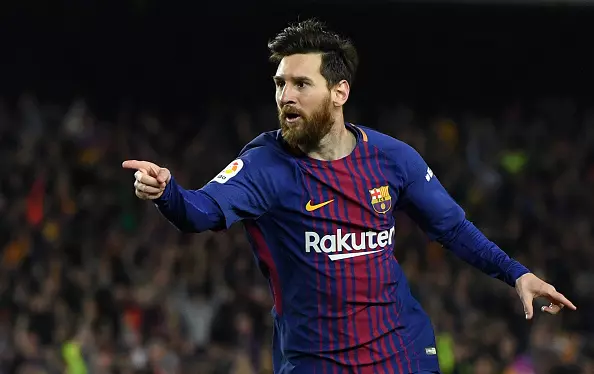
Lionel Messi remained the difference maker. At 39 years old, he was no longer the explosive Barcelona superstar who carried Argentina to the 2014 World Cup final, but he transformed himself into something different under Lionel Scaloni. A creator. A distributor. A player who controlled matches from wider positions and understood exactly what Argentina needed from him. His tournament began with a hat trick against Algeria that was one of the best single game performances in World Cup history.
Messi engineered comebacks, created chances and carried Argentina offensively throughout the knockout stage.
Emiliano Martínez remained one of the best goalkeepers in world football. Lautaro Martínez continued his reputation as a big-game player, delivering important moments throughout the tournament.
But eventually, the weaknesses became impossible to ignore. Argentina’s midfield looked older and more vulnerable. Their wingbacks struggled in transition. Teams found ways to play through them, and after the group stage nearly every knockout match became a battle rather than a display of superiority.
That identity had worked. Argentina became the boxer who absorbs the biggest punch, stays standing, and eventually lands the knockout blow. But against Spain in the final, there was no miracle.
Spain controlled the match, Argentina never found a way forward and the final image of the tournament was a frustrated Argentina side reduced to physical battles and desperation. Including Leandro Paredes assaulting Spanish players after the final whistle.
The regeneration that was delayed for one final Messi run must now begin.
Scaloni’s contract expires in December, and he has admitted he needs time to decide his future. “It’s very unlikely a group as wonderful as this will ever come together again, and that hurts me deeply,” Scaloni said after the final.
That reality is impossible to ignore.
Messi may decide to continue through Copa América, but eventually Argentina must replace the greatest player of the television era. The midfield needs major changes. The defense needs younger options. The attack needs new leaders.
Scaloni trusted veterans such as Ángel Di María’s generation for years, and now players like Nico Paz, Valentín Barco and other young talents must receive opportunities. The question is whether Argentina can remain the kings of the Americas without Messi.
Do Julián Álvarez and Enzo Fernández become the new faces of the national team? Can Argentina continue producing elite talent? Can the domestic league develop players capable of replacing a once-in-a-century generation?
The rest of the world has plenty of reasons to dislike Argentina after years of controversial moments, physical battles and emotional matches. As noted by the criticism of Egypt’s manager after the round of 16 clash, where he said plainly that FIFA favored Argentina. The final against Spain ended with Leandro Paredes sparking confrontation after the whistle and Nicolás Otamendi involved in heated exchanges.
But criticism should not erase reality. Argentina were still the only South American nation to reach the quarterfinals. They were still the only team from the continent that truly challenged Europe’s best. The era is ending. But the legacy is already secure as Argentina have reached yet another World Cup final.
Paraguay: A-
Manager Gustavo Alfaro maximized everything Paraguay could have hoped to achieve. After missing the previous World Cups, Paraguay returned to the biggest stage and immediately reminded everyone what makes them difficult to face.
They are not flashy. They are not built around global superstars. They are built around organization, discipline and making every opponent suffer.
The tournament began incredibly poorly, with a nervous opening performance against the United States, but Paraguay recovered immediately. Julio Enciso overcame injury concerns to lead the attack at just 22 years old, while goalkeeper Orlando Gill produced one of the greatest individual goalkeeping tournaments of the competition.
Gill became a breakout star and a transfer market commodity.
The defense, however, was the real story. How good was Paraguay’s defense? Ugly. Aggressive. Physical. But incredibly organized.
Against Australia and Turkey, Paraguay produced clean sheets to reach the knockout stage. Then came the biggest achievement of all: eliminating Germany on penalties after a 1-1 draw. Against one of Europe’s most talented attacking teams, Paraguay conceded just 1.57 expected goals and forced Germany into the kind of uncomfortable match they wanted.
They followed that by limiting France to one goal in the Round of 16 in a game played in high temperatures. Paraguay lacks midfield creativity. Paraguay lacks a true elite striker. Those limitations were obvious. But a Round of 16 appearance, three strong performances against UEFA opponents and a famous victory over a former World Cup Champion represents a massive success.
This was Paraguay being Paraguay, the national character on the global stage. And for a nation that spent years trying to return to the World Cup, that matters. They have the inside track on returning to the World Cup in 2030 and continue to send their best players to leagues like Brazil’s to develop.
Brazil: B-
Brazil’s World Cup was not a disaster. It just was not Brazil.
The group stage was encouraging, or at least met expectations. A draw against a strong Morocco side and routine victories over Haiti and Scotland suggested Carlo Ancelotti’s tournament held promise.
Then the weaknesses that we all saw against Morocco appeared again. Brazil’s midfield looked increasingly vulnerable against elite opponents. The Seleção still possessed individual brilliance, but the control and creativity that once defined Brazilian football remained missing.
Ancelotti showed his tactical quality in the Round of 32, guiding Brazil past an exhausted Japan side in a 2-1 victory, key substitutions generating a late winner. But the Round of 16 defeat against Norway exposed the biggest problems. Brazil created chances. Brazil had more shots. But Erling Haaland was clinical. Brazil was not.
The return of Neymar was supposed to be a fairy tale. Instead, it ended with disappointment. The former superstar entered in the second half but could not produce the moment Brazil needed.
The frustration from supporters is understandable. They do not simply want results. They want Brazil to feel like Brazil again. The free-flowing football, the creativity, the confidence — those qualities have disappeared. But context matters. This World Cup was not worse than the struggles during qualifying or the disappointment of Copa América 2024. The problem is that Brazilian supporters are comparing everything to a standard created by generations of legends in a yellow shirt.
Brazil still has enormous talent. Vinícius Júnior is in his prime. Ancelotti has unlocked attacking dimensions from him again. Rayan is only 19 years old and has immense potential. But the midfield requires urgent attention.
Brazil cannot continue being dominated in the center of the pitch and expect individual brilliance to save them. They remain a Copa América contender. They are simply no longer the favorite.
Read More: CONCACAF World Cup Report Card: Grading All Six 2026 Participants
Colombia: B-
Néstor Lorenzo may have extracted everything possible from this Colombian generation. But the cycle has reached its conclusion.
Colombia’s Round of 16 elimination against Switzerland on penalties was heartbreaking, especially for the tens of thousands of supporters who followed this team across North America, and were already anticipating a quarterfinal against Argentina.
The streets of Medellín, Bogotá, Barranquilla, and Cali went silent when Colombia faltered in yet another penalty shootout, after missing chances over 120 minutes against Switzerland. The music stopped. The party ended. Colombia was the most somber it’s been in years. Because everyone understood what this generation could have been.
Colombia impressed in the group stage and won their group. They defeated the defensive low blocks of Uzbekistan and DR Congo before producing an entertaining 0-0 draw against Portugal. Their defense became the unexpected strength of the tournament. Also limiting Ghana in a 1-0 round of 32 victory.
Camilo Vargas was outstanding in goal. Davinson Sánchez anchored the back line. After years of questions, Colombia conceded just one goal in five matches. That was a remarkable achievement. But football punishes teams that cannot finish. Colombia’s attacking football was often beautiful. Their transitions were quick. The backline calm and steady. Their midfield combinations were excellent. The problem was simple. Nobody could put the ball in the net.
Luis Díaz, the Bayern Munich superstar, carried the weight of the yellow shirt but finished with only one goal. Several other goals were ruled out for offsides, but Colombia needed more from their biggest attacker. Luis Suárez, one of Europe’s top scorers with Sporting CP, did not score for his country. Jhon Córdoba battled but was injured. Cucho Hernández never got consistent minutes under Lorenzo.
For all the creativity from Juan Fernando Quintero and the attacking movement around him, Colombia lacked the clinical striker every contender needs. And they have been punished for that. Beautiful football does not excuse failing to score when opportunities arrive. The biggest positive may have been Gustavo Puerta.
The young midfielder announced himself as a potential long-term leader, showing the technical ability and maturity to anchor Colombia’s midfield for years. The rebuild cannot wait.
There are also questions surrounding Lorenzo’s management. Reports have suggested internal divisions, with some believing the coach showed favoritism toward certain veterans and trusted players too heavily instead of accelerating the transition. Whether those rumors are true or not, the reality remains the same. Colombia needs a new cycle.
James Rodríguez is finished at the highest level. Juan Fernando Quintero is 33. The goalkeeper position needs long term clarity. The defense needs younger options. The country desperately needs a striker with a better attitude than Jhon Duran.
Lorenzo or his replacement must use the next friendlies to begin building a new team. Colombia remains one of South America’s strongest football nations in terms of exporting players abroad, but the next generation must now take responsibility. The talent exists. Now the development must match it, at a time when Colombia’s Liga Betplay Dimayor continues to favor older, experienced players instead of playing young talent.
Ecuador: C
Ecuador entered this World Cup as one of the trendy dark horse picks.
For years, La Tri built their identity around one of the best defensive structures in international football. They had elite young defenders, a world-class midfield anchor in Moisés Caicedo and a generation of players competing at the highest levels in Europe.
The reason they might underperform was obvious. They could not score.
For much of this World Cup cycle, Ecuador produced the same script. Elite defending. Organized structure. Physical dominance. But when the match required a moment of creativity or a clinical finish, they struggled to find the answer and ended up drawing matches. That weakness finally caught up with them on the biggest stage.
After a 1-0 defeat to Ivory Coast, where 36-year-old captain Enner Valencia eventually gave up the armband after years of service to the national team, Ecuador entered a must-win situation against Curaçao. Instead, they produced one of the most frustrating performances of the tournament.
Curaçao had conceded seven goals against Germany. Ecuador could not score once.
Despite controlling possession, playing with four midfielders and two forwards and producing 27 shots, they were unable to beat goalkeeper Eloy Room. It was another reminder of Ecuador’s biggest problem: they could defend against anyone, but they could not consistently hurt anyone.
Then came the Germany match. For a moment, everything changed, as Ecuador was facing elimination and their manager Sebastian Beccacece had offered up his resignation if they failed to advance to the last 32.
After 189 minutes without a World Cup goal, Nilson Angulo finally gave Ecuador their breakthrough. The goal sparked belief across the nation, and suddenly Ecuador looked like the team many expected before the tournament. Moisés Caicedo dominated midfield, showing why he is one of the Premier League’s elite players, while Gonzalo Plata delivered a memorable goal in the second half to complete a 2-1 victory. Ecuador coming back and saving itself.
It was relief.
It was joy.
But it was only temporary.
Against Mexico in the Round of 32, Ecuador looked overwhelmed by the occasion. There is no shame in losing at Estadio Azteca against a Mexico team that produced an excellent tournament, but Ecuador never gave themselves a chance.
They fell behind 2-0 at halftime, were outshot 15-7 and never found a way back into the match. The final image of their tournament was Piero Hincapié receiving a frustration red card deep into stoppage time. A team that entered with so much defensive promise finished third in the group with just one win from four matches. They only scored in one of their four matches. That simply was not good enough. Still, Ecuador’s future remains incredibly bright.
This is a young team. They brought three forwards under the age of 23. Most of their midfield options are still developing, including Caicedo, Pedro Vite and Angulo. Their defense remains one of the most talented young groups in world football, with Willian Pacho and Hincapié capable of competing against anyone when healthy.
The talent is not the question. The striker position is. Ecuador needs a manager capable of maximizing this generation and finding solutions in the final third. With the right tactical direction, La Tri can absolutely compete for a Copa América title and return to being one of South America’s elite teams.
The World Cup was disappointing. The future does not have to be.
Uruguay: F
Uruguay is always held to a different standard.
A nation with a small population but a massive football identity, Uruguay has built generations of teams that compete above their resources. They are famous for their intensity, their physicality, their defensive discipline and their refusal to surrender. That identity disappeared in 2026.
This was one of the lowest points in modern Uruguayan football. In a group featuring Cape Verde, Spain and Saudi Arabia, Uruguay managed only two draws and failed to advance. Worse than the results was the feeling around the team.
They lacked energy. They lacked urgency. They lacked the aggression that has always defined La Celeste.
Marcelo Bielsa will shoulder much of the blame.
His decision to bring 40-year-old goalkeeper Fernando Muslera and make him the starter became one of the defining mistakes of the tournament. Muslera endured a nightmare campaign, making critical errors in the 2-2 draw against Cape Verde and the 1-0 defeat to Spain. The regular starter Sergio Rochet sat on the bench.
According to Bielsa, Muslera was so affected by his mistake against Spain that he asked to be substituted at halftime. Muslera was not the only problem.
Uruguay entered the tournament without a reliable striker and often depended on winger Maxi Araújo to create moments. Darwin Núñez, once viewed as the next great Uruguayan forward after Edinson Cavani and Luis Suárez, has struggled to become that player. At 27 and playing in Saudi Arabia, questions about his international future are unavoidable.
The problems extended beyond the attack.
Defender Ronald Araújo remains a major name at Barcelona, but with Uruguay he has not become the leader many expected. Bielsa also arrived at the tournament carrying injured players including Araujo, skipped preparation matches and made controversial squad decisions.
Rodrigo Zalazar, who scored 19 goals in Portugal during the 2025-26 season, watched all three group matches from the bench while Uruguay struggled to create chances. Federico Valverde was often played out of his best position. Giorgian de Arrascaeta, likely playing in his final World Cup cycle, never recovered from injury but remained on the squad without a replacement.
The criticism of Bielsa was not simply about tactics. It was about stubbornness.
Uruguay looked like a team without answers and without the emotional intensity that has historically carried them through difficult moments.
To be fair, their 1-0 defeat against eventual champions Spain looks much better in hindsight. Spain dominated most opponents throughout the tournament, and Uruguay’s defensive organization kept them within one goal.
Cape Verde also proved to be a much stronger opponent than many expected. But the Saudi Arabia draw was unforgivable. In front of their own supporters in Miami, Uruguay produced a lifeless performance when a victory would have immediately reduced the pressure they were facing heading into the tournament.
That is why this tournament feels like such a failure. Uruguay can always defend. Uruguay can always fight. But without energy, creativity and leadership, this generation risks being remembered as one that never reached its potential. The next managerial decision may define everything. Because Uruguay in 2026 was not itself.
Overall CONMEBOL Grade: B-
CONMEBOL entered the 2026 FIFA World Cup with enormous expectations.
The region arrived as the defending champion of world football. Argentina had won the previous World Cup and two consecutive Copa América titles. Brazil remained one of the deepest talent pools in the sport. Colombia believed their golden generation had one more opportunity to finally break through.
Ecuador entered as a popular dark horse pick. Uruguay trusted their history, their identity and their ability to compete against anyone. But ultimately, most of CONMEBOL fell short.
A B- feels fair. The region produced one finalist and several memorable performances, but it never truly dominated a tournament that was played in favorable conditions.
South American teams had home-region support throughout North America. Argentina, Brazil, Colombia, and Ecuador all experienced massive crowds behind them, with supporters traveling across the United States, Mexico and Canada to create familiar environments. Only Ecuador were at a home field disadvantage when they were eliminated from the tournament, the same cannot be said of Colombia or Brazil.
Yet even that advantage was not enough to overcome the biggest challenge facing the region.
Talent depth. The reality is that many CONMEBOL nations reached the limit of their squads. Argentina squeezed everything possible out of an aging core.
Brazil had individual brilliance but lacked the midfield quality to control elite opponents. Colombia created beautiful attacking transitions but could not finish. Ecuador defended at an elite level but never found a reliable goalscorer. Uruguay lacked the energy and attacking quality required to survive.
Paraguay was the exception. Gustavo Alfaro maximized every available resource and produced one of the greatest World Cup runs in the country’s modern history. Their organization, physicality and belief showed that South American football can still compete with Europe’s best when a team fully understands its identity.
But across the tournament, the same pattern continued. Europe had more complete squads, more options, more depth to alter the direction of games. Spain lifted the trophy because they combined elite young talent, tactical discipline and depth across every position.
France remained dangerous because of their endless supply of attacking players. Norway eliminated Brazil because they possessed the one thing every team dreams of having: a world-class striker who changes matches by himself.
CONMEBOL still produces stars. It still produces passion.
It still produces the emotional moments that make the international football played in the region unlike anything else. But the next challenge is clear.
The region must produce more complete teams. Because this tournament also marked the end of an era.
Lionel Messi’s World Cup journey appears complete. Neymar’s international career has closed. James Rodríguez played his final tournament. Players such as Miguel Almirón, Enner Valencia and other veterans who carried their nations for years are reaching the end of their international careers.
A generation that defined South American football is disappearing. Now comes the difficult question.
Who takes over?
Who becomes Argentina’s next leader after Messi? Who carries Brazil’s expectations? Who becomes Colombia’s new creative force? Who emerges as Uruguay’s next superstar? Do nations like Chile or Venezuela push for World Cup qualification in 2030?
The talent will come. South America has always produced footballers. The challenge is turning those players into teams capable of competing with Europe’s modern giants.
The next Copa América cycle begins immediately. New leaders must emerge. New identities must form. New generations must take responsibility. The 2026 World Cup belonged to Europe. CONMEBOL remains one of football’s great powers. The continent has lost legends. Now it must find what comes next.
Main Photo Credit: Smartframe Images