
CONCACAF World Cup Report Card: Mexico Restores Belief, Canada Keeps Rising, United States Left Wanting More
The 2026 FIFA World Cup was always going to be a measuring stick for CONCACAF. With the tournament hosted in North America and six regional representatives qualifying, expectations were higher than ever. Mexico sought to restore faith after Qatar a Qatar group stage exit, Canada hoped to prove 2022 was only the beginning and finally get a win, and the United States believed it had assembled one of the strongest squads in its history.
Not every nation met expectations, but the region also showed why it deserves more respect than ever before. Here’s our report card for every CONCACAF team.
Canada: B+
Jesse Marsch had every excuse available.
Ismaël Koné suffered a horrific leg break against Qatar. Alphonso Davies, after another exhausting season with Bayern Munich, barely featured due to injury concerns. Losing arguably your two most important players could have derailed the tournament before it truly began.
Instead, Canada adapted.
Stephen Eustaquio cemented himself as the new leader of this team, Canada continued creating chances, advanced from a difficult group behind Switzerland after beating Qatar, drawing Bosnia and Herzegovina and narrowly losing 2-1 to the Swiss, before edging South Africa 1-0 in the Round of 32 to earn their first ever knockout stage win.
The 3-0 defeat to Morocco was disappointing but hardly shocking against one of the tournament’s strongest teams.
Canada entered this World Cup as a team many still associated with Alphonso Davies. They leave it looking far more complete, with Eustaquio, Jonathan David, Moïse Bombito and an increasingly mature supporting cast proving they can compete without relying on one superstar.
This isn’t an elite side yet, but considering Canada sat outside the world’s top 100 not that long ago, becoming a reliable knockout-stage nation represents enormous progress.
Mexico: A-
Mexico didn’t simply benefit from home advantage.
They earned this tournament.
El Tri won all three group matches without conceding a goal. Even with a rotated lineup they defeated Czechia. They overwhelmed Ecuador 2-0 at the Estadio Azteca, a team that had finished second in CONMEBOL qualifying, and they re-established the Azteca as one of international football’s great fortresses.
The Round of 16 loss to England still hurts.
Playing against ten men for much of the second half, Mexico resorted to lofting hopeful crosses into England’s penalty area rather than finding more creative solutions. England survived 3-2, but the frustration stemmed from knowing the opportunity was there.
Still, context matters.
Before Javier Aguirre returned, Mexico looked directionless. He rebuilt the team’s identity, won the Nations League and Gold Cup, restored belief among supporters in Mexico and the diaspora, and delivered a disciplined defensive team that conceded just three times against England in four World Cup matches.
Now the baton passes to Rafa Márquez, who inherits one of Mexico’s most promising generations in years. Gilberto Mora, Obed Vargas and Mateo Chávez have already shown they belong on this stage.
Mexico exited disappointed, not embarrassed, and that distinction matters after Qatar 2022 and Copa America 2024 were a disaster.
United States: B
The emotions around the United States remain raw.
Mauricio Pochettino guided the Americans through the group stage, topping their group with victories over Australia and Paraguay, both respectable opponents. They then overcame Bosnia and Herzegovina in the Round of 32 despite playing much of the second half with ten men.
Everything unraveled against Belgium.
Simple defensive mistakes, poor goalkeeping and a complete loss of composure produced a humbling 4-1 defeat against a Belgian side many had written off after an inconsistent group stage and older than a true contender should be.
Supporters quickly turned on players, including an injured Christian Pulisic, questioning the team’s mentality and commitment.
The reality is less dramatic.
This remains one of the strongest squads the United States has ever assembled. They simply performed around their current level. They are not yet a genuine top-ten football nation, and a Round of 16 exit against an experienced European side reflects that reality. This is a team that can score goals in bunches, but the defending and technical aspects often disappear.
The disappointment isn’t that they failed. It’s that they never gave themselves a chance in the Round of 16 by playing so poorly.
Panama: C+
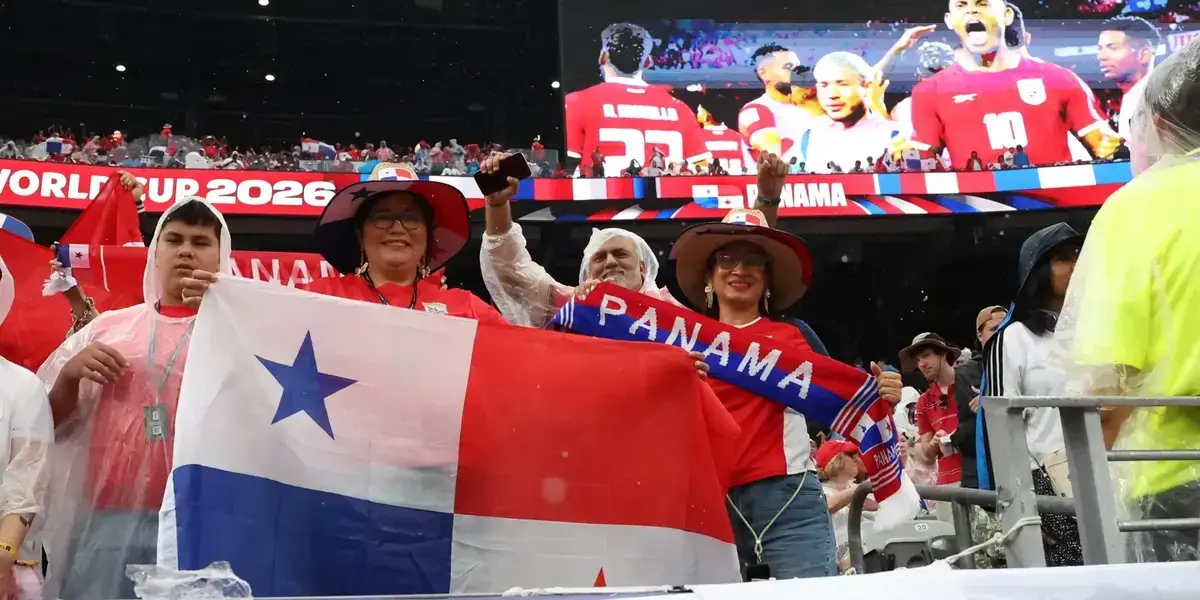
Panama failed to advance from a group where the other three teams all reached the knockout rounds.
The biggest problem was painfully simple.
They never scored.
Thomas Christiansen has transformed Panama over six years, establishing them as arguably Central America’s strongest national team. They defended bravely against Croatia, Ghana and England, but football ultimately rewards goals.
The injury to Pumas Adalberto Carrasquilla before the tournament proved devastating. Losing arguably the nation’s best player stripped Panama of the creativity needed to unlock defenses, and there simply wasn’t enough depth to compensate.
This wasn’t a failed tournament.
It was a reminder that defensive organization alone, and a limited talent pool can only take a nation so far. Panama will continue to have to battle with the likes of Costa Rica and Honduras for the “best in Central America” title.
Curaçao: B
Nobody expected Curaçao to reach the knockout stage.
Simply qualifying represented one of the greatest achievements in the country’s football history.
The 7-1 defeat to Germany was sobering, but Eloy Room produced an outstanding tournament in goal, helping Curaçao earn its first ever World Cup point with a memorable draw against Ecuador.
Livano Comenencia’s goal against Germany gave supporters a moment they’ll never forget, while the squad, built largely from the Dutch football system, proved it belonged on this stage.
They leave with valuable prize money for youth development, increased international credibility and proof that they can compete.
For a debut World Cup, that’s a success.
Haiti: C+
This grade feels harsh.
Qualifying itself was a tremendous achievement, and Haiti arrived with genuine optimism after strengthening the squad through dual-national recruitment.
The performances, however, rarely matched that optimism.
A 3-0 defeat to Brazil was understandable. The 1-0 loss to a limited Scotland side felt like a missed opportunity, and to be fair Haiti felt cheated by the refs.
Haiti created excitement against Morocco, fighting to 2-2 at the half before eventually losing 4-2, but once again the defensive concentration disappeared late.
Without a single point, Haiti leaves knowing it competed, but also knowing it could have achieved more. There were flashes. There simply weren’t enough of them for a team that has already shown itself capable.
Overall CONCACAF Grade: B
CONCACAF leaves this World Cup with reasons for both optimism and frustration.
Mexico restored belief and looked like the region’s standard bearer once again. Canada continued its rise despite devastating injuries. The United States met realistic expectations before collapsing against better opposition. Panama, Curaçao and Haiti all proved they deserved to be here but did little else.
The region still trails Europe’s heavyweights, but it no longer looks like an afterthought at the World Cup.
The next challenge is obvious. CONCACAF has become increasingly good at qualifying, competing and surviving.
Now it must learn how to win the matches that change history. Quarterfinal appearances cannot remain the ceiling forever if the region truly wants to be considered among world football’s elite. There continues to be a debate about whether CONCACAF and CONEMBOL should merge to improve both regions football prospects, especially after the success of Copa America 2024, while only one CONEMBOL side, Argentina, reached the last 8 of the World Cup.
Main Photo Credit: Smartframe Images