
The Honest Truth About MLS Pressure
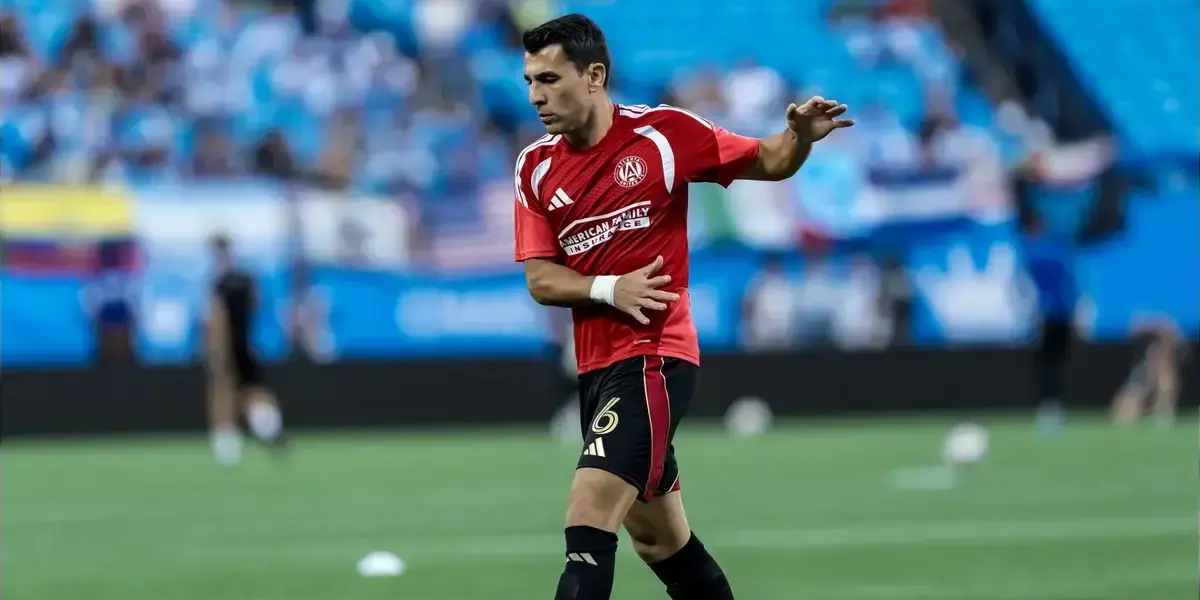
Atlanta United defender Júnior Alonso recently said something about Major League Soccer that sounds extreme at first, but the more you think about it, the more it reveals a fundamental truth about the league. The 33-year-old veteran, who has played extensively in South America and Europe for clubs like Lille and Atletico Mineiro, was asked about the difference between the environments.
His response, as reported by Atlanta journalist Jose Prosopio was stark: if a team were in Atlanta United’s current situation in South America—last in the standings—“the players wouldn’t even be able to go out, their cars could be burned.”
Naturally, there is nothing romantic about violence or vandalism. It’s not likely that Alonso wasn’t endorsing hooliganism; he was describing the weight of consequence. And while supporters of Atlanta United might criticize his mentality, calling it weak or suggesting he should simply motivate himself based on the money he’s being paid, that argument ignores how many humans actually operate. Motivation isn’t a light switch. It is cultivated by environment, and environments are shaped by stakes. Alonso was simply being honest about a structural reality that MLS has yet to solve.
Atlanta United Is the Perfect Case Study
Atlanta United might actually be the ideal example for this conversation. This is a club that won MLS Cup in its second season, filled Mercedes-Benz Stadium, and created one of the most electric atmospheres in American soccer. Anything less than competing for trophies felt unacceptable. Now, Atlanta is winless in eight matches and sitting at the bottom of the table after also being poor in 2025. Yet the world hasn’t stopped. The club isn’t facing relegation, there are no financial sanctions looming, and with significant improvement midseason, they could still sneak into the playoffs.
The supporters can be furious. The manager, Tata Martino, can be criticized. Players can be booed. But the consequences remain mostly contained to the club’s season. For a team with a World Cup stadium, serious training facilities, and a significant budget, going eight games without a win should be a catastrophe. Instead, it’s merely a bad stretch. This is the extreme example of a league-wide issue: in MLS, the regular season often feels like a long prelude to the postseason.
How Many MLS Games Actually Matter?
South America isn’t necessarily producing “better” football, but it does know how to produce spectacle, desperation and weighty moments more than MLS can at this point.
MLS is a closed league, and in 2026, eighteen of its clubs will have a path to MLS Cup. That is a perfectly reasonable American sports model, but it changes the psychology of the game. A team can be mediocre for months and still make the playoffs. A club can have a terrible stretch without facing the existential dread of relegation. A player can lose week after week knowing there is another opportunity coming.
It doesn’t mean the players don’t care. It means the structure itself creates less urgency. Compare that to a club fighting relegation in Argentina or Brazil, where every point can determine the future of the organization. A bad month becomes a crisis. A bad season changes the entire financial and sporting direction of the club, taking years to recover from. In MLS, the bottom of the table doesn’t carry that same weight. The owners protect their investments, and the safety net is wide, even as the quality of MLS keeps improving to the point it’s equal or better to a number of leagues with more historic reputations.
Zlatan Saw It Too
Junior Alonso isn’t the first player to point this out. In 2019, Zlatan Ibrahimović was asked about mentality in MLS and immediately went after the playoff system. “How can you learn mentality, if you just need to reach the playoffs?” he asked. His point was that mentality isn’t something you can suddenly switch on when the important games arrive. It has to be built every day, through the pressure of knowing that every dropped point matters, or that a loss to a rival could send supporters out into the streets or the training ground. He was frustrated that a team could finish seventh, make the playoffs, and still win the championship, making it difficult to cultivate a strong mindset.
Seven years later, Junior Alonso—a Paraguay international who is teammates with Miguel Almirón for both club and country—is describing the same cultural difference.
The Question of Motivation
Critics will say that great players don’t need the league to create pressure. They bring their own standards. Lionel Messi doesn’t need relegation to care. Darlington Nagbe, an MLS lifer, became one of the most respected professionals in MLS because he brought his own standards to every club he played for. But a league is more than its stars. What happens to the average player, the average club, and the average game when the surrounding environment doesn’t demand that same urgency? There are many players on MLS rosters who are neither promising young talents looking to move on to Europe, a bigger league, a bigger club, like Thiago Almada or Sebastian Berhalter, or accomplished veterans looking for one more run at glory like Robert Lewandowski or Thomas Muller. What might motivate these middle of the road players for whom MLS is their best level?
This is the part of Alonso’s comments that deserves more attention. We have seen the divide. Some MLS stadiums feel strangely empty for early Leagues Cup or Concacaf Champions Cup matches, yet the atmosphere changes dramatically when a club reaches the later rounds and suddenly has something enormous to play for. People care when they know what they are watching matters, and players care more when they feel something from the stands, whether it’s a cheer or a hiss.
It’s Not About Hooliganism, It’s About Stakes
Alonso isn’t saying MLS players are lazy or that American supporters don’t care. He’s describing a structural reality: the consequences are different, and consequences create pressure. Atlanta United is the extreme example—a club that went from championship glory to the bottom of the table. But here’s the deeper issue: the gap between the best and worst teams in MLS isn’t a chasm. The salary cap, roster rules, and playoff structure all work to compress quality. A bottom-dweller like Atlanta can beat a top team on any given night, which is exciting for parity but also dilutes the sense that being last is truly meaningful. When the distance between success and failure is that narrow, what does it really mean to lose?
Nobody should burn a car. Nobody should threaten a player or a manager. But football needs passion, and passion is much easier to create when there are real consequences for losing. Promotion and relegation would fundamentally change the economics of MLS, and the league isn’t going to become like Argentina or Brazil overnight, these are unrealistic goals. But there are other ways to make games matter more. Concacaf Champions Cup matters more when MLS clubs reach the later rounds. Leagues Cup matters more when supporters understand what is at stake. Rivalries matter more when they carry consequences beyond bragging rights.
Different Ways to Make a Statement
The difference in how fans react tells its own story. In South America or Europe, a supporter wears his club on his sleeve—or in his heart. Even when the team is awful, they still show up. They go to the stadium, fill the stands, and make their feelings known. They boo, they yell, they turn up at the training ground to demand answers. They organize protests outside the team hotel or coordinate an outright boycott, leaving the stadium eerily empty and the pitch silent as a form of collective punishment. The message is unmistakable: we are here, we are watching, and we will not let you forget what this means.
MLS fans respond differently. They vote with their wallets. When the team disappoints, they put the jersey in the back of the closet. They don’t renew the season ticket. They stop going to games, or they give their tickets away to casual friends who might not even know the names on the roster. It’s a quieter form of protest, but it matters—money talks in any league, and MLS owners notice when revenue dips.
But here’s the question: does it have the same impact on players? A silent stadium or a half-empty section sends a message to the front office, certainly. It pressures ownership to make changes, fire a manager, or spend on a designated player. But for the player on the pitch, an empty seat is abstract. The immediate, visceral pressure of thousands of people demanding more in that exact moment—that’s different. That’s the pressure Alonso is talking about. The South American fan who shows up to scream at you, who follows you to the training ground, who makes your failure feel personal—that gets into your head in a way a spreadsheet of declining ticket sales simply cannot.
MLS has spent years becoming better at producing players, building stadiums, and attracting stars. Now it has to figure out how to make the games themselves feel heavier. Alonso may have put it bluntly, but he isn’t wrong about the fundamental difference. Sometimes the most uncomfortable truths are the ones worth listening to.
Main Photo Credit: Smartframe Images