
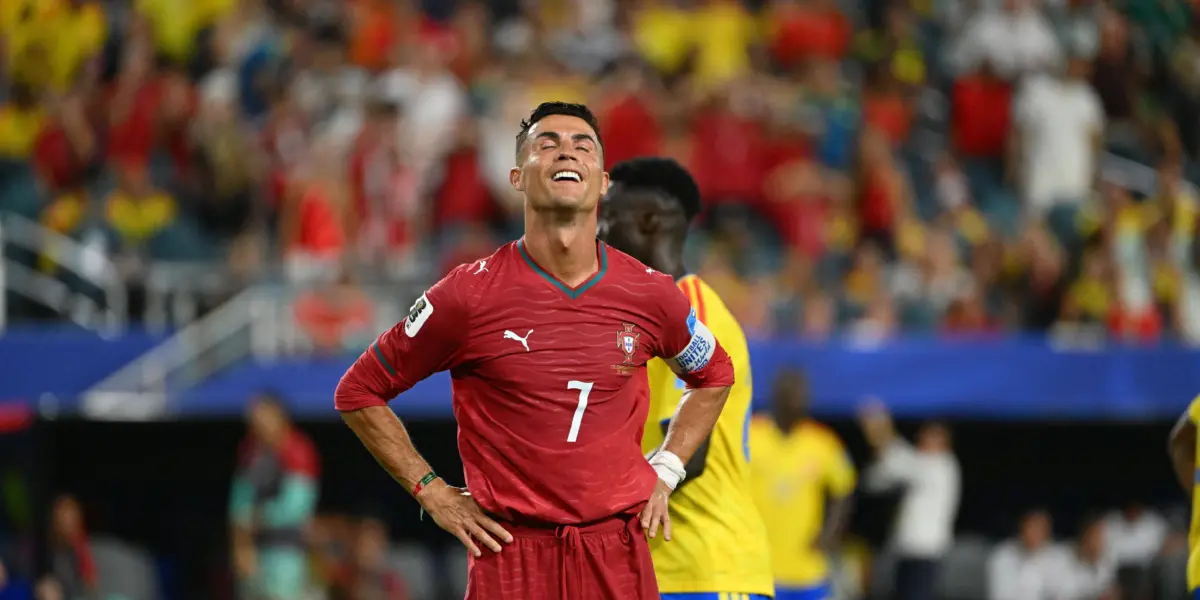
On November 5, 2026, Cristiano Ronaldo’s retirement from international football with the Portugal national team sent shockwaves across the sporting world as the day football fans had dreaded finally arrived. The 42-year-old decided to draw the curtains on an illustrious international career after 23 years of service, making 234 appearances and scoring an incredible 146 goals.
The five-time Ballon d’Or winner announced his decision to step away after the 2026 World Cup, leaving behind a legacy that will arguably take generations to match. On and off the pitch, Ronaldo has been a role model, an iconic figure and an inspiration to countless fans and aspiring footballers, encouraging them to push themselves to their limits in pursuit of greatness.
His departure has understandably attracted emotional reactions from teammates, supporters and the wider football community, with the Portuguese Football Federation going as far as immortalising his iconic No. 7 shirt in recognition of his extraordinary contribution to Portuguese football.
Portugal vs Denmark marked the national team’s first outing following Ronaldo’s retirement, as they returned to UEFA Nations League action without their iconic No.7.
Unfortunately, the emotional celebrations quickly gave way to an uncomfortable reality as the Seleção were thoroughly beaten 4-1 on home soil. Despite bouncing back with a 3-2 win over Wales on Tuesday, there were still arguments about whether Portugal without Ronaldo was a completely different proposition that began to emerge after the final whistle.
It was hardly the start anyone had anticipated for the post-Ronaldo era, particularly considering the quality and experience available within the Portuguese squad. The result inevitably raised questions about whether the Seleção and Jorge Jesus could maintain their competitive standards without their leading star man.
However, that disappointing performance should not be mistaken for an indication of long-term decline. While Ronaldo’s absence will undoubtedly leave a significant void, the Portugal national team possesses enough quality, tactical flexibility and emerging talent to navigate this transition successfully.
Cristiano Ronaldo’s retirement may have closed one of the greatest chapters in the country’s footballing history, but it could also provide an opportunity for a new generation to establish its own identity and take Portuguese football in a different direction.
Why the Portugal National Team Won’t Miss Ronaldo
1) Tactical Liberation and Modern Pressing: No more “Ronaldo-centric” gravity
For the Portugal national team, Ronaldo’s retirement offers an opportunity for greater tactical freedom.
For years, the Seleção’s attacking approach naturally revolved around finding their legendary captain in dangerous positions, particularly inside the penalty area. Understandably, having a player with Ronaldo’s extraordinary goalscoring record meant that teammates often prioritised getting the ball to him, sometimes at the expense of other attacking opportunities.
With 146 international goals to his name, it is difficult to argue that this approach did not produce remarkable results over the years. However, it also meant that the team occasionally became predictable, with their attacking patterns heavily influenced by the need to accommodate their talisman.
However, Portugal without Ronaldo could become a considerably more fluid and unpredictable attacking side. Rather than relying on one established goalscorer to provide the finishing touch, they can now distribute their attacking responsibilities across several technically gifted players.
This would allow the team to develop a more dynamic front three, with forwards capable of dropping deep, stretching opposition defences, making runs into the channels and interchanging positions throughout matches. Instead of having one obvious attacking reference point, the Seleção could present opponents with multiple threats that would be considerably more difficult to contain.
READ MORE: 2026/27 Premier League Title Race: Three Reasons Arsenal Will Win Back-to-Back Titles
2) High-Intensity Pressing and Fluid Positional Rotation
Another important consideration when assessing how tactically effective the Portugal national team could become in the post-Ronaldo era is the possibility of implementing a more aggressive pressing system. In modern football, “defending from the front” has become an increasingly important aspect of a team’s overall identity. International football now demands forwards who contribute defensively, particularly when facing technically superior opponents who are comfortable building attacks from the back.
Under Jorge Jesus, Portugal could benefit from having younger, more energetic attackers who are willing to press opposition defenders, close passing lanes and recover possession high up the pitch.
Players with greater mobility and work rates across the frontline would make it easier for Portugal to maintain their defensive intensity without constantly worrying about preserving the energy of their primary attacking outlet.
This is not necessarily a criticism of Ronaldo, whose extraordinary contribution to Portuguese football should never be understated. However, at 42 and approaching the final stages of his playing career, expecting him to consistently maintain the pressing intensity associated with younger forwards would be unrealistic.
Requiring him to sustain such physical demands over 90 minutes could also increase fatigue, potentially affecting his effectiveness in the attacking areas where his experience and goalscoring instincts remain most valuable.
His departure therefore gives the manager greater flexibility when deciding how aggressively the team should defend from the front. In the post-Ronaldo era, the Seleção could become more comfortable applying pressure higher up the pitch, forcing opponents into mistakes and creating goalscoring opportunities from turnovers.
Rather than having to manage the defensive workload of an ageing superstar, the Portugal national team coach could build a pressing structure around younger attackers who can sustain that intensity for longer periods.
Furthermore, the availability of different attacking profiles presents an interesting opportunity for greater positional rotation. Players such as João Félix, Pedro Neto, Rafael Leão and Francisco Trincão possess different qualities but share the technical ability and versatility required to operate in multiple attacking positions.
Ultimately, Ronaldo’s retirement could allow Portugal to move away from an attacking system that has naturally revolved around one individual for several years. Rather than depending on a single player to carry the goalscoring responsibility, the national team can develop a more collective approach in which different attackers contribute to the team’s overall output.
It does not mean they will automatically become a better attacking side, but it gives Jorge Jesus the opportunity to explore tactical possibilities that were previously more difficult to implement.
Replacing Ronaldo’s individual brilliance will undoubtedly be a difficult task. However, if the manager successfully takes advantage of the attacking depth, mobility and versatility available to him, Portugal without Ronaldo could become a considerably more balanced, energetic and unpredictable opponent.
3) An Embarrassment of Riches in Attack and Midfield
Another major reason why the Portugal national team could enjoy a relatively smooth transition into the post-Ronaldo era is the extraordinary depth of talent available across its attacking and midfield departments. Unlike several other countries that might experience a significant decline after losing their most influential players, the Seleção are certainly not short of quality replacements.
In fact, they have several established attackers capable of taking on greater responsibilities, alongside emerging talents who could become important figures in the years ahead. From defence to attack, the squad is littered with players who have won domestic league titles and European honours, giving Portugal an enviable level of experience and quality.
One obvious candidate to take on greater attacking responsibility following Ronaldo’s retirement is Gonçalo Ramos. The 25-year-old offers a natural centre-forward profile, combining intelligent movement, pressing ability and an eye for goal. Having already demonstrated his ability to deliver in important fixtures, the AC Milan striker could become an increasingly important figure in the years ahead.
Meanwhile, Chelsea duo Pedro Neto and teenage sensation Geovany Quenda, alongside Rafael Leão, offer different attacking qualities, ranging from explosive pace and individual brilliance to creativity and directness in wide areas. This variety of attacking profiles gives the team several options when looking to replace Ronaldo’s goalscoring contributions collectively rather than relying on one individual.
Yet, despite their abundance of quality in attack, the Portugal national team’s biggest strength arguably lies in the quality of its midfield.
For years, Ronaldo’s goalscoring contributions were often seen as the defining feature of the national team’s performances. However, this current generation of Portuguese stars possesses the technical ability and creativity to control games without necessarily depending on one superstar. Paris Saint-Germain duo Vitinha and João Neves, who were integral to their club’s recent Champions League successes, have established themselves as two of Europe’s most exciting midfielders.
They offer an excellent combination of composure, ball retention, intelligent movement and defensive work rate, providing the Seleção with the platform to dominate possession and dictate the tempo against even the strongest opponents.
Beyond those two, Bernardo Silva and Manchester United captain Bruno Fernandes make the midfield even more formidable. Fernandes brings exceptional creativity, incisive passing and an ability to produce decisive contributions in the final third, while Bernardo offers remarkable technical security, close control and the intelligence to exploit spaces between opposition lines.
Together, these players give Portugal multiple ways of creating goalscoring opportunities, whether through intricate combinations, quick transitions or sustained periods of possession. Rather than depending on Ronaldo to provide the decisive contribution, the team can now create chances through several different players.
Ultimately, the biggest advantage Portugal have heading into the post-Ronaldo era is that they do not need to find another Cristiano Ronaldo to remain successful. Their squad already possesses the attacking depth, midfield creativity and individual quality required to distribute the responsibility of winning matches across several players.
While Ronaldo’s retirement will undoubtedly leave an enormous emotional and sporting void, the Portuguese squad has an embarrassment of riches capable of filling it collectively. The challenge is now ensuring that this abundance of individual quality translates into a cohesive team capable of competing for major international honours.
YOU MAY ALSO LIKE: Manchester City Defence: How Enzo Maresca Can Fix The Flaws Behind Their Losing Run
4) A New Leadership Era and Freedom from Ronaldo-Centred Distractions
The leadership structure within the Portugal national team would also benefit significantly from Ronaldo’s retirement. For almost two decades, his presence, achievements and influence naturally made him the central figure in the dressing room, sometimes overshadowing other experienced players who could equally contribute to the team’s leadership.
His departure now creates an opportunity for established figures such as Bruno Fernandes, Rúben Dias, Bernardo Silva and several other experienced players to take greater ownership of the squad, guiding younger players and establishing a stronger sense of collective responsibility. With their experience captaining some of Europe’s biggest clubs, the Seleção have several personalities capable of filling the leadership void in Ronaldo’s absence.
Beyond the changing leadership structure, Portugal could also benefit from reduced media distractions following some of the controversies surrounding Ronaldo’s final moments with the national team.
His disagreement with Jorge Jesus in October 2026, following his omission from the starting eleven against Norway, attracted considerable attention after the forward walked out of the training camp in Denmark over what he perceived as a lack of respect from the Portugal head coach.
Subsequently, Ronaldo accused the manager of breaking promises concerning his playing time, while the Portuguese Football Federation handed him a 30-day suspension for leaving the camp.
Although the disagreement was eventually addressed, the incident showed just how quickly matters involving Ronaldo could overshadow the team’s actual footballing activities.
Ultimately, the post-Ronaldo era offers the Portugal national team an opportunity to build a more balanced dressing room in which leadership is shared and responsibility extends beyond one individual. Ronaldo’s contribution to Portuguese football will remain immeasurable, but the Seleção must now learn to function without constantly depending on his presence, both on and off the pitch.
Extra Time Notes
From now on, every defeat suffered by the Portugal national team will inevitably invite comparisons with the absence of Cristiano Ronaldo, with many questioning whether the Seleção would have achieved a different result had their legendary captain still been involved.
However, when one looks beyond the immediate reactions and examines the quality, depth and potential within the Portuguese squad, it becomes clear that Ronaldo’s retirement could ultimately benefit the team in the long run.
He will forever remain a legendary figure in Portuguese football, remembered as the man who helped lead his country to European Championship and Nations League glory, earning a place in the same conversation as other Portuguese greats such as Eusébio and Luís Figo.
At 42, having achieved virtually everything possible in the game and given more than two decades of service to his country, Ronaldo’s decision to step aside and allow a new generation to take responsibility could arguably be one of the most selfless decisions of his international career.
More UEFA Nations League News
England Nations League Quarter-Final Qualification: Concerns Thomas Tuchel Must Address
Romania vs Poland: Jan Urban’s Side Continues To Be Plagued By Negatives More Than Positives