

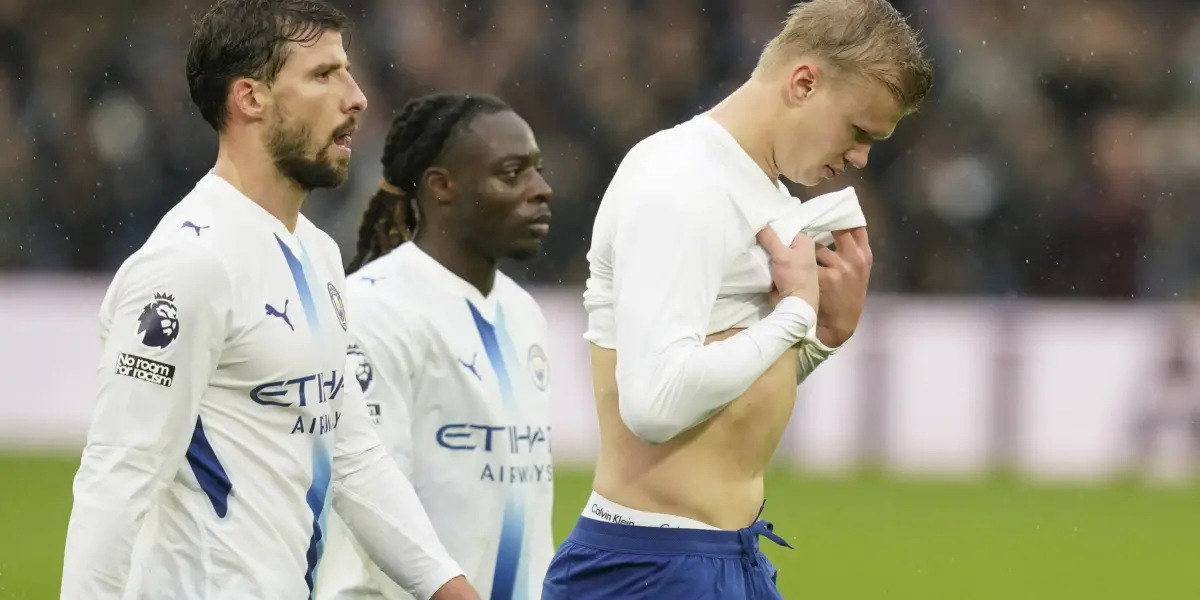
The Manchester City defence is facing a serious test under Enzo Maresca, with a team once admired for its defensive discipline now struggling to provide the security expected of a title contender. That contrast is particularly concerning given the quality of players available to him. Despite boasting some of the league’s best defenders, the Cityzens continue to look vulnerable at the back, and this has been central to their three consecutive league defeats.
Their defensive struggles have also made it easier for opponents to penetrate the back line, turning a weakness into a recurring issue that Maresca needs to address to get the team back on track. To restore that security, Maresca must look beyond backline errors and consider what needs to change in his defensive setup. His tactical decisions could prove crucial in determining whether the Manchester City defence can recover and bring their losing run to an end.
Manchester City Defence: How A Major Strength Has Become Their Biggest Problem
In terms of individual quality, the Manchester City defence is one of the best in the league and is expected to be a major strength and also shape the Enzo Maresca system. However, that advantage is now becoming one of the team’s biggest weaknesses. The Manchester City defensive record has been poor so far this season, with the team conceding 13 goals in 10 matches and also without a clean sheet in their last four league matches, clearly exposing defensive flaws.
Their struggles have also been reflected in the number of chances opponents are creating, as City have faced 39 shots on target, underlining how easily teams have been able to penetrate their defensive line and create goalscoring opportunities. Frequent individual errors and a lack of defensive organisation have affected their ability to compete effectively in matches, taking a toll on the Manchester City defensive record.
Beyond the goals conceded, these defensive struggles have disrupted the team’s overall balance and confidence, making it harder for them to impose their usual style of play. One area where this weakness has become particularly evident is in their inability to win defensive battles.
Losing The Battles: Why City Are Struggling To Win Defensive Duels
The Manchester City defence has fallen short in the number of duels won, and that has formed one of the major factors behind their defensive woes. This weakness was highlighted by Maresca following the team’s most recent 3-1 defeat to Nottingham Forest, where the failure to win individual battles emerged as a clear area of concern.
The statistics further underline the problem, as the Manchester City defence has won just 174 of the 303 duels contested in 10 league matches, losing 129 in the process. By failing to win aerial challenges, second balls, and one-on-one battles, City have given opponents opportunities to create dangerous situations in their box with ease. These weaknesses have directly affected their ability to defend crosses effectively and cope with more direct and physical attacking approaches.
Furthermore, a drop in collective intensity and aggression has made it harder for City to dominate the physical contests that often decide defensive situations. Their struggles in these battles have also made them more vulnerable when possession is lost, particularly against opponents capable of attacking quickly in transition.
Exposed In Transition: The Space Opponents Are Exploiting
Another factor contributing to the Manchester City defence becoming vulnerable is how easily opponents are opening them up in transition and exploiting that weakness. Teams have been able to launch rapid attacks the moment they regain possession, catching City’s defence out of shape before the players can recover their positions.
This flaw was particularly evident in their defeat to Nottingham Forest, as Liam Delap’s brace was driven by quick transitional attacks and counterattacks. City’s high defensive line and advanced attacking positioning, combined with midfielders failing to provide enough defensive cover, have left excessive space in behind that opponents are now exploiting.
At the same time, individual positioning errors and slow reactions have directly contributed to several of the goals City have conceded in transition. The team has also failed to recover as a unit quickly after losing the ball, creating large gaps between the midfield and defence. These problems suggest that the defensive line is not the only area requiring attention, as the midfield must also provide better protection to prevent opponents from reaching the back four so easily.
Midfield Protection: Why City Need More Support In Front Of Their Defence
Behind the Manchester City defence being so easily exposed in transition is the failure of the midfield unit to provide consistent support and recovery. The midfield duo of Elliot Anderson and Enzo Fernandez does not seem to be working, especially defensively, as they are not doing enough to shut down central passing lanes, win second balls, or prevent opponents from advancing through the middle of the pitch. This lack of coordination has left clear spaces between the midfield and the back line, which opponents are now utilising with ease.
To address this, Maresca may need to refine the midfield setup by introducing a disciplined holding defensive midfielder to screen the centre-backs and offer an effective first line of defensive resistance. With clearer communication and better defensive cover from the midfield unit, the Manchester City defence will face less pressure and become less exposed to attacks from opponents. However, even with improved midfield protection, City must also establish greater consistency in the central defensive partnership if they are to address the problems at the back.
YOU MAY ALSO LIKE: Romania vs Poland: Jan Urban’s Side Continues To Be Plagued By Negatives More Than Positives
The Centre-Back Problem: Can Maresca Find A More Reliable Defensive Partnership?
The Manchester City defence consists of quality defenders, but the available centre-backs have produced inconsistent displays and struggled to fulfil their responsibilities. One recurring problem has been their difficulty in consistently dominating physical and aerial contests against more direct attacking approaches. This has been further complicated by Maresca making frequent changes to his centre-back pairings, which appear to have disrupted communication and organisation along the back line.
Their positioning, recovery speed, and ability to manage the space behind the defensive line have also been tested and found wanting. To improve this situation, Maresca may need to settle on a more consistent partnership or simplify the defensive responsibilities placed on the centre-backs to improve their reliability. Finding the right partnership, establishing a clear tactical philosophy, and sticking with the duo will go a long way toward improving the Manchester City defence and giving the back line greater stability.
Maresca’s Tactical Fixes: What Must Change To Restore Defensive Stability?
While the Manchester City defence has been one of the team’s major weaknesses so far this season, Maresca needs to make some tactical adjustments to restore defensive stability and get the Manchester City form back on track.
One of the first changes should be refining the height of the defensive line and the team’s pressing structure to reduce the space and time opponents currently enjoy. Alongside this, finding the right midfield setup and improving coordination between the midfield and the back line are essential to closing the gaps that rivals have been exploiting. Faster recovery after losing possession, better defensive organisation, and improved defending from set pieces will also become important if City are to reduce the number of goals they concede.
In addition, adopting a more measured possession style could help limit the number of dangerous transitional moments City are forced to defend. Maresca must also raise defensive standards and collective discipline while still preserving the core attacking ideas that define his preferred approach. These adjustments will not only improve the team’s defensive shape if implemented effectively but will also be crucial in getting the Manchester City form back to winning ways.
Extra Time Notes
Manchester City’s defensive struggles have exposed problems with duels, transitions and the lack of midfield protection. These weaknesses have contributed to their three consecutive league defeats despite having quality defenders. Maresca now needs to improve the midfield cover, settle on a reliable centre-back partnership, and strengthen the team’s defensive organisation.
More Premier League News:
Chelsea Attack: How Xabi Alonso Can Rediscover Their Goalscoring Threat Without Joao Pedro
2026/27 Premier League Title Race: Three Reasons Arsenal Will Win Back-to-Back Titles

