

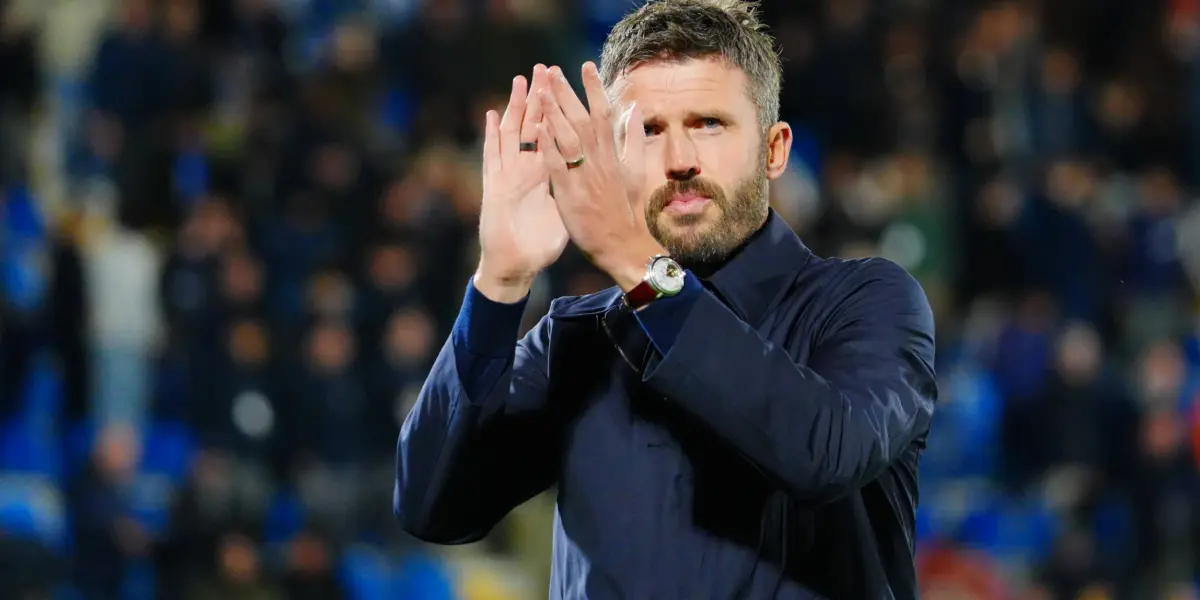
The next Man United manager has become one of the most talked-about topics in football on social media, and this comes as little surprise following the Red Devils humiliating 4-1 Champions League defeat to Italian newcomers Como.
What was already a difficult start to the campaign, marking the club’s worst start to a season since 1986, has developed into a full-blown crisis. From the boardroom to the sporting directors, coaching staff, players and supporters, frustration is mounting, with fingers being pointed in every direction as Michael Carrick’s side endure a seven-game winless run across all competitions.
For a club with Manchester United’s history and ambitions, such a prolonged spell without a victory is difficult to justify, particularly when performances continue to expose the same underlying problems. The defeat in Italy was especially concerning because United appeared incapable of responding after conceding an early goal.
Some supporters have even described the performance as the worst they have witnessed since they began following the club. By the time Joshua Zirkzee scored a stoppage-time consolation in the 91st minute, more than half of the travelling United supporters had reportedly left the stadium, further intensifying the scrutiny surrounding Michael Carrick’s future as Man United head coach.
However, the problem extends beyond the scoreline. Although individual mistakes contributed to the defeat, the bigger concern is the apparent absence of a coherent tactical identity. Manchester United are not simply losing matches; they are struggling to impose themselves on opponents, protect their defence and respond effectively when games move against them.
Their inability to maintain defensive organisation, control the midfield and apply consistent pressure on opposition players has raised serious questions about whether Carrick possesses the solutions required to turn the situation around.
The growing frustration, however, stems from the high expectations created by the Man United head coach’s impressive interim spell. During that period, he recorded 13 wins, four draws and just two defeats in 19 matches across all competitions. His Premier League record was equally encouraging, with 11 wins, three draws and two losses in 16 games.
These results played a significant role in convincing United to appoint him permanently, with hopes that he could build on his promising start and restore the club’s competitiveness. However, since taking the permanent role, the team’s performances have raised serious doubts about the direction of the project and whether the Englishman and his coaching staff can deliver the improvements required.
As a result, Michael Carrick’s future has become the biggest question at Old Trafford in the past few weeks.
With confidence seemingly deteriorating and questions emerging over the team’s tactical approach, the debate is no longer simply about when United will win their next match. It is increasingly about whether Carrick should remain in charge or whether the club must begin searching for the next Man United manager.
Julian Nagelsmann has emerged as an intriguing name in that conversation, with his tactical flexibility and experience at the highest level potentially offering a different direction for a struggling side.
Nevertheless, the next Manchester United boss must offer more than a temporary improvement in results; the club needs a clear footballing philosophy, greater defensive stability and a sustainable plan for returning to the top of European football.
Has Carrick’s Tactical Setup Exposed the Need for Change at Old Trafford?
So far, one of the biggest concerns surrounding Michael Carrick’s tenure as Man United head coach is the apparent lack of a clear tactical identity and his 4-2-3-1 formation’s failure to provide the balance needed.
On paper, the system should offer a combination of defensive protection, midfield control and attacking support. In practice, however, United have repeatedly struggled to maintain their shape, leaving the back four exposed whenever opponents bypass their initial press.
These problems are particularly evident in midfield. The partnership between Youri Tielemans and Kobbie Mainoo was expected to provide a blend of technical quality, composure in possession and defensive stability. Instead, the balance between progressing the ball and recovering possession has become a major concern, with opponents finding it increasingly easy to exploit the spaces left between United’s midfield and defence.
Their defeat to Como offered another example of these weaknesses. The Italian side moved the ball confidently, exploited gaps in United’s defensive structure and repeatedly found opportunities to advance into dangerous areas. Como’s second goal was particularly revealing, as just four passes from defence through midfield and into attack were enough to expose United’s defensive vulnerabilities.
Rather than controlling the tempo and dictating proceedings, Carrick’s men appeared reactive, allowing their opponents to grow in confidence and take control of the contest. Performances like this have only increased the uncertainty over Michael Carrick’s future.
This is where the debate surrounding the next Man United manager becomes increasingly relevant. A new appointment would need to do more than introduce a different formation or make changes to the starting eleven.
At this point, United require stability with a coach capable of establishing clear pressing triggers, maintaining appropriate distances between the defensive and midfield lines, and ensuring the team can transition between attacking and defensive phases without losing its structure.
Ultimately, the question is whether improvements can be made quickly enough to salvage the tenure or whether Michael Carrick’s future lies away from the club. With the tactical shortcomings becoming increasingly difficult to ignore, the decision facing the hierarchy is whether to give their current manager more time or begin searching for a successor who can provide a clearer footballing identity.
A managerial change at Old Trafford would carry massive weight. Finding a successor for Carrick means appointing the eighth permanent Man United head coach since Sir Alex Ferguson stepped down, further exposing the club’s decade-long battle to find true stability after his departure in 2013.
READ MORE: UEFA Champions League Matchday 3: Three Key Takeaways As Bayern Munich and Arsenal Draw
Michael Carrick’s Future: Have Public Dressing Room Disputes Strengthened the Case for a New Man United Manager?
Public spats and accusations appear to be becoming the new norm at Old Trafford. Following Manchester United’s 2-0 defeat to Atletico Madrid in the second gameweek of the Champions League, defender Lisandro Martinez reportedly criticised his teammates’ performance while also taking aim at the club’s hierarchy.
He expressed disappointment with the level of support provided to Michael Carrick during the summer transfer window, suggesting that the manager deserved greater backing. A few days later, reports emerged that the situation had been resolved, with Martinez receiving a warning and a fine.
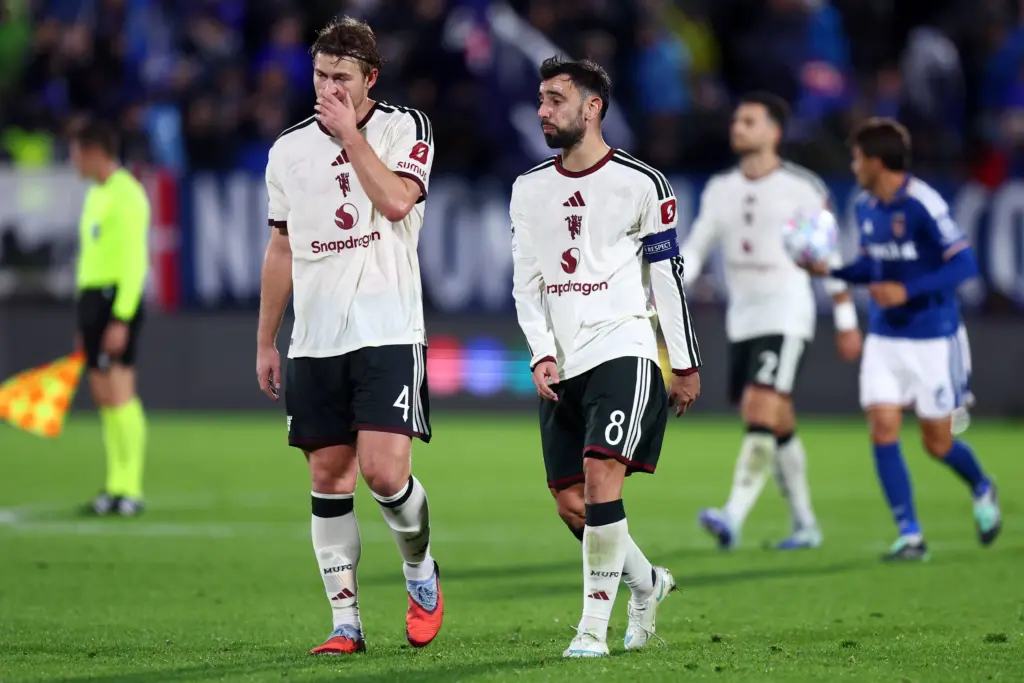
However, the Como defeat has brought another public disagreement to the forefront. This time, Manchester United captain Bruno Fernandes questioned the coaching staff’s decision not to press their opponents more aggressively, suggesting that the team’s passive approach allowed Como to control possession, grow in confidence and dictate the game.
Speaking after the defeat, Fernandes, who is struggling to rediscover the confidence that defined his performances last season, argued that United needed to show greater bravery under pressure and take more risks by pressing higher up the pitch.
His comments placed the spotlight directly on the tactical decisions made by Carrick and his coaching staff, raising further questions about the team’s approach to high-pressure matches.
For any Man United head coach, public criticism from the club captain represents an uncomfortable situation. Fernandes is one of Manchester United’s most influential players and the holder of the PFA Players’ Player of the Year award.
His remarks highlight a potential disagreement over how the team should approach matches, particularly when facing opponents capable of exploiting their defensive weaknesses. While such criticism does not necessarily mean Carrick has lost the dressing room, it suggests that concerns about the team’s performances extend beyond the stands.
For his part, the Man United head coach refused to place the entire responsibility on his tactical approach. Carrick argued that, regardless of the system employed, his players must demonstrate the intensity, work rate and commitment required to compete.
His position has also been echoed by pundits and former teammates who believe that players must take responsibility for their performances rather than attributing every failure to managerial decisions.
A manager must provide a system that allows his players to perform effectively, but those players must also execute their instructions with the necessary discipline and determination. When either side fails to fulfil its responsibilities, the entire team suffers.
This is precisely why Michael Carrick’s future has become such an important talking point in the debate surrounding the next Man United manager. Persistent disagreements over tactics, coupled with a prolonged winless run, risk creating an atmosphere in which frustration overshadows the collective effort required to turn results around.
A fractured dressing room, where players are unwilling to fight for the manager or fully commit to his tactical instructions, is a recipe for disaster at any club, let alone one with Manchester United’s ambitions. The hierarchy must therefore determine whether Carrick can restore confidence in his leadership and establish a shared vision with his squad or whether a change in management is necessary.
Tactical Evolution: Moving Beyond Interim Fixes
One of Manchester United’s biggest problems since Sir Alex Ferguson’s departure in 2013 has been the club’s inability to establish long-term managerial stability. From experienced managers to club legends and interim appointments, the hierarchy has repeatedly searched for the right person to restore the club to its former glory, all to no avail.
The cycle of managerial changes has done little to address the deeper structural problems that continue to undermine the team’s performances.
The appointments of Ole Gunnar Solskjaer and Michael Carrick reflect the club’s willingness to turn to familiar faces during periods of uncertainty. While both men may have “the United DNA”, familiarity with the club does not automatically translate into the tactical expertise required to compete consistently at the highest level.
If Michael Carrick’s future does not lie at Old Trafford, Julian Nagelsmann presents an interesting alternative.
Rather than another appointment driven primarily by his connection to the club or his ability to steady the ship temporarily, the former Bayern Munich boss represents a different managerial profile: a tactically progressive coach whose experience at elite level could offer United a clearer footballing direction.
If the club is serious about rebuilding, the search for the next Man United manager should focus on identifying someone capable of implementing a sustainable playing philosophy rather than simply delivering an immediate improvement in results.
Why Julian Nagelsmann Could Be the Right Choice for Old Trafford
At 39, Julian Nagelsmann, alongside Brighton’s Fabian Hürzeler, another manager linked with the next Man United manager role, represents a new generation of coaches challenging traditional approaches to football management.
Hürzeler, 33, became the youngest manager in Premier League history when he took charge at Brighton. Both are known for a modern, tactically flexible style, a clear break from the old-school, hands-off approach that dominated for decades.
Despite his relatively young age, Julian Nagelsmann has already built an impressive managerial résumé, having coached major European clubs such as Bayern Munich and RB Leipzig before taking charge of the German national team. His time at Bayern, in particular, exposed him to the immense pressure of managing a club expected to compete for domestic and European honours every season.
During his spell in Bavaria, Nagelsmann won the Bundesliga title and two DFL-Supercups. He had also earned recognition earlier in his career, being named VDV Bundesliga Coach of the Season after guiding Hoffenheim to a Champions League qualification spot.
His managerial journey has also seen him work in different footballing environments. At Leipzig, he established himself as a coach capable of organising an aggressive pressing system while encouraging his players to attack with speed and precision.
However, the pace and physical intensity of the Premier League cannot be directly compared with those of the Bundesliga, as the two competitions present very different challenges. Nagelsmann’s credentials should not be mistaken for a guarantee of success at Old Trafford. Managing Manchester United would bring its own pressures, from relentless media scrutiny and enormous expectations among supporters to the need to address the tactical shortcomings that have become increasingly apparent within the squad.
Nevertheless, among the names linked with the next Man United manager role, Nagelsmann stands out as a compelling candidate. Whoever takes charge must be capable of handling the pressure while establishing a clear and consistent footballing identity.
His experience in Germany’s biggest club competitions provides a solid foundation for that challenge, although his success at Old Trafford would ultimately depend on how effectively he adapts to English football.
YOU MAY ALSO LIKE: Rio Ngumoha Starting Spot: Has The Brilliant 18-Year-Old Forced Andoni Iraola’s Hand?
Tactical Adaptability: A Key Requirement for the Next Man United Manager
Adaptability should be a defining characteristic of the next Man United manager. In the Premier League, understanding when to change formations to counter an opponent’s tactical setup is essential.
Managers must know how to break down a low block, when to initiate a counter-press, and when to adopt a more conservative approach to protect their defence. The ability to recognise these situations and make timely adjustments can be the difference between winning and dropping valuable points.
Julian Nagelsmann has demonstrated a willingness to experiment with different formations, including systems built around three centre-backs and variations of the 4-2-2-2.
The latter creates a narrow attacking structure in which two deeper midfielders support four players operating between the lines or in advanced central positions. This can help a team overload the middle of the pitch, combine quickly in tight spaces, and create opportunities for forwards to attack the penalty area.
Nagelsmann’s use of a three-centre-back system also offers another tactical option. With three defenders providing a solid foundation, wing-backs can push forward to supply attacking width while maintaining defensive cover. This flexibility allows a team to adapt its approach depending on the opposition, rather than relying on a single system regardless of the circumstances.
These qualities are particularly relevant to Manchester United, whose recent performances have raised questions about their ability to respond when opponents disrupt their preferred approach.
When an initial game plan fails, the team needs a manager with strong tactical awareness who can identify weaknesses, interpret how a match is unfolding, and introduce effective adjustments. Simply changing formations is not enough; those changes must address the problems on the pitch and give the players a clear understanding of their responsibilities.
Ultimately, the question is whether Manchester United are prepared to move beyond the cycle of short-term solutions that has characterised much of their post-Ferguson era. Appointing Julian Nagelsmann would not automatically guarantee success, but it could represent a deliberate shift towards a manager whose reputation is built on tactical innovation, adaptability, and a clearly defined footballing philosophy.
Extra Time Notes
A proper structure, consistency, and quality players with the right mentality are essential if Manchester United want the coming years to look any different from the struggles of the past.
The club remains one of the biggest in English football, but its reputation alone cannot guarantee a return to the top. As Mikel Arteta demonstrated at Arsenal, rebuilding requires patience, a clear footballing philosophy, and the backing of the board, even when the results are not immediate.
The same level of trust and long-term planning will be necessary, whether United decide to continue with Michael Carrick or appoint a new manager. The road ahead will not be straightforward, and there will inevitably be setbacks. However, with the right leadership, recruitment, and stability, Manchester United can begin to rebuild a team capable of challenging consistently for major honours.
If the board decide to retain Carrick as Man United head coach, he must be given the support and time needed to establish his philosophy and address the team’s weaknesses. However, if the club believes a change is necessary, Julian Nagelsmann presents an intriguing alternative. His tactical flexibility, experience at the highest level, and ability to develop a distinct footballing identity make him a candidate worth serious consideration.
Ultimately, the debate surrounding the Next Man United Manager should not be reduced to choosing between Carrick and Nagelsmann. The bigger question is whether the club’s leadership is finally prepared to commit to a coherent long-term plan. Without that commitment, even the most promising appointment could struggle at Old Trafford.
More Premier League News
Premier League Matchday 7: Three Key Takeaways as Arsenal Struggle Against Nottingham Forest


