
Every FIFA World Cup creates unforgettable triumphs, but it also leaves behind stories of shattered expectations. While some nations rose to the occasion and etched their names into history, others arrived as genuine favourites only to leave the tournament far earlier than anyone anticipated.
That reality has made the World Cup 2026 biggest disappointments one of the tournament’s defining talking points, as several elite nations failed to live up to expectations despite entering the competition among the favourites.
Perhaps what made those underwhelming campaigns even more surprising was the quality at their disposal. Many of these teams arrived with star-studded squads and genuine ambitions of lifting the trophy, but to the surprise of many, they failed to deliver as frustration overshadowed their campaigns.
The World Cup 2026 biggest disappointments ultimately became just as memorable as the tournament’s greatest success stories, making it impossible to ignore how several football giants fell well below the standards expected of them.
World Cup 2026 Biggest Disappointments: When Expectations Collided With Reality
The World Cup 2026 biggest disappointments are the teams whose campaigns fell far below the standards expected of nations with their quality, pedigree and ambitions.
They entered the tournament as genuine contenders, with many analysts and fans tipping them as heavy favourites or predicting deep runs because of their star players, squad depth and impressive form leading into the competition.
However, expectations quickly collided with reality as these football powerhouses underperformed, with early exits becoming the defining theme of their respective campaigns.
These World Cup 2026 flops struggled for several reasons, ranging from tactical issues and poor form to over-reliance on star players, weak team cohesion and an inability to respond when matches became difficult.
Their performances will remain one of the defining stories of this tournament and a reminder of how one generation failed to deliver on football’s biggest stage.
Germany: When Possession Lost Its Purpose
Germany remain central to the World Cup 2026 biggest disappointments after the football world was stunned by their Round of 32 exit to Paraguay.
A team widely regarded as one of the favourites to lift the trophy was eliminated on penalties, and a major reason behind that disappointment was an issue that has become increasingly evident in recent years: possession without purpose.
Germany controlled matches with high possession percentages, dominating long spells of games but consistently struggling to create clear-cut chances or penetrate organised defensive structures.
Opponents quickly figured out their predictable build-up play and attacking routines. Their reliance on wide overloads and set-piece patterns became easier to defend, while their inability to convert control into decisive moments proved costly.
Tactical rigidity also became another recurring issue, as they lacked an effective Plan B against organised low blocks or aggressive counter-pressing teams, exposing major flaws in their overall approach.
Those shortcomings made them one of the World Cup 2026 underperformers as a squad capable of challenging for the trophy failed to match expectations.
Brazil: A Midfield That Couldn’t Win the Biggest Battle
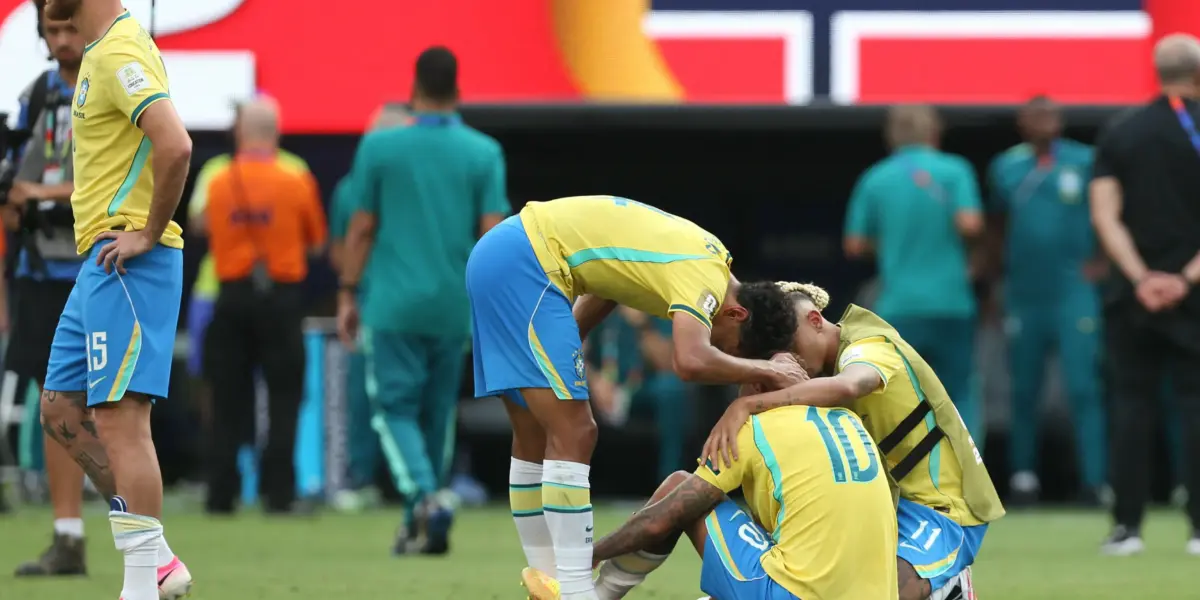
A Brazil side led by Carlo Ancelotti entered the tournament as genuine contenders but eventually became one of the World Cup 2026 biggest disappointments.
A recurring issue throughout their campaign was a midfield that failed to dictate matches or control possession against elite opponents. That weakness was already evident in their opening fixture against Morocco before becoming even more costly in their Round of 16 defeat to Norway.
Despite boasting midfield stars such as Bruno Guimaraes, Casemiro and Fabinho, Brazil struggled to dictate the tempo, control possession and win key midfield battles, as they repeatedly failed to pick up opposition runners from deep, allowing teams to play through them far too easily.
As a result, the defence became increasingly exposed, with defenders constantly left under pressure whenever the midfield line was broken.
That ultimately placed Brazil among the World Cup 2026 flops as a squad blessed with enormous quality failed to reach the quarter-finals.
Portugal: Too Many Stars, Not Enough Connection
Portugal entered the tournament as arguably one of the most complete squads on paper, with every position filled by elite talent, but their inability to function as a cohesive unit placed them among the World Cup 2026 underperformers.
A major factor behind that was a midfield trio that never truly clicked. Despite having Vitinha, Joao Neves and Bruno Fernandes, they lacked rhythm, balance and chemistry, consistently failing to link midfield and attack effectively.
The attack also struggled to get the best out of Cristiano Ronaldo. The forward line often looked disconnected, with poor service into the veteran striker while the supporting attackers rarely created the movement needed to unlock organised defences.
There was a visible disconnect between the midfield, attack, full-backs and wingers, making Portugal appear more like a collection of talented individuals than a well-structured team.
That lack of cohesion led to their Round of 16 exit as another golden generation became one of the World Cup 2026 flops.
Uruguay: A Team That Couldn’t Protect Either Box
Uruguay not only earned a place among the World Cup 2026 biggest disappointments, but they also underperformed across almost every department of the pitch.
A talented side coached by Marcelo Bielsa was expected to make a deep run in the tournament, yet they failed to progress beyond the group stage.
The team lacked attacking sharpness despite possessing quality forwards. They created opportunities but struggled with clinical finishing, particularly during decisive moments.
Defensive instability also defined their campaign. They conceded soft goals, looked vulnerable against direct football and quick transitions, while set-piece defending remained another major weakness.
Although they had technically gifted midfielders, they failed to control possession or dictate the tempo consistently, leaving themselves exposed to counter-attacks while also losing the physical dominance that traditionally defines Uruguay.
With all these issues combined, they failed to win a single match despite facing teams such as Cape Verde and Saudi Arabia, leaving them among the World Cup 2026 underperformers.
Senegal: A Team That Never Found Its Balance
Senegal entered the tournament as one of Africa’s highest-ranked nations and one of the continent’s strongest teams, with many expecting them to make another deep World Cup run.
However, several on-field and off-field issues surrounded their campaign as a team with so much quality never truly found its balance, placing them high among the World Cup 2026 biggest disappointments.
Their open and vulnerable defensive structure became central to their early exit. A side traditionally known for defensive solidity suddenly looked exposed and disorganised, conceding nine goals in just four matches.
A lack of cutting edge in attack also proved costly. Despite creating numerous chances, clinical finishing became a major weakness, while the team consistently struggled to combine defensive stability with effective attacking transitions.
Those issues made Senegal one of the World Cup 2026 flops as they were eliminated in the Round of 32 after winning just one match throughout the tournament.
YOU MAY ALSO LIKE: Spain World Cup Win: Once Talented Underachievers, Now European Superpowers
Different Paths, Same Destination: What These Failures Teach Future Contenders
The World Cup 2026 biggest disappointments tell the story of several football giants that failed to live up to expectations despite possessing squads capable of challenging for the trophy.
Although each team had different problems, they all shared similar shortcomings: poor team cohesion, tactical imbalance, weak game management and an inability to deliver when it mattered most.
The tournament once again proved that individual quality alone is never enough to win the World Cup. Success on football’s biggest stage requires tactical flexibility, collective understanding, strong mentality and a team capable of performing under the highest pressure.
That is perhaps the biggest lesson future contenders must learn if they hope to avoid becoming the next names added to the list of the World Cup’s biggest disappointments.