
Inter Miami’s 2026 preseason tour is not just a warm-up for another MLS campaign—it’s a continued statement. While most MLS clubs treat preseason as a closed-door tune-up or low key affair, Inter Miami continues to operate with a global, and specifically Latin American, mindset. The club understands that soccer culture, money, media attention, and long-term growth don’t stop at the U.S. border. Once again, the Herons are one of the few MLS teams acting like it and trying to take MLS to the next level as a globally relevant league.
Inter Miami’s 2026 Preseason Tour in January and February sees the club continue to strengthen their ties to the South American continent. After a 2025 tour that saw stops during the pre-season in Panama, Honduras, and Peru, the 2026 pre-season tour before the start of the MLS season and 2026 CONCACAF Champions League sees the Herons visit Lima, Peru, Medellín, Colombia, and Guayaquil, Ecuador for matches against three iconic South American clubs.
Inter Miami’s January Pre-Season Tour
Tickets are already for sale for the three Inter Miami matches on their South American tour. On January 24th they take on Alianza Lima, considered one of Peru’s “big three” clubs. After a match last year against Universitario in Lima, Estadio Alejandro Villanueva, which seats 33,938, is the host to this year’s game in Peru. Alianza Lima finished third in the aggregate table for the 2025 Peru Liga 1 season and will participate in qualifying for the 2026 Copa Libertadores. The squad includes two Argentine midfielders, Guillermo Enrique and Alan Cantero, along with two of the oldest active players in world football: legendary Argentine striker Hernán Barcos, the club captain, and defender Paolo Guerrero, both 41.
Estadio Atanasio Girardot in Medellín, Colombia is home to match number two on the pre-season tour on January 31st. The 44,826-capacity stadium hosts a match between Inter Miami and the home team, Colombia’s king of cups, Atlético Nacional. The recent Copa Colombia champions have a veteran squad that includes Colombian international goalkeeper David Ospina and midfielder Matheus Uribe. Former Rangers striker Alfredo Morelos may also feature, along with younger transfer targets like defender Simón García and midfielder Juan Rengifo.
The third match on the pre-season tour is February 7th at 8 p.m. at the Monumental Stadium in Guayaquil, Ecuador. The 57,267-seat venue is home to Ecuador’s most supported club, Barcelona SC. The Liga Ecuabet side regularly participates in the Copa Libertadores and finished third in the most recent league season. “Ecuador’s idol” is led by Uruguayan striker Octavio Rivero, while 24-year-old attacking midfielder Joaquín Valiente is another key figure in the squad.
The scheduled match is also likely to honor the memory of Barcelona SC defender Mario Pineida, who was murdered by a criminal gang in December at 33 years old.
Inter Miami starts their MLS season in a marquee clash against LAFC in Los Angeles on February 21st. They receive a first round bye in the 2026 CONCACAF Champions Cup, after winning their first ever MLS Cup title. They would face the winner of Atletico Ottawa from the Canadian Premier League and MLS side Nashville SC (who they beat in the 2025 MLS playoffs) in round 2 in March.
Inter Miami’s Long-Term Strategy to Market and Invest in Latin America
The star power of Lionel Messi and his teammates—which now includes Argentine international Rodrigo De Paul and possibly the final season of former Uruguay international Luis Suárez—carries as much weight in South America as it does in North America. David Beckham and Jorge Mas have clearly determined that the club’s financial and sporting ceiling is higher if Inter Miami expands beyond South Florida and the United States and stays relevant in those markets beyond the Messi years.
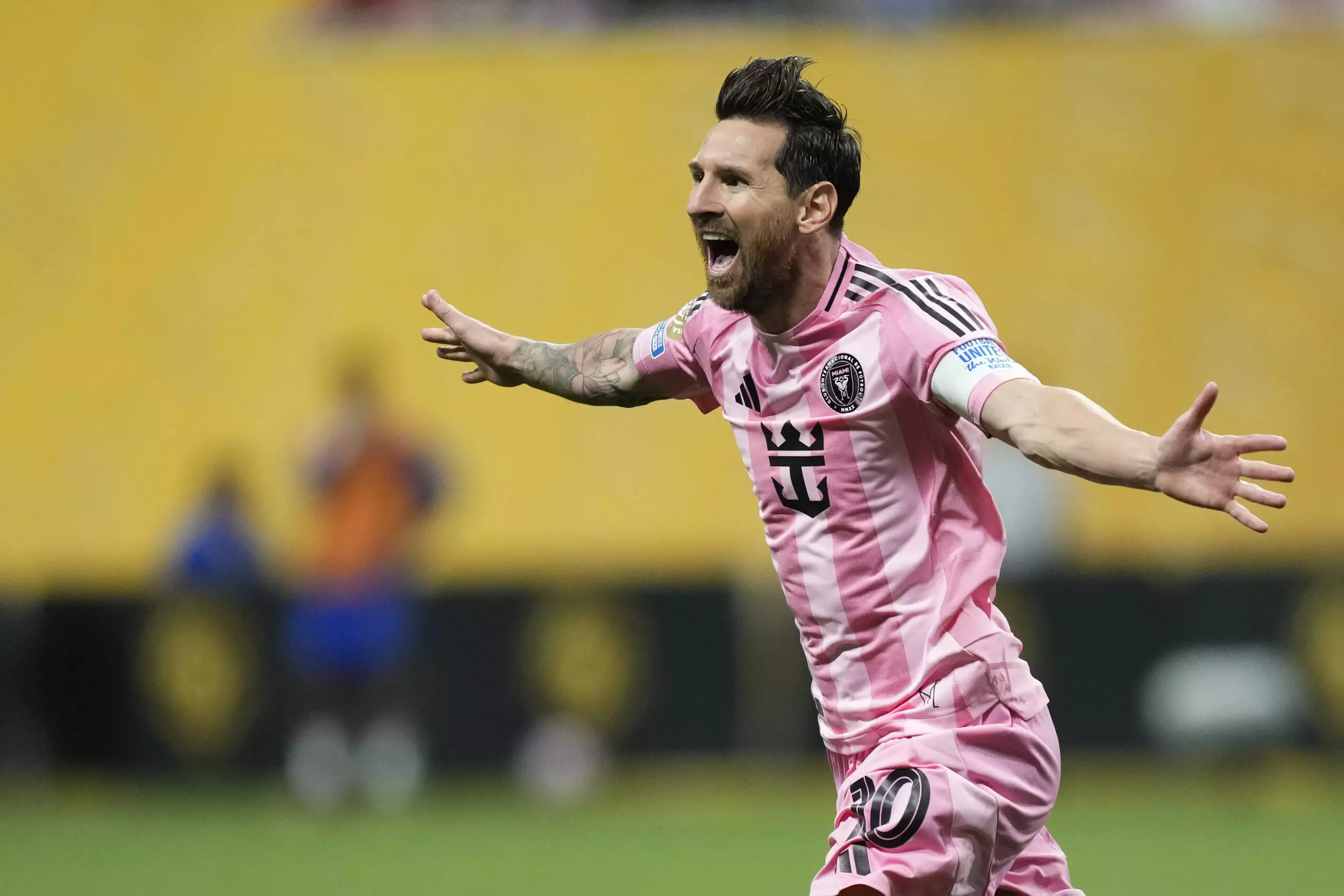
Miami is already the economic and cultural gateway to Latin America, and Inter Miami is the only MLS club with a visible, intentional presence in South America—even if that presence often begins with the now-iconic pink Messi #10 jersey.
While Messi’s future as an active player after the 2026 World Cup remains uncertain, what is certain is that Inter Miami intends to maintain long-term ties to the CONMEBOL region. Playing iconic clubs like Atlético Nacional and Barcelona SC keeps the club relevant in Latin American media and creates marketing opportunities that few MLS teams even attempt. Press coverage in these countries is already treating these preseason matches as major events. Despite being friendlies, they generate real money for Inter Miami, the host clubs, and the stadiums involved. CONEMBOL clubs have been trailing in the global football financial arms race, and are still very dependent on gate ticket sales, rather than league revenues or TV rights to afford to retain and attract quality players.
Beyond the financial upside, Inter Miami benefits from matches broadcast on television across Latin America, while the club’s scouting department gains direct access to talent pipelines in CONMEBOL leagues. While South American signings do not always succeed, history has shown that MLS teams willing to invest and scout seriously in the region tend to win trophies.
Inter Miami’s current young core includes players like Mateo Silvetti (Argentina), and Telasco Segovia (Venezuela). The addition of Uruguay’s Maxi Falcón strengthened the back line, and the club also took on former Barcelona SC forward Allen Obando (Ecuador), who at 19 has seen limited minutes so far. Even after Messi’s era ends, the club appears positioned to rely on players like these to build competitive MLS-level rosters and complement the well compensated stars in the designated player spots. Miami being comfortable as a home for Spanish and Portuguese speakers is also a big factor in terms of player recruitment.
Comparison to MLS Competition and an Eye on the Libertadores
Playing preseason matches against top CONMEBOL teams that regularly qualify for the Copa Libertadores and Copa Sudamericana provides a higher caliber of preparation than most MLS clubs experience. It also sharpens Inter Miami for MLS play and CONCACAF Champions Cup competition.
As MLS champions, Inter Miami would hypothetically be competitive against many Libertadores sides, though the roster still trails elite Brazilian clubs like Intercontinental Cup finalist Flamengo and Brazilian league runners-up Palmeiras.
CONMEBOL has already shown a willingness to bring major tournaments like Copa América to the United States as a revenue driver, most recently with the final between Colombia and Messi’s Argentina played in Miami. Should FIFA and the confederations again allow cross-confederation participation in club tournaments, it would not be surprising to see CONMEBOL reopen the Libertadores and Sudamericana to CONCACAF teams, including MLS and Liga MX. Liga MX previously sent lower-ranked teams to the Libertadores while prioritizing CONCACAF competition with its top clubs.
MLS has already partially experimented with this idea through the Leagues Cup, a midseason tournament designed to tap into the Mexican and Mexican-American fan market. While Leagues Cup currently features only MLS and Liga MX teams, the concept could easily expand to include CONMEBOL clubs with significant U.S. followings—Boca Juniors, Atlético Nacional, Millonarios, Flamengo, Universitario, and Barcelona SC among them. Many of these teams already draw large crowds for friendlies in the United States, and Flamengo and Boca Juniors were among the most supported clubs at the 2025 FIFA Club World Cup.
What stands out is that, for now, Inter Miami is standing alone. No other MLS club is seriously touring South America, building sustained media presence, or leaning fully into the Latin and South American market the way Miami has. Clubs like Atlanta United or New York City FC could easily justify preseason tours through Central or South America given their fanbases and roster profiles, both financially and culturally. The fan base exists. The appetite exists. The opportunity is there. Many Latin Americans MLS fans who reside in the United States also support at least one other club in a league like Liga MX or the Argentine or Colombian leagues, seeing their MLS club play those teams can be a meaningful experience, like the Club America friendly against Inter Miami last season.
But until someone else steps up, this remains Messi mania, Inter Miami style—playing at iconic stadiums, against iconic clubs, in front of audiences that MLS claims to want, yet largely ignores. Miami isn’t just cashing in. They’re showing the rest of the league what’s possible if MLS truly wants to think bigger and think beyond borders.
Main Photo Credit: Imago Images Copyright: xJosexBretonx