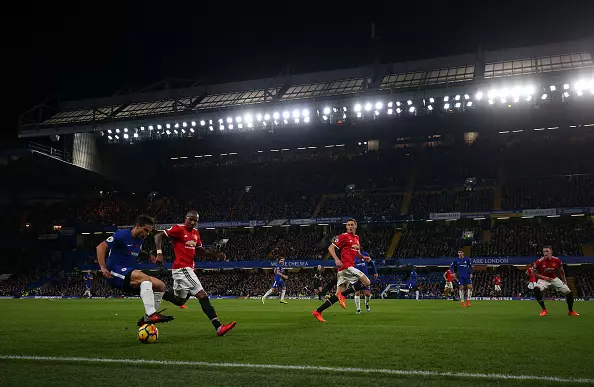

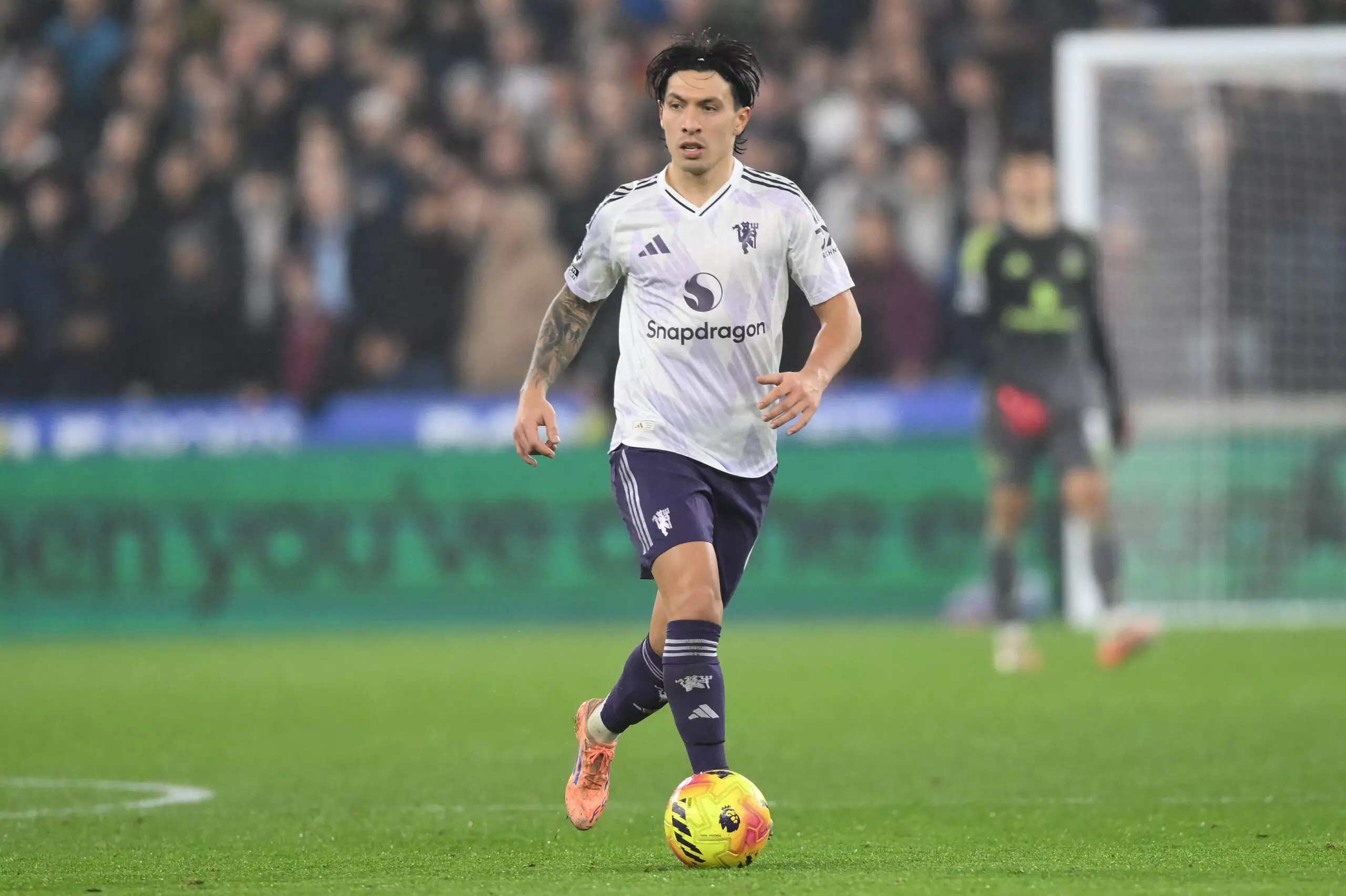
On Monday night at Hill Dickinson Stadium, Everton’s plan was simple: suffocate Manchester United in their own half, rush decisions in build-up, and force turnovers close to goal. Lisandro Martinez’s importance to Manchester United became obvious early, because this was exactly the kind of match where calmness on the ball decides whether pressure becomes a trap or just noise.
Everton pressed to create doubt, not beauty. Make every first touch feel heavy. Make every short pass look risky. Force the goalkeeper and centre-backs into choices they do not want to make, and keep the ball living around United’s box long enough for an error to arrive.
As the game developed, one absence explained why United looked less settled. Lisandro Martinez’s absence vs Everton due to injury not only removed a defender. It removed order in the first phase, and it magnified Manchester United’s defensive third problems that stay quieter when he plays.
When Martinez is available, United’s defensive third is a platform. He receives on angles that open the pitch, keeps his body shape ready to play forward, and makes the simple option feel like control rather than relief. Without him, the build-up can start with hesitation.
One extra touch. One extra second searching for a pass that arrives late. That is all opponents need, because pressing is as much about planting doubt as it is about winning the ball.
Everton’s press fed on that uncertainty. They did not need to win the ball with the first sprint. They only needed to make the next pass awkward, and the next decision rushed. When the centre-backs cannot step in with confidence or play through pressure with composure, the whole team sinks.
Midfielders drop closer, distances stretch, and the next pass becomes harder because the shape is no longer connected. Fullbacks receive with fewer angles, midfielders receive with a marker tight to their back, and the safest option becomes a clearance that simply invites Everton forward again. This is how Manchester United’s defensive third problems show up: not always as one big mistake, but as small panics that invite the next wave.
That is the real reveal. Martinez’s value is not only in what he stops. It is in what he prevents from starting: rushed clearances, repeated pressure, and the sense that the ball is a problem instead of a tool.
Size Doubts and the Value People Overlooked
Size, height, and physicality matter for a centre-back. The Premier League will always test you in the air and in the box. Martinez has never been immune to that reality, but he has often been judged by the media and pundits only by that deficiency, while his major value gets overlooked.
His game is built on controlling situations before they become wrestling matches. He arrives early, not late. He turns a risky moment into a routine one by reading where the danger is going, not where it already is. He reads danger early, steps into passing lanes, and stops attacks while they are still ideas.
He also gives United something that does not show up on a height chart: calm. Calm keeps distances tighter, keeps midfield reachable, and reduces desperate defending. Fewer desperate moments means fewer repeated box situations where size becomes the headline.
Lisandro Martinez’s Importance to Manchester United in the Centre-Back Pairing
Centre-backs are a duo. The best partnerships are not two identical profiles, but two roles that cover each other. That is why Manchester United’s centre-back pairing matters so much when Martinez is missing, because the unit loses its balance.
Martinez is a front-foot defender. He wants to engage early and win the ball before attacks settle. That aggression is only a problem when it is unsupported. When the partnership is set up correctly, it becomes a shield that stops the opponent from building clean attacks at all. That profile allows the line to be braver and the midfield to stay connected. United can squeeze space instead of backing into it.
This is where Harry Maguire comes in. For all the noise that follows him, he offers a profile that can complement Martinez well. He brings height, strength, and comfort in the aerial battle. He competes for first contact and gives United a natural answer when opponents go direct. In other words, the partnership becomes balanced rather than duplicated.
With that mix, responsibilities are clearer. If Martinez steps out to challenge, Maguire can hold the line and protect the space behind. If opponents go direct, Maguire can compete for first contact, while Martinez positions himself for the second ball and the first forward pass.
Martinez can step in aggressively because his partner can cover the space behind and deal with the more physical parts of the battle when the ball is forced wide. Maguire can lean into his strengths because Martinez helps prevent long spells of siege by keeping United braver and cleaner in possession. One helps win duels. The other helps win control.
Take Martinez out, and the pairing often becomes reactive, which was the case withthe Maguire-Yoro pairing. More balls return quickly, the line drops, and decisions turn into clearances. That is how balance becomes chaos. That is when Manchester United’s centre-back pairing looks less like roles and more like reactions.
The Evidence that Backs the Feeling Up
The Everton match did not only feel like United were inviting pressure in their defensive third. The flow suggested long spells pinned back, dealing with repeat phases, and struggling to build clean exits. It is the kind of match where corners and second balls stack up, and where one sloppy touch in your own third becomes an instant chance for the opponent.
Those sequences become cumulative. A hesitant first pass leads to a rushed second pass. The rushed second pass becomes a clearance. The clearance returns. The pressure restarts. This is the environment where Manchester United’s defensive third problems become impossible to hide.
That is why Lisandro Martinez’s absence vs Everton hurt the team in this regard. It is not only about keeping the ball, it is also about where the ball lives. The team that builds cleanly spends less time defending its box, and the team that cannot build cleanly spends the match resetting in the same dangerous zones. One clean exit resets shape, forces the opponent to run back, and gives midfielders time to receive with space, not with a marker on their back.
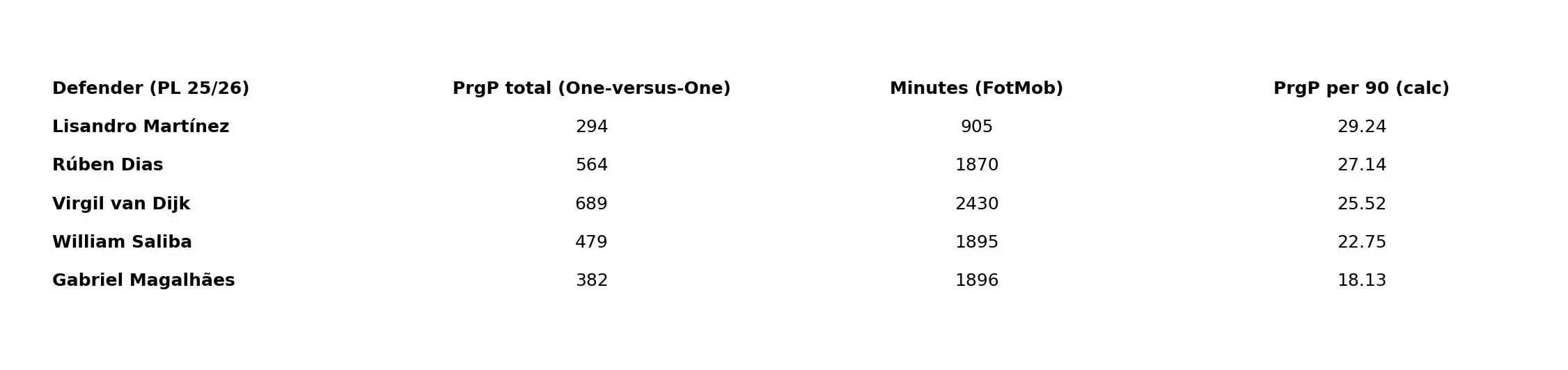
Then you add Martinez’s profile, and the picture sharpens. Lisandro Martinez’s progressive passing turns possession into territory. It is not passing for the sake of completion. It is passing with the intent to move the team away from danger.
YOU MAY ALSO LIKE: Leicester City’s Fall: From English Champions to League One Dwellers – The Embarrassing Stumble of the Foxes

Calm, Composure, and the Passes that Change Games
Martinez’s calm is not just personal confidence. It is contagious. He opens his body to see both sides, invites pressure on his terms, and keeps the tempo steady enough for teammates to find their positions. When the press is intense, he has the nerve to pause, draw it in, and then pick the pass that breaks it.
This is where Lisandro Martinez’s progressive passing becomes a weapon. When opponents clog the middle, many centre-backs fall into the safe rhythm: wide, back, wide again. Martinez looks for the line-breaking lane into midfield with the timing and weight that lets the receiver turn, not just survive contact.
And when short options are locked, he has a second escape route: diagonals into the far side or the channel for runners behind the line. One diagonal can turn a pressing team into a retreating team, and that threat alone can soften the next press.
Without him, United can still try to build, but they lose a reliable way to beat pressure through the middle and a reliable way to punish it over the top. So the ball comes back more often, the defensive third gets crowded again, and panic sequences repeat. That is how Lisandro Martinez’s absence vs Everton became a mirror for Manchester United’s defensive third problems.
The match revealed something clear. Martinez is not only a centre-back. He is a stabiliser of rhythm, a creator of calm, and a progressive passer who gives United exits when the press is loud. That is Lisandro Martinez’s importance to Manchester United, and it shows most when he is not there.
Main Photo
Credit: IMAGO / NurPhoto
Recording Date: 10.02.2026