

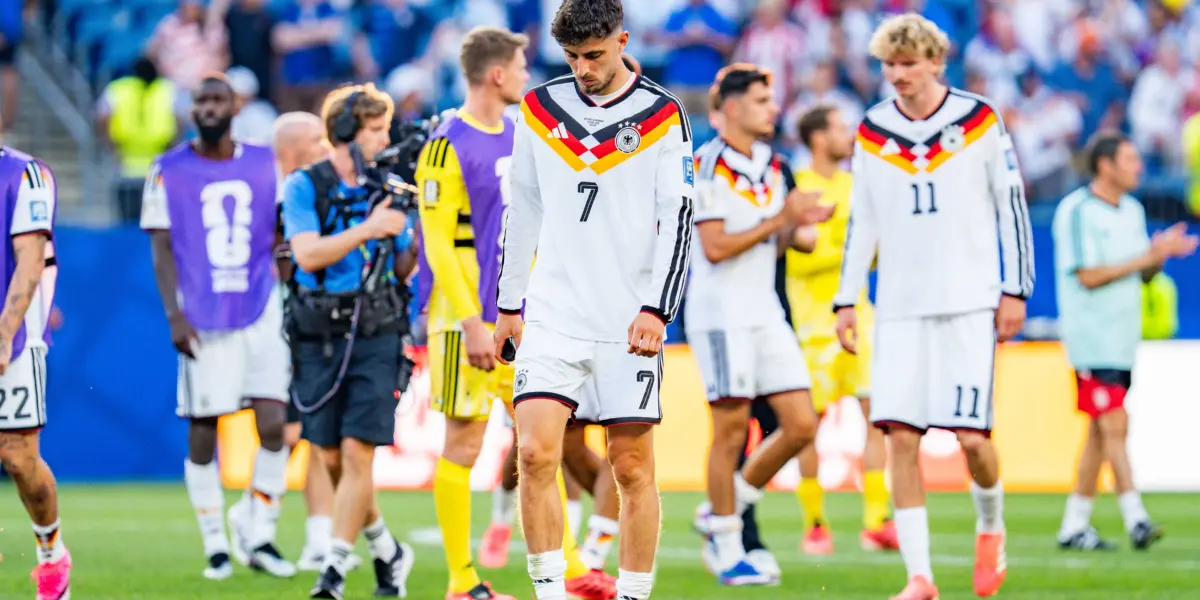
The Germany World Cup 2026 exit has sent shockwaves through the football world after one of the tournament favourites suffered a dramatic Round of 32 elimination on penalties against Paraguay, bringing another disappointing World Cup campaign to a painful end for the four-time world champions.
The defeat came despite Germany topping Group E with six points and enjoying an impressive group-stage campaign, with players like Deniz Undav emerging as one of the team’s standout performers. However, the Germans have once again crashed out earlier than expected.
Beyond the immediate disappointment, the result marks another Germany World Cup failure as the Germans have now failed to reach the Round of 16 since lifting the trophy in 2014, extending their run of disappointing World Cup campaigns to three consecutive tournaments.
With another early exit now added to that worrying trend, the Germany World Cup 2026 exit has sparked growing debate over what has gone wrong and what the four-time world champions must do to return to football’s biggest stage as genuine contenders.
Germany World Cup 2026 Exit: Another Early Elimination That Raises Familiar Questions
The Germany World Cup 2026 exit from the Round of 32 once again highlights the recurring problems that have affected the national team over recent World Cup tournaments.
Their defeat to Paraguay represents another elimination against a team many expected Germany to overcome comfortably, a pattern that has become increasingly familiar over their last three exits at the tournament.
Throughout the match, Germany lacked creativity in the final third, suffered defensive lapses, and failed to convert their dominance in possession into clear-cut chances. The game eventually finished 1-1 after extra time before Paraguay prevailed in the penalty shootout.
As a result, Germany have now gone three consecutive World Cups without reaching the Round of 16, having suffered group-stage eliminations in both the 2018 and 2022 editions. It is a significant decline from the standards traditionally associated with one of world football’s greatest nations.
More importantly, this latest exit once again exposed familiar issues, including tactical rigidity, limited flexibility during matches, and poor in-game management.
There has also been insufficient impact from the younger generation, while the continued reliance on experienced players has no longer produced the desired results.
Altogether, Germany World Cup failure at this tournament reflects the same underlying problems that have consistently affected the national team’s performances.
From World Champions to World Cup Strugglers: How Germany Lost Their Edge
Germany World Cup failure has been driven by several long-standing factors that remain unresolved despite repeated disappointments.
Winning the 2014 FIFA World Cup with a dominant and memorable campaign established Germany as a nation expected to dominate world football for years. However, that success ultimately became the beginning of an unexpected decline.
The warning signs first appeared in 2018 when the ageing golden generation was not adequately replaced, resulting in a disastrous group-stage elimination in Russia that served as the first major indication that change was needed.
Unfortunately, those problems were never fully addressed. Another disappointing group-stage exit followed in Qatar in 2022 before the 2026 Round of 32 elimination completed a third consecutive failed World Cup campaign, confirming a worrying downward trend.
Beyond the inability to replace the golden generation, Germany World Cup failure has also been influenced by coaching instability and a lack of continuity. Frequent managerial changes from Joachim Low to Hansi Flick and Julian Nagelsmann have disrupted long-term planning, with each coach introducing different tactical ideas rather than building a consistent identity.
Furthermore, youth development and academy progression have slowed considerably. Germany’s once-famous pathway for developing elite talents has produced fewer homegrown players capable of making an immediate impact at international level.
Equally concerning is the gradual disappearance of the traditional German winning mentality. The ruthless efficiency that once defined the national team has faded, with Germany now dominating matches without consistently producing decisive results.
In addition, challenges in integrating dual-nationality players with the traditional core have affected chemistry, leadership, and tactical cohesion, while an overreliance on club form rather than international suitability has further contributed to the ongoing Germany football crisis.
The Tactical Flaws That Continue to Hold Germany Back
The Germany World Cup 2026 exit also exposed several recurring tactical weaknesses that have been evident throughout recent tournaments.
Germany tactical problems begin with an increasingly predictable possession-based approach that relies too heavily on slow, sideways build-up play. Opponents have become comfortable defending against this style by sitting in compact low blocks and forcing Germany into hopeful crosses and speculative long-range efforts.
Another major issue within Germany tactical problems is the team’s inability to adapt quickly during matches. Tactical adjustments often arrive too late, allowing opponents to remain comfortable and execute their own game plans effectively.
Germany also continue to suffer whenever possession is lost, with large gaps frequently appearing between midfield and defense, making them highly vulnerable to counter-attacks.
Creatively, the team lacks a genuine playmaker capable of unlocking stubborn defences through central areas. As a result, Germany now rely heavily on their full-backs and wide players to provide creativity instead of generating attacks through the middle.
Perhaps most surprisingly, a nation once renowned for its efficiency from set-pieces has developed another recurring weakness. Poor organisation from corners and free-kicks has repeatedly led to avoidable goals conceded.
Collectively, these tactical shortcomings have deepened the Germany football crisis and continue to play a significant role in the team’s repeated early World Cup exits.
YOU MAY ALSO LIKE: World Cup 2026 England vs DR Congo: Three Key Factors, Predicted Lineups And Team News
What Must Change Before the Next Major Tournament?
The Germany football crisis must now be addressed with urgency before the country’s next major international competition, beginning with the UEFA Nations League in September.
Firstly, Germany need to move away from a rigid possession-based philosophy towards a more vertical, flexible, and dynamic tactical approach while developing alternative game plans for different opponents.
At the same time, a comprehensive squad rebuild should place greater emphasis on youth integration by promoting the country’s brightest young talents while maintaining the right balance between experienced leaders and fearless emerging players.
Equally important is committing to a long-term manager with a clear modern vision capable of establishing a consistent football identity rather than constantly changing direction after every disappointing tournament.
Finally, Germany require a complete mental and cultural reset. Restoring the nation’s famous winning mentality, strengthening leadership within the squad, and rebuilding confidence must become priorities if they are to return to the highest level.
Although the Germany football crisis cannot be solved overnight, decisive structural changes can finally stop the cycle of recurring disappointments. If the rebuilding process is properly managed, Germany possess the history, talent, and football culture to establish themselves among the world’s elite once again.