

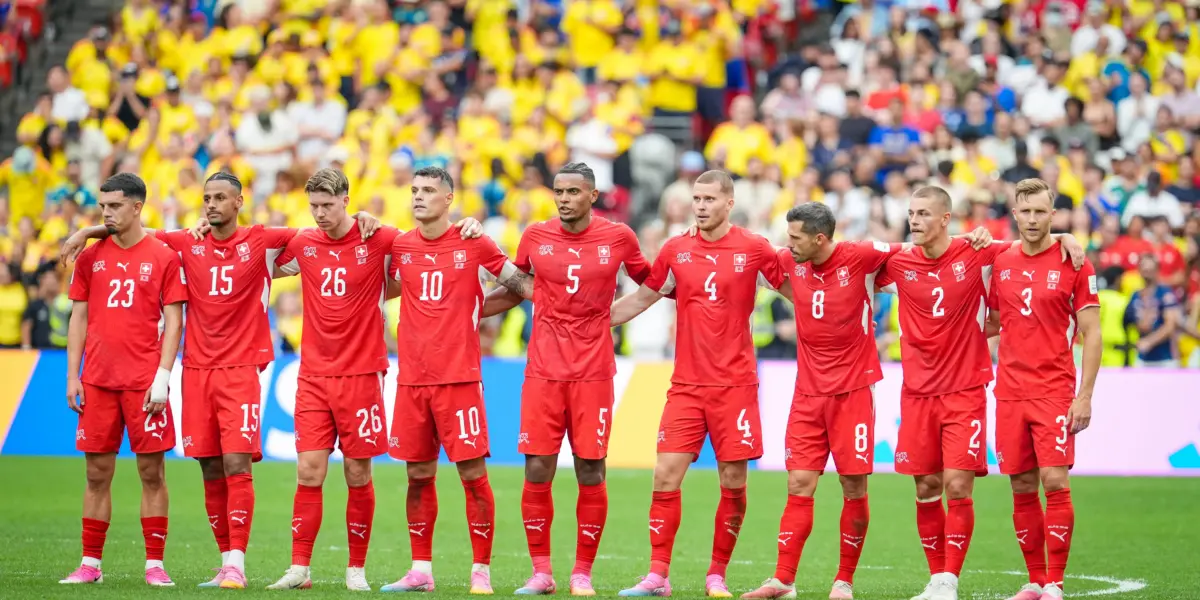
Whenever a conversation about football penalty shootout strategy arises, it is more often than not dismissed as nothing more than luck or a simple 50-50 gamble.
The popular belief is that once a knockout match reaches penalties, the outcome is largely out of a team’s control.
That narrative has been repeated for decades by fans, pundits and even some professional coaches after painful tournament exits. However, penalty shootout analysis and years of research tell a different story.
In today’s game, successful penalty shootouts are determined far less by fortune and far more by preparation.
Modern football penalty tactics place just as much emphasis on mental readiness as technical ability, making penalty shootout psychology one of the most important aspects of elite football.
Every penalty is a high-pressure duel between the taker and the goalkeeper, with both players forced to make split-second decisions while trying to predict the other’s next move.
From the striker’s perspective, the penalty kick strategy is a complex mental process. Every taker must instantly decide whether to prioritise precision, power, or deception.
The goalkeeper faces an equally demanding challenge. A well-executed penalty strategy involves studying a player’s body language, previous penalties, preferred shooting zones and even subtle changes in the run-up.
This is where sports data analytics has completely transformed modern football, and perhaps no tournament has demonstrated this evolution better than the 2026 FIFA World Cup.
The goalkeepers at the World Cup have delivered one of the finest collective performances in the history of the competition.
Their success has not been defined solely by spectacular saves, but also by exceptional positioning, anticipation, decision-making and an advanced understanding of penalty kick psychology, allowing them to consistently stay one step ahead of the opposition.
Elite clubs and national teams now maintain extensive databases on opposition penalty takers, recording preferred corners, shooting patterns, conversion rates and how individual players behave under extreme pressure.
This level of preparation has fundamentally changed shootout tactics in football, turning them into carefully planned mental battles rather than games of chance.
As a result, goalkeepers no longer dive blindly. Many walk into shootouts carrying tactical notes wrapped around water bottles or detailed information memorised from hours of video analysis.
These small details provide a measurable competitive edge before the first penalty is even taken.
The numbers further support this shift. Across elite football, the average penalty shootout success rate sits at around 75.5%, meaning roughly one in every four penalties is either missed or saved.
Those margins are too significant to be explained by luck alone. Instead, they highlight how preparation, execution and psychology often determine how to win a penalty shootout when the pressure reaches its highest point.
Football Penalty Shootout Strategy: The Striker’s Blueprint Detailing Where The Perfect Penalty Should Go
The best penalty takers in the world do not simply pick a corner and pray it goes in.
Every successful football penalty shootout strategy begins with understanding that there are areas of the goal which consistently produce the highest scoring percentages.
Years of penalty shootout statistics and sports data analytics have revealed that not every shot location carries the same probability of success. Some areas are significantly harder for the goalkeeper to reach, while others invite unnecessary risk.
The “Unsavable” Zone
The upper corners of the goal are the one location every striker dreams of finding during a penalty kick.
According to penalty shootout analysis, high-velocity shots placed into the top 15% of the goal are regarded as virtually impossible to save, even when goalkeepers correctly predict the direction.
The reason is simple. A goalkeeper can only cover so much space before gravity takes over. By the time they push off the ground and extend fully, the ball has often already crossed the line.
This is why aiming for the upper corners remains one of the most effective penalty kick strategy approaches in modern football.
Take, for example, Harry Maguire’s audacious penalty against Gianluigi Donnarumma’s Italy in the UEFA Euro 2020 final. The strike flew into the top corner with such pace and precision that there was simply no realistic chance of any goalkeeper, past or present, making the save.
Regardless of anticipation or positioning, it was an unstoppable finish — top bins in every sense of the phrase.
Maguire is far from the only player to master this approach. Some of the best penalty takers in football history, including Cristiano Ronaldo, Harry Kane and Steven Gerrard, have frequently targeted the upper corners when their confidence is at its peak.
It is a clear demonstration of elite penalty kick technique that combines exceptional ball striking with complete composure under pressure.
The margin for error, however, is incredibly small. The goalkeeper’s chance of making the save is minimal, but so too is the striker’s room for mistake.
Miss the target by just a few centimetres and the ball either crashes against the crossbar or sails harmlessly over it.
For that reason, this remains one of the riskiest yet most rewarding football penalty tactics, reserved for players with the technical quality and mental confidence to execute it consistently.
The Natural Cross-Body Advantage
Another fascinating discovery from penalty shootout analysis is the natural advantage created when players shoot across their own body.
For example, a right-footed player striking the ball towards the goalkeeper’s right-hand side often generates greater power, cleaner contact and improved accuracy. The same principle applies to left-footed players aiming towards the goalkeeper’s left.
Research suggests this advantage stems from the body’s natural biomechanics. Shooting across the body allows the hips to rotate more freely, creating better balance, cleaner ball contact and more powerful strikes with less effort.
It is one of the reasons why this approach has become a key component of modern penalty kick strategy and is increasingly incorporated into elite penalty tactics.
However, goalkeepers are equally aware of these tendencies. As a result, many spend hours studying opponents’ preferred shooting directions before major tournaments.
Through sports data analytics, they identify recurring patterns and favourite corners, making this preparation a vital part of modern goalkeeper penalty strategy.
The Goalkeeper’s “Dive Blindspot”
Not every successful football penalty shootout strategy requires the ball to be placed in the top corner. Sometimes, the smartest way to beat the goalkeeper is not through power, but through patience.
That is the philosophy behind the famous Panenka — one of the greatest examples of penalty kick psychology in football.
According to Opta Sports data and the landmark study Action Bias Among Elite Soccer Goalkeepers, goalkeepers dive either left or right in 93.7% of penalty situations. They remain standing in the centre of the goal just 6.3% of the time
Researchers attribute this to what psychologists call action bias — the natural urge to do something rather than nothing.
For a goalkeeper, diving and failing to make a save is often perceived as more acceptable than standing still and watching the ball fly into the net.
As a result, goalkeepers instinctively commit to one side, even when remaining central may offer a better chance of making the save.
This is where penalty shootout analysis becomes particularly fascinating. If goalkeepers dive almost 94% of the time, the middle of the goal effectively becomes the largest open target during a penalty.
As most keepers commit before the striker makes contact with the ball, a calmly placed shot down the centre — or a delicately executed Panenka can become almost impossible to stop once the goalkeeper has moved.
However, this approach comes with enormous psychological risk. While penalties played down the middle enjoy an impressive penalty shootout success rate when executed correctly, they demand exceptional composure.
If the goalkeeper belongs to the 6.3% who remain standing, or the striker mistimes the chip, the result is often an easy save.
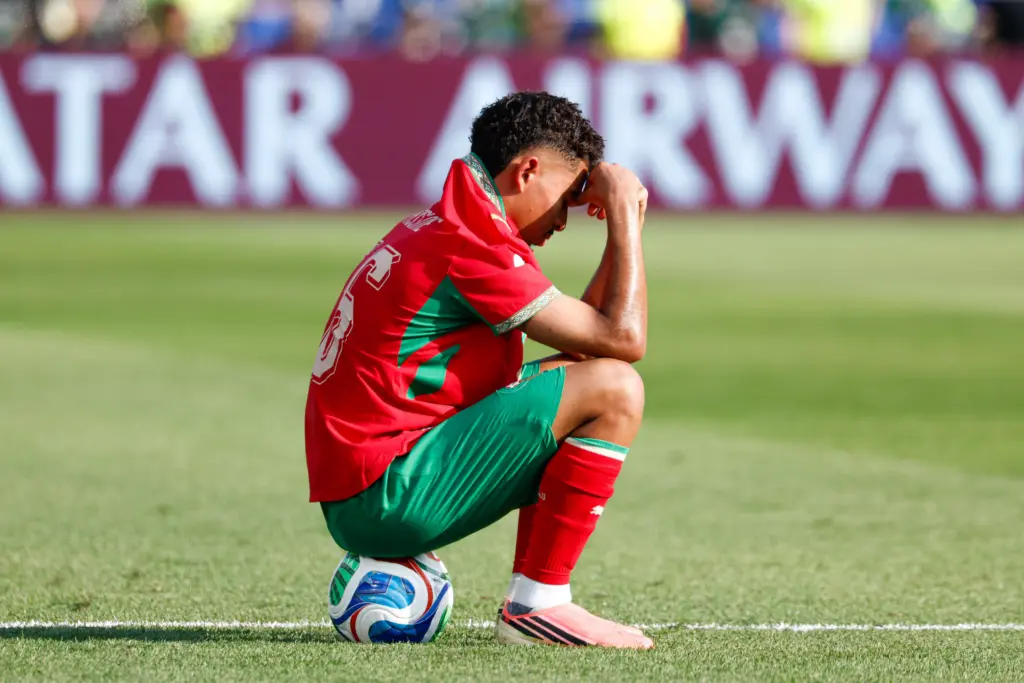
Chelsea’s former goalkeeper Édouard Mendy demonstrated this perfectly with his saves against Manchester City’s Sergio Agüero and later against Real Madrid and Morocco’s Brahim Díaz in the controversial AFCON final, proving that patience can be just as effective as anticipation when facing a Panenka or a penalty played down the middle.
More importantly, the consequences extend beyond the missed penalty itself. Few moments in football are remembered more vividly than a failed Panenka.
The embarrassment can linger long after the shootout has ended, making it one of the boldest yet riskiest football penalty tactics ever attempted.
Ultimately, how to win a penalty shootout is rarely about producing the most spectacular finish.
Instead, it is about consistently making the highest-percentage decision under the greatest possible pressure, combining technical execution with psychological intelligence.
The Goalkeeper’s Matrix: Anticipation, Data And Mind Games
Modern goalkeeper penalty strategy is no longer based on guessing correctly. Instead, it revolves around identifying patterns, reading body language and exploiting the psychological weaknesses of penalty takers.
Thanks to advances in sports data analytics, goalkeepers now enter shootouts with detailed information that significantly improves their chances of making decisive saves.
Reading The Body Before The Ball
Elite goalkeepers rarely wait until the ball is struck before making their decision, as that extra half-second can make the difference between getting fingertips to the ball or watching it fly into the net.
Instead, they search for visual clues that reveal the striker’s intentions before the contact is made.
Studies have shown that the angle of the player’s run-up, the position of his standing foot, the direction of his hips, and even his shoulder alignment, can indicate where the ball is likely to be placed.
Although these signals might not be seen by viewers at home, experienced goalkeepers process them almost instinctively.
This ability has become a cornerstone of modern goalkeeper penalty strategy, with clubs using video sessions to train the goalkeepers to recognise these patterns from specific players.
Winning The Battle Before The Kick
As recently as the 2026 FIFA World Cup, goalkeepers have been seen using various tactics to unsettle penalty takers, deliberately attempting to disrupt their concentration before the kick is taken.
Such psychological warfare has become an integral part of modern football penalty shootout strategy, giving goalkeepers an additional edge in increasing their chances of making a save.
Many elite goalkeepers deliberately delay the penalty by adjusting their gloves, requesting the ball be repositioned, talking to the taker or taking extra time to settle on the goal line.
Others employ more visible tactics, including exaggerated movements, waving their arms or dancing along the line.
While these actions may appear theatrical, they are grounded in penalty shootout psychology.
Research suggests that when a penalty taker’s routine is interrupted or delayed, their concentration can be disrupted. As seen in Kylian Mbappé‘s penalty miss against Morocco in the 2026 FIFA World Cup quarter-finals, even a brief pause before the kick can affect a player’s composure.
Studies indicate that such psychological disruptions can reduce conversion rates by as much as 10%, as hesitation often increases anxiety, encourages second-guessing and leads to poorer decision-making.
MORE FOR YOU: African Teams World Cup 2026: Morocco’s Exit Confirms Africa’s Biggest World Cup Problem
Game Theory & The Order Of Kickers
The goalkeeper undoubtedly has a crucial role to play in securing victory during a penalty shootout. The players also have their responsibilities, but long before the match begins, the coach must have already identified his preferred penalty takers and established the kicking order.
Failing to do so is a fundamental oversight in modern football penalty shootout strategy, where preparation can often prove just as important as execution.
That involves not only selecting the team’s five best penalty takers, but also deciding the order in which they will take their kicks — one of the most overlooked yet influential aspects of modern football penalty tactics.
Managers of today understand that the sequence of penalty takers can shape confidence, momentum and, ultimately, the outcome of the shootout. Choosing the right players is only the first step; deciding who takes the opening kick is equally important.
The Anchor Effect: Why Your Best Penalty Taker Should Go First
The first penalty taker, often referred to as the anchor, sets the tone for the entire shootout. A successful opening penalty immediately eases the pressure on teammates while placing the opposition on the back foot.
Conversely, missing the first kick can hand the psychological advantage to the other side before the contest has truly begun.
For that reason, many coaches entrust the opening penalty to one of their most dependable players.
The objective is simple: establish early momentum, build confidence within the team and create a positive platform for the remaining penalty takers.
This approach has become a key element of penalty kick strategy, supported by years of shootout analysis.
The past decade has seen arguments raised about whether the team’s best penalty taker should go last or should come first. However, analysts now argue that the best penalty taker should kick first, because scoring the opening penalty immediately creates confidence within the team.
Also, there is the practical reality that a fifth penalty is never guaranteed.
If the shootout ends after four rounds, a reliable taker may never touch the ball. As a result, coaches now favour using their strongest penalty taker as the anchor, rather than saving them for a moment that may never come.
The First-Mover Advantage: Why Kicking First Wins More Shootouts
One of the most remarkable findings in penalty shootout statistics is the advantage enjoyed by the team that takes the opening penalty. Across hundreds of professional shootouts, teams kicking first have historically won around 60% of the time.
The explanation lies largely in penalty shootout psychology. The team kicking second spends the entire shootout reacting to the opposition.
Every successful penalty by the team kicking first immediately piles pressure on the opposition to respond, while every miss increases the threat of falling behind or facing elimination.
As each round passes, that psychological burden continues to build, gradually shifting the momentum in favour of the team that established the early lead.
It is a subtle but significant factor in football penalty shootout strategy, demonstrating how the order of kicks can influence the outcome long before the decisive penalty is taken.
The Micro-Behaviors That Decide Penalty Shootouts
If, after 90 minutes of normal time and 30 minutes of extra time, both teams remain inseparable, their technical ability is often evenly matched.
At that point, what usually separates victory from defeat is no longer talent or tactics, but the smallest details — tiny behaviours that many fans barely notice but can ultimately decide the outcome of the penalty shootout.
From the moment the referee blows the whistle to the walk back to the centre circle, every action can reveal a player’s mental state.
The “Don’t Rush” Rule
Research has shown that players who strike the ball almost immediately after the referee blows the whistle — within roughly 0.2 seconds — are significantly more likely to miss than those who take a brief pause before beginning their run-up.
That short delay, typically lasting one or two seconds, gives the player time to regulate their breathing, lower their heart rate and refocus on the intended target rather than the enormity of the occasion.
According to sports psychologists, this brief pause helps shift the brain away from panic and back towards automatic execution.
Instead of reacting emotionally to the pressure, the player is better able to rely on their instincts and execute their usual penalty kick technique with greater composure and precision.

Leave a Reply