
The World Cup 2026 goalkeepers are setting a standard rarely, if ever, seen in the history of the competition. Every edition of the World Cup is remembered for iconic moments – breathtaking goals, dazzling dribbles and breakout attacking stars.
But in a remarkable shift, the 2026 tournament has been defined by the men between the posts.
Although the competition features many of the world’s best forwards – with three of them, Lionel Messi, Kylian Mbappe and Erling Haaland, currently tied on seven goals in the race for the World Cup Golden Boot, the first time this has ever happened – they have still not dominated the headlines in the same way the goalkeepers have.
From spectacular penalty saves, as seen in the recent Brazil vs Norway Round of 16 clash, to remarkable one-on-one stops, commanding displays under relentless pressure and strings of seemingly impossible saves that have kept their teams alive, the World Cup 2026 goalkeepers have consistently delivered exceptional displays.
Whether it is shot-stopping, playing out from the back, penalty heroics, or exceptional decision-making in crucial moments, elite goalkeeping has become one of the defining themes of the tournament.
As a result, fans and pundits alike are beginning to ask the same question: is this simply a coincidence, or are we witnessing the greatest collection of World Cup goalkeeper performances ever assembled? More importantly, why are so many keepers producing such extraordinary displays at the same tournament?
The answer goes far beyond individual brilliance. The answer lies in the tactical evolution of modern football, advances in goalkeeper coaching, improved preparation through video analysis and sports science, and the unique demands of World Cup 2026, all of which have combined to create the perfect stage for goalkeepers to dominate like never before.
World Cup 2026 Goalkeepers: How the Expanded Tournament Created More Heroes
The 2026 World Cup has introduced several major reforms, but none has had a greater tactical impact than the expansion of the tournament from 32 to 48 teams.
While the change was primarily designed to give more nations the opportunity to compete on football’s biggest stage, it has also created the perfect environment for the goalkeepers to shine.
For the first time in the competition’s history, several nations that would ordinarily have fallen short in qualification earned their place at the tournament hosted by the United States, Canada and Mexico.
While the expansion has brought greater diversity and fresh storylines, it has also widened the quality gap between many of the tournament favourites and the emerging football nations.
Faced with technically superior opponents, many of these underdogs have adopted a survival-first approach.
Rather than attempting to dominate possession or commit large numbers forward, they have defended in compact, low defensive blocks, willingly conceded possession and looked to exploit counter-attacking opportunities whenever they arose.
That tactical approach has inevitably placed enormous responsibility on the goalkeeper.
Against major powerhouses that would enjoy between 70-80%possession, goalkeepers are subjected to relentless pressure throughout the match.
Instead of making just a handful of routine interventions, they are forced into repeated shot-stopping situations, dealing with dangerous crosses, long-range efforts, close-range finishes and one-on-one opportunities over the course of 90 minutes.
A goalkeeper who faces only two or three shots throughout a game would hardly be noticed and might have limited opportunities to influence the outcome.
By contrast, someone who is called upon to make 10 or 15 meaningful saves has far more chances to demonstrate elite goalkeeper positioning, exceptional reflexes, intelligent decision-making and the composure required to deliver world-class performances on football’s biggest stage.
That is precisely what has defined the World Cup 2026 goalkeepers.
Many of the tournament’s standout goalkeeping displays have not come from well-known goalkeepers but from players from other nations expected to spend long periods defending against superior opposition.
These goalkeepers have become the backbone of their teams, producing crucial saves that have kept underdogs in games far longer than anyone anticipated and, in several cases, turned them into some of the biggest stars of the tournament.
World Cup 2026 Goalkeepers: The Science Behind Their World-Class Performances
Another major reason the World Cup 2026 goalkeepers have consistently produced outstanding performances is that the position itself has evolved beyond recognition.
The modern goalkeeper undergoes a far more advanced and comprehensive development process than their predecessors 20 years ago.
While the primary objective remains unchanged – to prevent the ball from crossing the line – the methods used to achieve that goal have been completely revolutionised.
In previous generations, goalkeeping sessions mainly focused on handling, diving and basic shot-stopping drills.
Today, modern goalkeeping has become an interdisciplinary science, combining biomechanics, sports psychology, tactical analysis and data analytics to maximise every aspect of a goalkeeper’s performance.
Elite keepers are no longer trained simply to react to danger; they are taught to anticipate it, influence it and often neutralise it before it fully develops.
Every movement is scrutinised in remarkable detail. Coaches now analyse body positioning, balance, foot placement and movement to ensure goalkeepers are always in the best possible position to make a save.
As a result, goalkeeper positioning and footwork have become just as important as reflexes. A goalkeeper who takes the correct adjustment steps before the shot is struck immediately gives himself a greater chance of making a save.
More often than not, the difference between conceding and producing a match-winning stop is determined by positioning rather than athleticism.
Preparation away from the training ground has become equally important. Thanks to advances in technology, video analysis has become an indispensable part of goalkeeper coaching.
International goalkeepers now spend countless hours studying opposing forwards, analysing their preferred shooting angles, favourite finishing techniques, body shape before striking the ball, movement inside the penalty area and even how they respond under pressure.
Every observation is logged, reviewed, and discussed with goalkeeper coaches and performance analysts, ensuring that nothing is left to chance.
This meticulous preparation means the World Cup 2026 goalkeepers often enter matches with a detailed understanding of the attackers they are about to face.
Even during penalty shootouts, modern goalkeepers have access to an additional source of information. It is now common to see goalkeepers carry water bottles marked with detailed notes on opponents’ preferred penalty placements, allowing them to take a quick glance before each kick.
These referrals are the result of extensive video analysis and penalty research conducted long before matchday.
Rather than relying solely on instinct, goalkeepers are expected to study, understand and memorise each penalty taker’s preferred spot, significantly improving their chances of making decisive saves when the pressure is at its highest.
It is this evolution in training methods and performance analysis that has played a significant role in producing the exceptional goalkeeper performances that have become one of the defining features of the tournament.
YOU MAY ALSO LIKE: World Cup 2026 Argentina vs Egypt: Three Key Factors, Predicted Lineups And Team News
Goalkeeping Records Broken at The 2026 World Cup
The extraordinary performances of the World Cup 2026 goalkeepers have also rewritten the history books, with several long-standing records falling during the tournament.
Spain’s Unai Simón set a new all-time World Cup record by going 519 consecutive minutes without conceding a goal, surpassing the legendary Walter Zenga’s 36-year-old mark of 517 minutes.
The milestone was made possible by Spain’s outstanding defensive organisation, as La Roja kept four consecutive clean sheets against Cape Verde, Uruguay, Saudi Arabia and Austria, with Simón’s exceptional positioning and composure playing a crucial role in establishing the longest shutout streak in World Cup history.
Meanwhile, South Africa‘s Ronwen Williams showcased the evolution of the modern goalkeeper by completing 77 passes in a single match against Canada, breaking Manuel Neuer’s previous World Cup record and underlining the growing importance of goalkeepers in build-up play.
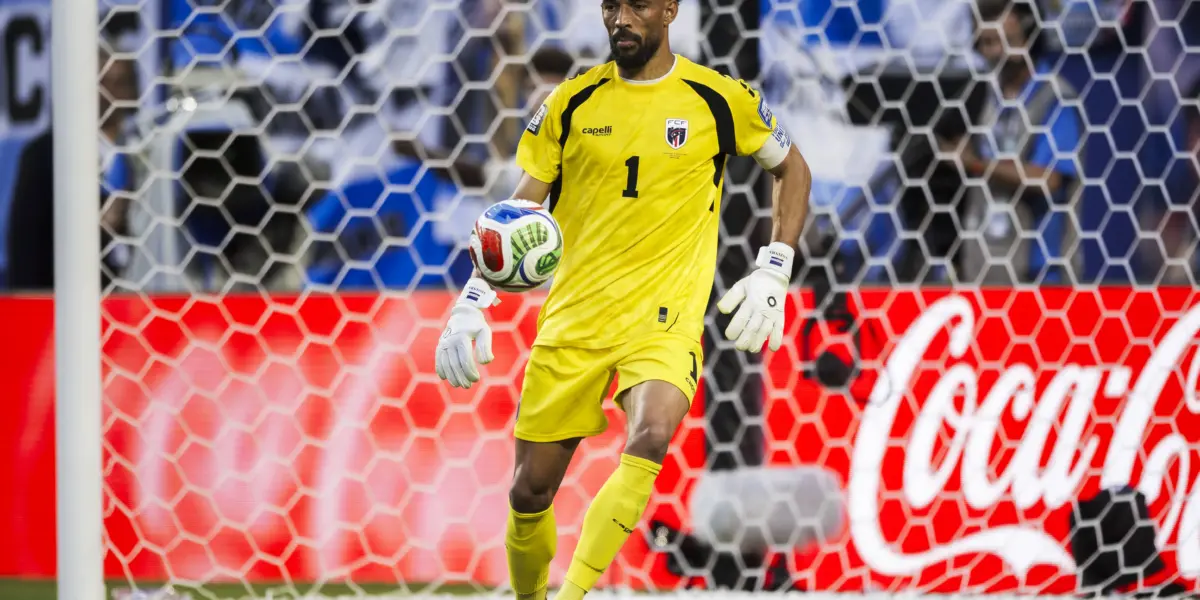
Curaçao’s Eloy Room also wrote his name into World Cup history during his side’s second Group Stage match against Ecuador.
The experienced 37-year-old goalkeeper produced an astonishing 15 saves, equalling the all-time record for the most saves in a single match while delivering one of the greatest World Cup goalkeeper performances ever seen.
Despite facing relentless pressure from the South American side throughout the contest, Room’s remarkable shot-stopping ability and composure kept Curaçao in the game and turned an expectedly one-sided affair into a memorable goalkeeping masterclass.
These achievements highlight how the World Cup 2026 goalkeepers have not only starred in the tournament but have also redefined what is possible from the position.