
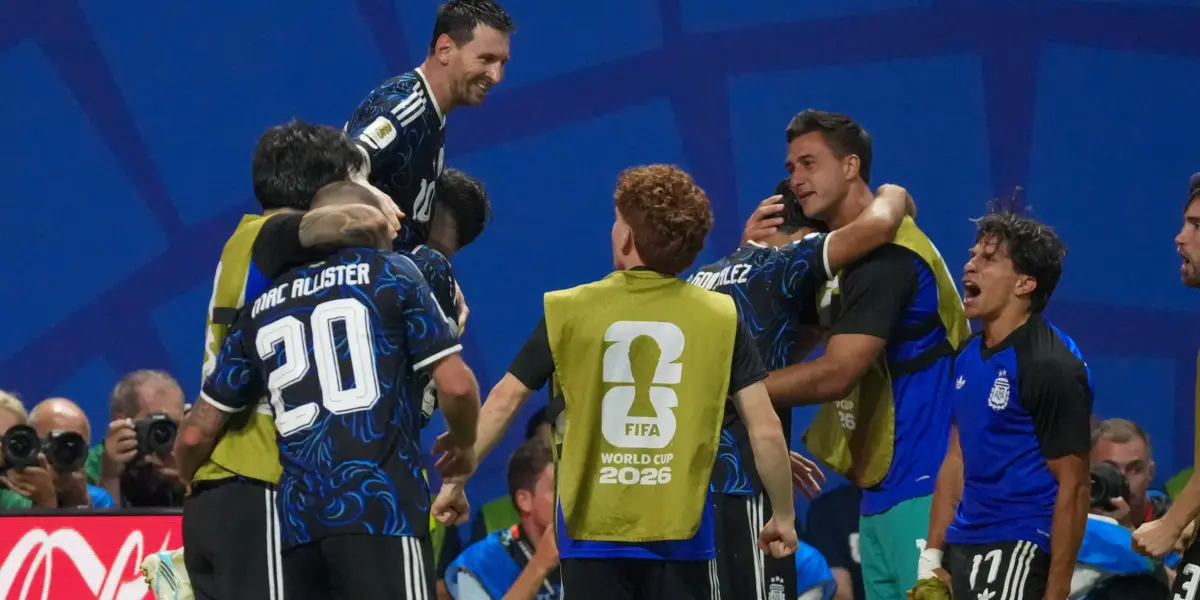
Few nations have consistently thrived on football’s biggest stage like La Albiceleste, and the Argentina World Cup 2026 campaign has once again reinforced their place among the greatest teams in FIFA World Cup history.
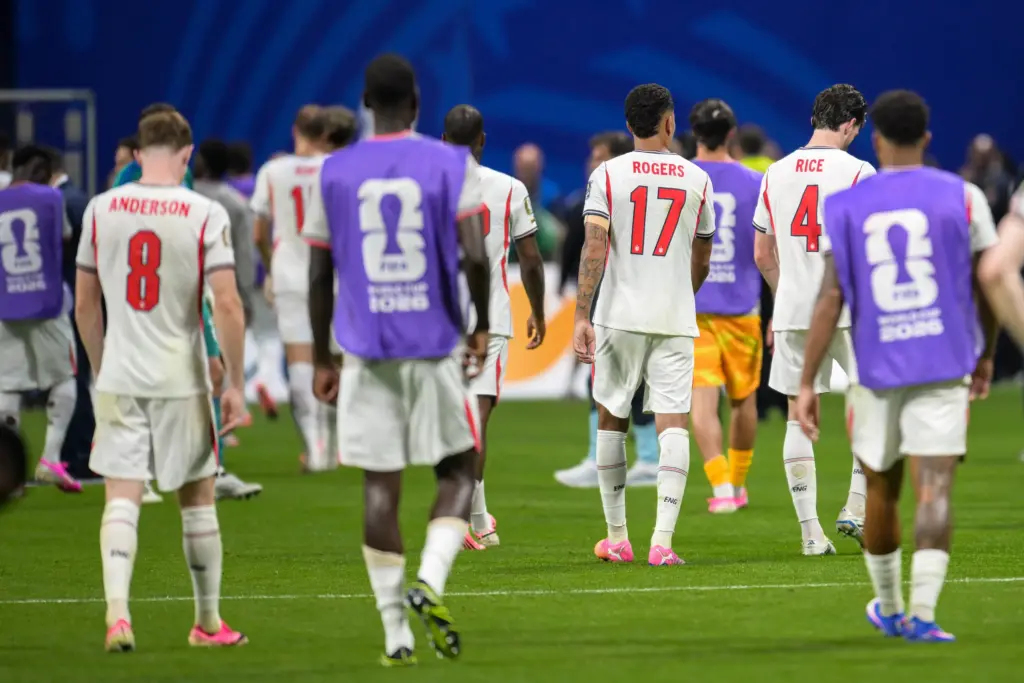
That reputation was strengthened even further following a 2-1 victory over England, as Argentina secured back-to-back World Cup final appearances to become one of the few nations ever to achieve such a remarkable feat.
Another place in the final also represents yet another historic chapter for the reigning champions, as the Argentina World Cup campaign continues to produce unforgettable moments and reinforce their status as one of world football’s elite.
Success on this scale is never accidental. The Argentina World Cup 2026 campaign has been driven by a blueprint that continues to separate La Albiceleste from the rest of the world, and understanding that winning formula offers a clearer picture of how they have reached back-to-back World Cup finals.
Argentina World Cup 2026: The Foundations Of Another Final Run
The Argentina World Cup 2026 run has been impressive from the very beginning, as they have once again proved why they are the defending champions.
They entered the competition with enormous expectations, and so far they have lived up to every one of them, with only the ultimate prize remaining on the final day.
The Argentina World Cup run has been built on consistency and excellence, as they topped their group with nine points from three victories, scoring eight goals while conceding just once.
However, the knockout stages have been far from straightforward. They displayed outstanding mentality and resilience to overcome Cape Verde, Egypt, Switzerland and England, showing their ability to manage pressure when it matters most.
Reaching back-to-back World Cup finals is rare in modern football, and it is the product of long-term planning, tactical continuity and a clearly established identity.
Ultimately, the Argentina World Cup campaign has been driven by tactical discipline, exceptional squad harmony, collective responsibility, mental resilience and the ability to manage pressure throughout the tournament.
Collective Brilliance With Lionel Messi Still Leading The Way
The Argentina World Cup campaign has once again been built around collective brilliance, with Lionel Messi continuing to lead the team.
Although Messi remains the focal point and undisputed leader, Argentina’s success has never relied solely on individual brilliance. Instead, a team-first mentality has become the defining feature of the Argentina World Cup 2026 run.
Different players have stepped up at different moments throughout the tournament, with midfielders contributing goals, defenders making important attacking contributions and substitutes producing decisive impacts whenever called upon.
Every member of the squad fully understands their role within Lionel Scaloni’s system. Every player is willing to sacrifice, track back, cover teammates and contribute defensively, making collective responsibility one of Argentina’s greatest strengths.
That outstanding unity has been carefully developed by Scaloni, who has created a squad where every individual works for the collective, making the Argentina World Cup campaign one of complete togetherness rather than individual dependence.
The Tactical Blueprint That Continues To Outclass Opponents
A defining feature of the Argentina World Cup run over the last two editions has been the tactical brilliance of Lionel Scaloni.
He utilises flexible formations, switching between a 4-3-3, 4-1-4-1, 4-4-2 diamond and 4-1-3-2 depending on the opposition without disrupting the team’s structure.
That tactical flexibility allows Argentina to adapt during matches while maintaining defensive stability and attacking balance, making them extremely difficult for opponents to predict.
Defensively, Scaloni deploys a compact block when out of possession, combined with an aggressive yet coordinated high press supported by excellent cover between the defensive and midfield lines.
Another key element behind the Argentina World Cup run has been the midfield balance. Enzo Fernandez operates as both the anchor and deep playmaker, while Alexis Mac Allister partners Rodrigo De Paul or Leandro Paredes to provide ball progression, defensive cover, relentless work rate and technical quality.
Going forward, Scaloni blends positional discipline with intelligent movement. Messi continues to drift into deeper areas to receive possession, dictate play and create overloads, allowing Argentina’s attacking structure to remain fluid and unpredictable.
His in-game management has also been exceptional throughout the tournament, with timely tactical adjustments, impactful substitutions and intelligent squad rotation helping the Argentina World Cup campaign remain consistent across every stage.
Continuity Over Change: Why The 2022 Core Still Sets The Standard
The Argentina World Cup 2026 campaign has been built on continuity from their 2022 triumph rather than a complete overhaul of the squad.
Many fans and pundits questioned the decision to retain a large number of players from the World Cup-winning squad, but that continuity has ultimately become one of Argentina’s greatest strengths.
Rather than rebuilding from scratch, Argentina has maintained the backbone of the 2022 champions, preserving the chemistry, tactical understanding and relationships developed over several years.
That continuity has created outstanding familiarity between players, allowing their campaign to flow naturally without the disruptions that often come with major squad changes.
At the same time, younger players have been introduced gradually into the Argentina World Cup 2026 squad without affecting the established system.
Instead of replacing the experienced core, the new generation has complemented it, learning from senior players while adding fresh energy and quality whenever required.
Overall, continuity from the 2022 World Cup-winning philosophy, rather than wholesale revolution, has remained the foundation of the Argentina World Cup campaign.
YOU MAY ALSO LIKE: England World Cup Loss: The “Safety-First” Approach Costs The Three Lions
Mentality That Never Breaks: Argentina’s Greatest Competitive Edge
The Argentina World Cup run to another final has been defined as much by mentality as by tactical quality.
Their ability to perform under pressure, win difficult knockout matches, handle extra time and penalties, and respond positively during challenging moments reflects far more than technical ability alone.
Argentina possess a never-say-never attitude that has repeatedly carried them through adversity, with every player believing they can overcome any opponent regardless of the circumstances.
Scaloni has successfully built a champion’s mentality throughout the squad, where team success always comes before individual recognition.
Strong leadership across the dressing room has reinforced unity, while the players consistently display remarkable composure during both emotional highs and difficult moments throughout the tournament.
That mental resilience has become Argentina’s greatest competitive advantage, allowing them to manage pressure, thrive in knockout football and consistently find another level when everything is on the line.
Can Argentina Keep This World Cup Dynasty Alive?
The Argentina World Cup 2026 campaign is further proof that this is a long-term project built on clear planning, continuity and a winning culture.
More importantly, their continued success has been driven by collective responsibility, tactical discipline and outstanding mental resilience, qualities that have consistently separated them from the rest of the competition.
With another World Cup final now awaiting, Argentina have once again shown why they remain the benchmark in international football. Regardless of the outcome, the blueprint behind their campaign has established a modern dynasty capable of competing for football’s biggest honours for years to come.