

Senegal has lifted the AFCON trophy, and they deserve the moment. The final has been played, the medals handed out, and the tournament has come to an official end. But the closing ceremony cannot be allowed to close the conversation.
Because even with the dust settled, what lingers is the sense that there was host nation bias in AFCON – the feeling that the host nation treated the tournament like it came with extra privileges. Not just home support, but a licence to warp the match environment. Across the competition, there were too many instances where the atmosphere turned toxic, where unsporting behaviour felt normalised, and where the mechanics around the game – from players to ball boys – appeared to be used for unnecessary antics that cheapened the football.
And then there is the AFCON 2025 officiating controversy. There is no concrete proof that referees intended to favour Morocco. But when the same complaints keep resurfacing – when key decisions repeatedly land one way, in moments that swing matches – the integrity issue becomes bigger than intent. Football does not only need fair outcomes; it needs visible fairness.
That is why this cannot be dismissed as post-match bitterness. Senegal have won, yet the tournament still owes everyone else an honest look at what was allowed to happen around the host nation’s games – and whether the organisers did enough to protect neutrality. If the standard is simply “the champions were crowned,” then the sport is settling for far too little.
The Atmosphere: Toxicity as a Competitive Tool
In the semi-final against Nigeria, the “home advantage” did not simply sound like noise. At key moments, it crossed into interference, and the deeper concern of host nation bias in AFCON began to feel less like a talking point and more like a pattern.
Behind the Nigerian goal, a cluster of Moroccan fans tried to make themselves part of the game. On three occasions, they goaded security officials and ball boys into removing the Nigerian goalkeeper’s towel. It sounds minor until you see what it does: it breaks rhythm, delays the restart, and forces a goalkeeper to reset his focus under pressure. In a semi-final, those small interruptions are not innocent. They are dirty tactics.
Then it got uglier. Morocco supporter threw a banana towards the Nigerian goalkeeper. Even if you avoid the shortcut of assuming intent, football does not need much imagination to understand the symbolism. For decades, the banana has been one of the most recognisable tools of racial abuse. That is why this is not “banter,” and it cannot be brushed off as a harmless object tossed in frustration. It is a choice – one loaded enough that it demands consequences, and sad enough that it should shame everyone involved, especially in an African competition.
This is the part organisers cannot hide behind. Toxicity is not only what happens on the pitch; it is what is tolerated around it. When a crowd learns it can influence match operations – harass, distract, throw, provoke – without a firm response, the stadium becomes an asset to the host nation that goes beyond support. It becomes a weapon.
And once the environment is allowed to tilt like that, everything else becomes easier to question: player behaviour, officiating pressure, the handling of flashpoints, the sense that teams are competing against an opponent and a context at the same time.
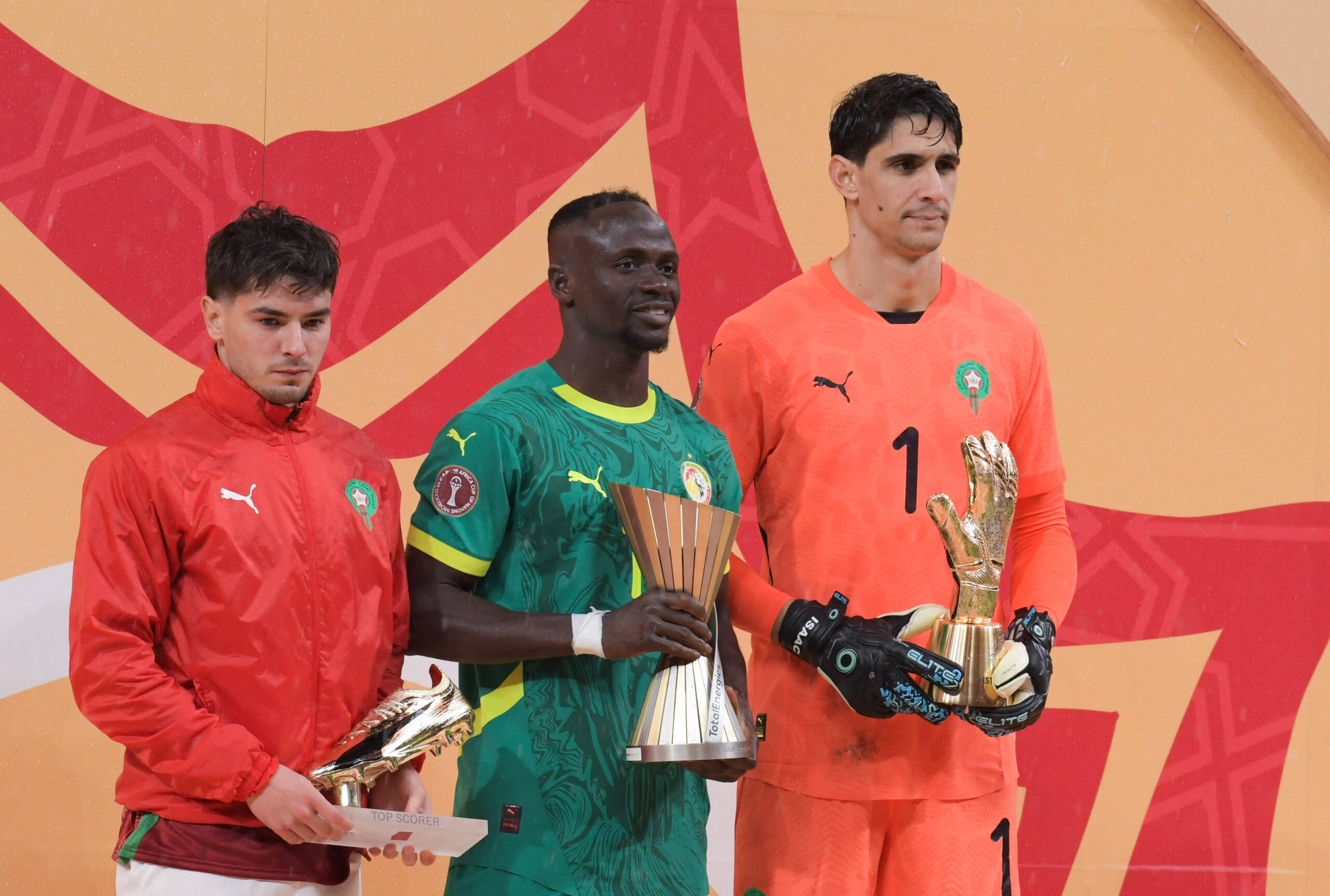
On-Field Unsportsmanlike Conduct: When Players Exploit the Climate
Football has never been a pure sport. Players exaggerate contact, appeal for everything, and try to buy decisions. That is not new, and it is not unique to any one team.
What made this tournament feel worse was the sense that Morocco’s players recognised how the match environment was bending – and then chose to take full advantage of it. With 80% of the stadium behind them, every decision carried extra noise, every protest gained an echo, and the referee was not only managing a match but managing a mood. In that climate, gamesmanship stops being occasional and becomes a method: contest the call aggressively, turn every 50-50 into a negotiation, and keep leaning until the line blurs.
The Nigeria semi-final offered a clean example of how that plays out. Calvin Bassey sprinted to challenge Brahim Díaz, won the ball, and then appeared to be the one fouled in the aftermath. Yet it was Bassey who received the yellow card, a booking that ruled him out of Nigeria’s third-place match. The outrage was not simply that a card was shown; it was that the incorrect decision was made after sustained insistence from Díaz. This sort of moment keeps the AFCON 2025 officiating controversy alive long after the whistle.
The final produced the moment that tipped the tournament into disorder, and Díaz was again at the centre of it. From a Moroccan corner, he and Senegal’s Diouf grappled for position, and Díaz went to ground after a slight tug on his shoulder.
The referee initially let the play go on. Díaz got back up, stayed involved in the phase, and eventually took a shot that ran through for a goal kick. Only then did the scene shift. Díaz immediately confronted the referee, demanding a VAR check, and even gestured to the home crowd to amplify the pressure.
That is where the problem sits. Not simply in whether the contact was enough for a penalty – those calls can be interpreted either way – but in the confrontational intensity that surrounded the decision, the sense that protest could steer the process, and the feeling that the host had learned it could drag officials back into re-litigating incidents until it got the outcome it wanted.
With host nation bias in AFCON already defining a tournament, these moments do not stand alone; they stack.
This is a case that shouldn’t be. A dive is a dive. An appeal is an appeal. But when a team behaves as though it can pressure the referee, on top of a stadium already doing the same, then the competition starts to feel like it is being officiated under duress rather than governed by a clear, consistent standard.
AFCON Ball Boy Antics and Match Operations: When the Infrastructure Joins the Contest
Ball boys are supposed to be invisible. Their job is to keep the match moving, not to become part of the pressure.
That is why the towel incident matters. In both the semi-final and the final, ball boys attempted to take the opposing goalkeeper’s towel. Goalkeepers use towels to dry their gloves and maintain grip – it is part of their routine and their control. Disrupt that routine, and you disrupt focus, especially in tense moments when a goalkeeper is trying to reset quickly. Those are unnecessary antics, and they should be treated as such.
This is not “kids being kids.” In a host-nation tournament, any neutral official near the pitch who interferes with an opponent’s concentration becomes an integrity issue. If ball boys are allowed to indulge in these antics, it creates the impression that the host has extra tools at its disposal – not just crowd noise, but match operations. And when AFCON ball boy antics become a feature, it only strengthens the suspicion that the tournament is drifting towards host nation bias in AFCON.
At a minimum, organisers should treat this as match interference: clear protocols, tighter supervision, and immediate consequences when ball boys cross the line.
AFCON 2025 Officiating Controversy: From Suspicion to a Proper Integrity Review
The officiating debate is the most delicate part of this – and the most important. There is no concrete proof that referees intended to favour Morocco.
But tournaments do not need proof of intent to have an integrity problem. They only need repeated flashpoints, inconsistent thresholds, and the growing perception that decisive moments are being managed in a way that repeatedly benefits the host.
That is the heart of the AFCON 2025 officiating controversy.
The quarter-final against Cameroon is part of why that perception spread. Cameroon felt they had a penalty case when Bryan Mbeumo went down in the box under a challenge from Adam Masina, but the referee waved play on, and the match continued without a VAR reversal.
The Guardian‘s live coverage described contact, while also noting that Mbeumo appeared to move his foot to initiate it – exactly the kind of borderline incident that becomes combustible when the referee’s threshold feels unclear, and VAR stays out of sight.
Then the final added a more damaging layer. Senegal had a stoppage-time goal disallowed, a decision that multiple match reports framed as a foul on Achraf Hakimi in the build-up.
In isolation, referees can interpret contact differently. But when a late, match-swinging goal is chalked off on a “soft” foul, and the controversy is immediately followed by further VAR drama at the other end, the issue stops being one call and becomes the credibility of the whole decision-making environment.
That is why the responsible conclusion is not to shout “rigged.” It is to insist on scrutiny. An integrity review should examine Morocco’s knockout matches for consistency: what counted as a foul, how dissent and player pressure were handled, when VAR intervened (and when it didn’t), and whether similar contacts produced different outcomes depending on the team and the moment.
If CAF wants the competition protected, it cannot settle for “the champions were crowned.” It needs visible fairness – and transparency when controversies stack up around the AFCON 2025 officiating controversy.
YOU MAY ALSO LIKE: Manchester United Wins Derby 2-0: But Is It More Than a New Manager Bounce?
What Must Change: Accountability, Reforms, and a Clean Standard
Senegal winning the final should have been the end of the story. Instead, it has become a reminder that a tournament can still crown the right champion and yet compromise its standards along the way. That contradiction is exactly why CAF cannot treat these controversies as noise that fades with time, not when host nation bias in AFCON has been allowed to dominate the conversation.
The solution is not to strip host nations of legitimate benefits. Part of hosting is opportunities for locals – including providing temporary jobs, ball boys included. But with that opportunity must come responsibility, training, and consequences.
First, match operations must be properly governed.
If ball boys are local, then the organisers have to treat them like what they are: part of match control. There should be a designated operations body responsible for briefing them on sporting conduct, enforcing clear protocols, and intervening immediately when they interfere with play or target a player’s routine.
In a tournament where goalkeepers use towels to dry gloves and maintain grip, attempting to take that towel is not harmless mischief; it is match interference and should be treated as such. If AFCON ball boy antics are tolerated, the suspicion of host nation bias in AFCON becomes inevitable.
Second, crowd misconduct needs escalated consequences, not selective warnings. Throwing objects cannot be tolerated, and anything with racial symbolism in football should trigger decisive action – identification, ejection, bans, and meaningful sanctions that deter repetition. Host-nation status cannot translate into softer enforcement.
Third, player conduct must be managed with a consistent threshold. Referees cannot be left alone to absorb collective intimidation. Surrounding officials, aggressively contesting decisions, and trying to steer VAR processes must carry real, visible punishment. If the rule exists, it has to be applied when the stadium is loudest, not only when it is quiet.
Fourth, CAF should commission and publish a post-tournament integrity report for high-risk matches: decisive VAR moments, disallowed goals, penalty incidents, and the consistency of refereeing thresholds. Transparency is not an attack on officials. It is how a competition protects itself from recurring suspicion – and how it starts to draw a line under the AFCON 2025 officiating controversy.
Because the deeper issue here is not one decision or one incident. It is a message that can be left behind: that a host nation can bend the environment, lean on noise, and pull the match ecosystem into its favour. That is not home advantage. That is a governance failure.
Senegal has the trophy. They earned it. Now CAF has to earn something too: trust.
Main Photo
Credit: IMAGO / ABACAPRESS
Recording Date: 18.01.2026




Africans are always complaining and don’t want to progress and advance, they still think about conspiracies’ and if you look at African tribalism , there have been fights and genocides between themselves and corrupted governments & Elites who treat their own people as herd. I lived in Africa for many years working with non profit organization to help good and innocent people in the continent. Africa is so beautiful with its resources and nature, but some religious and political leaders are brainwashing and controlling their people . So please, do not lecture rational people in Africa about Morocco not being fair and mistreating the Africans and their national teams in in this AFCON tournament. I was in the ground attending some of the matches and enjoyed the visit. Moroccan people were so nice and generous. The Infrastructure is top-notch compared to many African countries with a lot of wealth. Football is mirror that reflects how bad Africa still in development and their leaders must empower their people to prosper and be good citizens. CAF has Major issues to resolve and fix, officiating, corruption and invest in infrastructure. It’s so biased from this article to keep blaming the host country, it happened before and was worst in all aspects. Finally, I need to send my love to some good hearted, humble and pure African people that have been used and abused by the elites among them. Peace
It’s good to finally see a honest and constructive review of the AFCON, addressing issues that everyone wants to act like they never happened. If we must get better as a continent, we must learn to have uncomfortable conversations and explore ways to get better. Calling this article an attack on CAF or Morocco would be dishonest when there are multiple videos online showing all of these things happened. Ismael Saibari didn’t go apologise to Mendy after the final match because he didn’t do anything and that in itself is enough proof.