

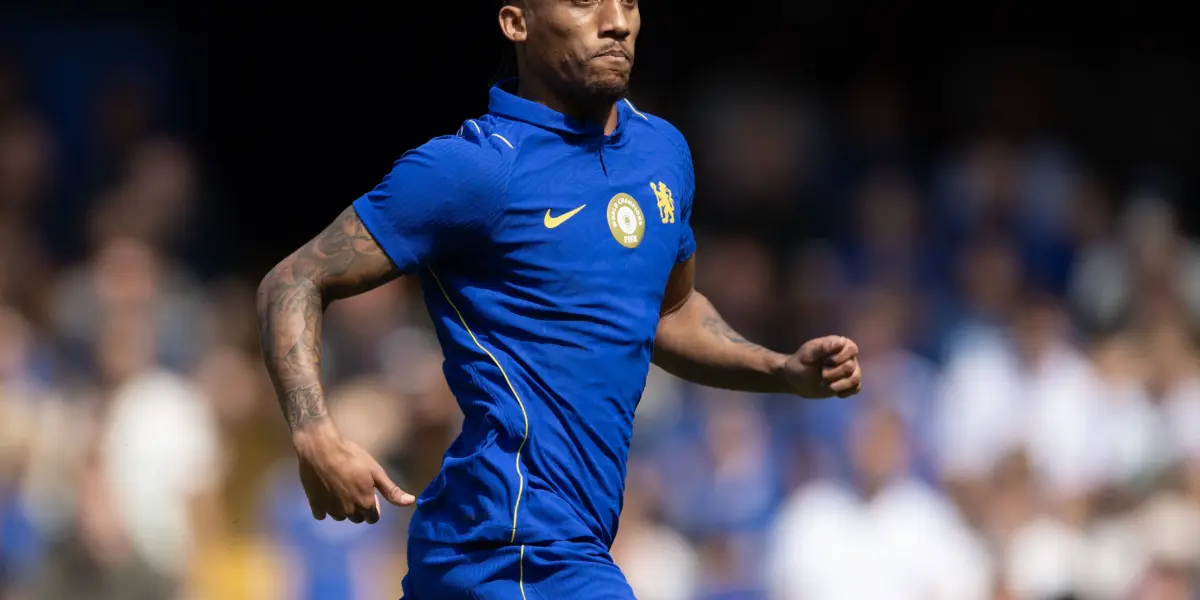
Chelsea’s No. 9 curse has once again been thrust into the spotlight after João Pedro swapped the number 20 shirt he wore during his first season at Stamford Bridge for the much-feared No. 9 jersey.
Superstition is a genuine part of football culture, and supporters can hardly be blamed for feeling uneasy after watching several high-profile strikers struggle whenever they have taken Chelsea’s No. 9 shirt.
For years, the pattern has continued to fuel the belief that something is different about wearing the jersey at Stamford Bridge.
João Pedro, however, enters the role with considerable expectations. The Brazilian was one of the standout performers during Chelsea’s disappointing 2025/26 campaign, finishing the season with more than 30 goal involvements across all competitions despite playing in a side that went through three different managers.
His performances made him one of the few Chelsea strikers to consistently demonstrate his quality, earning him a salary increase and a contract extension.
Now, with the weight of Chelsea’s No. 9 curse added to the expectations surrounding him, João Pedro will be hoping his form can continue rather than suffer the fate of his predecessors.
Surprisingly, that form was not enough to earn him a place in Brazil’s squad for the 2026 World Cup, a decision that drew scrutiny towards Carlo Ancelotti.
Nevertheless, João Pedro remains one of Europe’s highly rated young forwards, with several top clubs, including Barcelona, reportedly willing to make a bid to lure him away from Stamford Bridge during the summer transfer window.
Now, with the No.9 shirt on his back, João Pedro faces a different challenge.
Will he be the player to break Chelsea’s No.9 curse and prove that the infamous jersey is nothing more than superstition? Or will he become the latest high-profile name to struggle under its weight?
From Abramovich to Boehly: The Unsolved Mystery of Chelsea Strikers’ Graveyard
Since Roman Abramovich’s takeover in 2003, the Blues have consistently signed world-class strikers – players who have led clubs and countries to silverware and earned reputations as clinical finishers.
Yet, once they pull on Chelsea’s No.9 shirt, something seems to change.
Their shots lack power, goals dry up, and easy chances go begging. Top Chelsea strikers who once terrorised defences across Europe suddenly look out of sync, a shadow of their former selves.
This recurring pattern raises questions: Is Chelsea’s No.9 shirt cursed? Or have modern Chelsea strikers simply succumbed to the immense pressure?
Are curses even real in football? Or is this narrative simply a product of a series of underwhelming signings?
During Roman Abramovich’s ownership, Chelsea became renowned for their willingness to spend heavily on top talent across all positions, building a squad brimming with stars.
At one point, the team fielded a lineup featuring captains of multiple nations: Michael Ballack (Germany), Branislav Ivanovic (Serbia), John Terry (England), Petr Cech (Czech Republic), John Obi Mikel (Nigeria), and Didier Drogba (Côte d’Ivoire).
This showcased Abramovich’s fearless approach to securing the players he desired.
One particularly intriguing aspect of Roman Abramovich’s tenure as Chelsea owner was his consistent struggle to find a reliable forward, despite his substantial investment in the transfer market.
This difficulty in securing a dependable No.9 for the central role has curiously persisted even after he handed over ownership in 2022 to Todd Boehly and the Clearlake Consortium.
At Stamford Bridge, the number nine shirt appears to carry a strange burden. For years, Chelsea strikers who don the jersey have struggled to live up to expectations, often underperforming or failing to settle at the club.
Even former Chelsea head coach and current boss of England’s Men’s national team Thomas Tuchel once admitted that “nobody wants Chelsea’s No. 9 shirt.”
“There was not a big demand for number 9. Players sometimes want to change numbers but, surprisingly, nobody wants to touch it.
“Everybody who is longer than me in the club tells me: ‘Ah, you know, like he had the nine and he did not score and he had the nine and did also not score.’ So we now we have a moment where nobody wants to touch the number nine.”
READ MORE: Premier League 2026/27: Why This Season’s Title Race Could Be Decided By Fine Margins
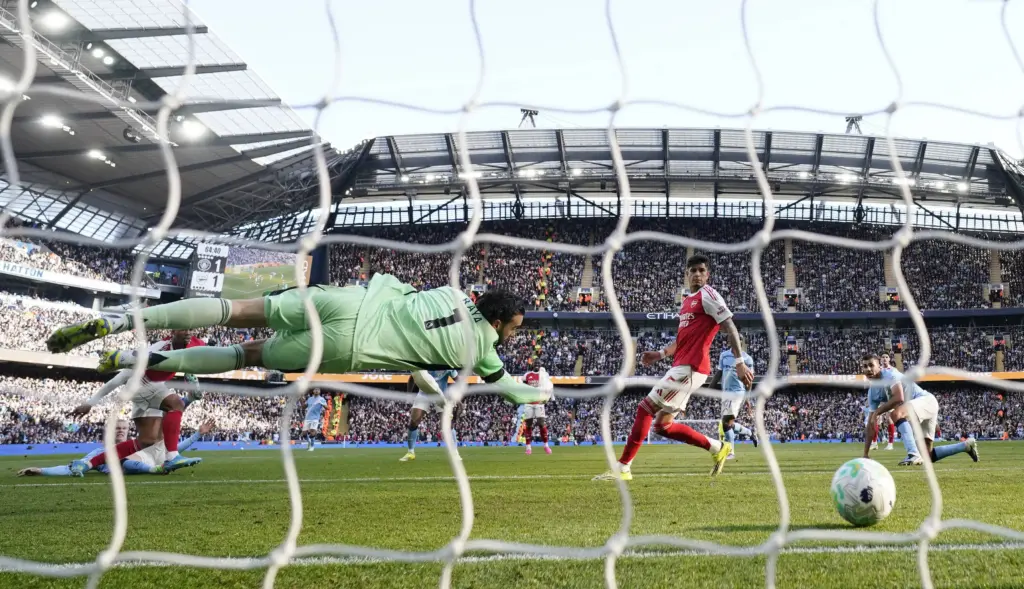
Chelsea’s No. 9 Curse: Elite Striker Struggle Unveiled
Mateja Kezman
Serbian striker Mateja Kezman was one of the earliest players signed in 2004 during the early era of Jose Mourinho, but like Chelsea strikers before him, he found the transition to English football difficult.
Kezman arrived at Chelsea with a reputation as a prolific goalscorer, having won three Eredivisie Golden Boots and scored 105 goals in 122 appearances for PSV Eindhoven. He was expected to bolster the Blues’ attack with his clinical finishing and predatory instincts in the box.
In the Premier League, Mateja Kezman struggled to replicate his prolific form from PSV Eindhoven, enduring a disappointing 2004/05 season at Chelsea.
He managed only four league goals, with his first strikes for the Blues not arriving until late December and his next goal not until March of the following year.
After scoring just seven goals in 41 appearances across all competitions, Kezman departed for Atlético Madrid a year later.
His struggles would become one of the early chapters in what supporters would eventually call Chelsea’s No. 9 curse.
Franco Di Santo
Argentine forward Franco Di Santo joined Chelsea in 2008 from Chilean side Audax Italiano as a young and relatively inexperienced player.
He began his stint with the club in the reserve team before earning promotion to the senior squad.
However, his time with the first team was underwhelming. He made 16 appearances without scoring a single goal.
In 2009, he was loaned out to Blackburn Rovers in search of more opportunities, and not long after, he made a permanent switch to Wigan Athletic.
Fernando Torres
Fernando Torres was once one of the most feared strikers in Europe, but he became one of the most high-profile Chelsea strikers to endure a severe goal drought after making a big-money transfer.
During his time at Liverpool, the Spanish centre-forward was clinical in front of goal, consistently troubling opposition defences.
Between 2007 and 2011, he scored an impressive 81 goals in 142 appearances for the Reds in the Premier League before making a then-British record £50 million move to Chelsea in 2011.
By that point, Torres had already won the World Cup with Spain and would go on to be the top scorer at Euro 2012 and the 2013 Confederations Cup.
However, after taking Chelsea’s No. 9 shirt, his time at Stamford Bridge got off to a difficult start. He went 903 minutes without scoring, and a notable open-goal miss against Manchester United in September 2011 fueled talk of a “curse.”
Despite struggling for consistency, Torres produced one of the most iconic moments in Chelsea’s history when he scored against Barcelona in the 2012 Champions League semi-final, helping send the Blues to the final, where they secured their first-ever Champions League title.
Though his spell at Stamford Bridge is often viewed as underwhelming overall, Torres still collected major silverware with Chelsea, winning the Champions League, Europa League, and FA Cup during his three-year stint at the club.
Yet, Torres’ struggles in London only strengthened the belief that Chelsea’s No.9 curse was real, with many questioning how a world-class striker who had been so clinical at Liverpool could suddenly find himself missing seemingly straightforward chances.
Radamel Falcao
After enduring the 2014/15 season with limited impact from their strikers, Chelsea turned to Radamel Falcao, a 29-year-old Colombian international, signing him on loan from Manchester United.
He arrived at Stamford Bridge hoping to rebuild his reputation, but joined a list of veteran Chelsea strikers whose moves failed to pay off.
In his prime, he was regarded as one of the most lethal forwards in Europe. Falcao had scored 70 goals in 91 games for Atlético Madrid, including a memorable hat-trick against Chelsea in the 2012 UEFA Super Cup. However, a serious ACL injury to his left knee marked the beginning of a sharp decline.
His stint at Manchester United in 2014 yielded just four goals in 26 appearances, and by the time he arrived at Stamford Bridge, many hoped he could rediscover his form and break the so-called striker curse.
Instead, Falcao’s time at Chelsea only deepened the narrative. He managed just one goal in 15 appearances, and his impact was minimal.
By the summer of 2016, he was released to AS Monaco, leaving behind another disappointing chapter in Chelsea’s search for a consistent No.9.
Alvaro Morata
After signing from Real Madrid for a club record fee of £60m in 2017, Morata took Chelsea’s No.9 shirt.
His fast start saw him reach 10 goals before Boxing Day, an impressive beginning to his time at the club that made some fans believe the curse had finally been broken.
However, some were still not convinced, and soon his hot form slowed down.
He ended his first season with 17 goal involvements in the league, and the following season, he changed his number to 29 to pay tribute to his newborn twins who were born on July 29th – perhaps also putting some distance between himself and the growing reputation of Chelsea’s No.9 curse.
That season, he also didn’t impress as his goals dried up, and he was ultimately sent on loan to Atletico Madrid.
Gonzalo Higuain
The 2014 World Cup finalist was another high-profile loan signing, similar to Radamel Falcao, as Chelsea hoped to spark a successful partnership between the player and manager, who had worked together before.
Gonzalo Higuain, who broke a 66-year Serie A record for most goals in a season – a record previously held by Gunnar Nordahl, by scoring 36 goals in the 2015/16 season – joined Chelsea from Juventus in January 2019 and was reunited with former Napoli boss Maurizio Sarri.
During their time together, they won the Europa League, but the loan was a disappointment as he scored just five goals during his six-month stay at the club.
Romelu Lukaku
Belgium’s all-time leading goalscorer, Romelu Lukaku, became another high-profile name associated with Chelsea’s No. 9 curse.
Lukaku arrived at Stamford Bridge from Anderlecht in 2011, and his first spell at the club didn’t go as planned, as a lack of first-team opportunities led him to a West Bromwich Albion loan, where he showed signs of being a prolific striker with 17 goals.
The following season, he was sent out on another loan to Everton, where he scored 15 goals before the Merseyside club decided to make it a permanent transfer.
He went on to score 53 goals in 110 appearances for the Toffees.
After several seasons playing for Manchester United and Inter Milan, he returned for a second spell at Chelsea where he took up the number nine shirt.
In 26 games for the Blues, he managed to score eight goals as injuries, loss of form, and controversial media interviews contributed to the Belgian’s difficult spell in London.
Pierre-Emerick Aubameyang
Aubameyang became one of the shortest-tenured Chelsea strikers in recent memory after managerial changes altered his role.
The 2017/18 Premier League Golden Boot winner with 22 goals joined Chelsea from Barcelona for a reported £10m fee.
The Gabonese played most of his football with Arsenal, spending four seasons and scoring 92 goals in all competitions.
But after a fallout with Head Coach Mikel Arteta, he was sidelined and eventually sold to Barcelona, where he scored 13 goals in 23 appearances during his 6-month stay at the club.
Aubameyang, who had played under Thomas Tuchel at Borussia Dortmund, was signed to reunite with his former boss, but the German was sacked before the two could make any meaningful impact together.
He worked under Graham Potter, where he played 15 games and scored three goals for the Blues before being shipped out to Marseille.
By this point, the list of high-profile forwards who had struggled in Chelsea’s No.9 shirt had become difficult for supporters to ignore, further strengthening the belief that the club’s infamous jersey was cursed.
Chelsea’s No. 9 Shirt: When Non-Strikers Took on the Infamous Number
Khalid Boulahrouz
Amid the ongoing struggle to find clinical Chelsea strikers, the club made the unusual decision to assign the iconic number to Dutch defender Khalid Boulahrouz.
Signed in 2006, Boulahrouz wore the number during his lone season at Stamford Bridge, making 23 appearances across all competitions.
His performances failed to leave a lasting impact, and he was loaned to Sevilla the following year before eventually moving on.
Steve Sidwell
In another unconventional use of Chelsea’s No.9 shirt, English midfielder Steve Sidwell inherited the jersey upon joining the club in 2007 on a free transfer from Reading.
Despite showing promise in the Premier League, Sidwell struggled to break into José Mourinho’s starting lineup.
Throughout the 2007/08 season, he made 25 appearances but failed to make a significant impression.
He departed for Aston Villa the following summer in search of more regular playing time.
YOU MAY ALSO LIKE: Hull City vs Manchester United: Three Key Factors, Predicted Lineups and Team News
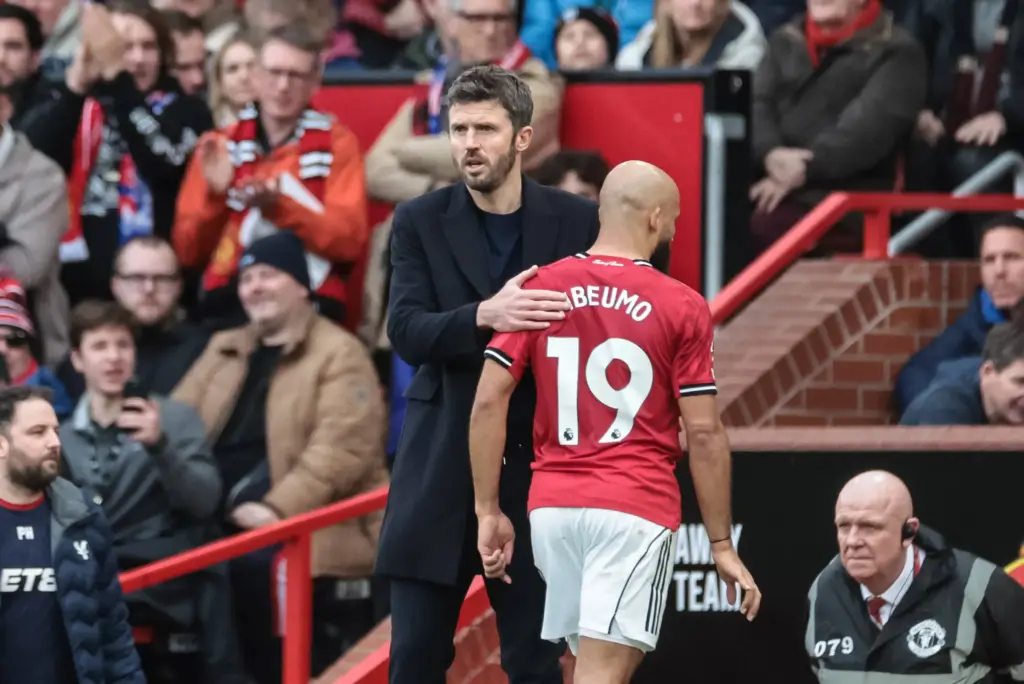
Strikers Who Shone in Chelsea’s No. 9 Shirt
There have been few strikers capable of performing exceptionally well while wearing the number nine shirt and bringing trophies to the club.
Jimmy Floyd Hasselbaink.
During the Roman Abramovich era at Chelsea, the club has experienced ups and downs with various strikers.
However, only a handful of players have managed to break Chelsea’s No. 9 curse, and a prime example is the Dutch striker, Jimmy Floyd Hasselbaink.
He joined Chelsea from Atletico Madrid in 2000 for £15 million.
Over the four seasons he spent at the club while donning the number nine shirt, he scored 87 goals in 177 appearances, with 70 of those goals coming in 136 Premier League games.
Hasselbaink became the club’s top scorer in three of his four seasons.
His standout campaign was the 2000/01 season, during which he won the Premier League Golden Boot by scoring 23 goals.
He also played a crucial role in helping Chelsea finish second in the 2003/04 Premier League and reach the semifinals of the UEFA Champions League.
Hernan Crespo
The Argentine striker spent three years at Chelsea after joining from Inter Milan in a deal worth £16.8m, wearing the number nine shirt in the 2005/06 season.
In his first year at the club, he scored 12 goals in 31 appearances, including 10 in 19 Premier League games.
In his second season, he was sent on loan to AC Milan, and when he came back, he scored 13 goals in 42 appearances, with 10 coming in 30 Premier League games, helping the team to the Premier League title.
Crespo’s time was marked by quality but limited starts due to tactical fit and adaptation challenges. His efficiency and clutch performances made his stint successful.
Tammy Abraham
Tammy Abraham, a Chelsea academy graduate who joined the club at an under-eight level, progressed through the youth ranks and showed prolific goal-scoring ability.
His impressive record of 74 goals in 98 matches across Chelsea’s youth teams from 2014 to 2016 caught the eye of former boss Guus Hiddink, who gave him his senior-team debut in May 2016, when he appeared as a substitute against Liverpool and Leicester City.
In 2019, an imposed FIFA transfer ban that prevented the club from registering new players for two transfer windows forced the hands of then-head coach Frank Lampard to rely on youth from the academy.
This gave opportunities to players like Tammy Abraham, Mason Mount, Fikayo Tomori, Callum Hudson-Odoi, Billy Gilmour and current captain Reece James.
Abraham, who made his senior England debut in November 2018, played a key role in helping Chelsea secure a top-four finish that season, scoring 15 goals and providing three assists in 34 Premier League games, including a hat-trick in a 5-2 win over Wolves.
Overall, the Englishman would go on to lift the 2020/21 Champions League and Super Cup with the Blues, scoring 26 goals in 89 appearances before leaving for AS Roma in 2021 in a £34m deal.
Will The “Curse” Affect The New No.9, João Pedro?
João Pedro has a strong chance of thriving at Chelsea due to his young age (24), high work rate, familiarity with the Premier League, and connections with known teammates such as Cole Palmer & Danny Welbeck.
Many of the previous strikers whose struggles strengthened the belief in Chelsea’s No.9 curse either suffered serious injuries that derailed their progress or arrived at the club past their best, unlike the few exceptions, such as Tammy Abraham, who was young, energetic and eager to prove himself.
The Brazilian already understands the demands of English football and has shown that he can perform under pressure. His technical ability, movement and versatility also give him the tools to contribute in different areas of the attack rather than relying solely on goals.
More importantly, as Chelsea’s 2026/27 season is set to kick off, he finds himself at a stage of his career where he can still develop and adapt to the demands of the club under Xabi Alonso.
If he can maintain the confidence and form that made him one of the Blues’ standout performers, there is a genuine possibility that he could become the player who finally puts an end to the long-running narrative surrounding Chelsea’s No.9 shirt.
The “curse” is likely a mix of high expectations, tactical mismatches and coincidence rather than a supernatural jinx or voodoo.
However, the pressure will be immense. Every missed chance and barren spell is likely to revive talk of the curse, making João Pedro’s first season wearing the No.9 one of the most intriguing storylines to follow at Stamford Bridge.