

Over the past few seasons, Premier League fans have observed a dramatic and thrilling trend: the number of stoppage time goals has increased significantly.
Late drama has always been part of English football’s charm, but recently, it has become a defining feature of matches.
Whether it’s title contenders rescuing crucial points or relegation battlers pulling off miraculous comebacks, stoppage time goals in the Premier League are no longer rare moments — they’re becoming a recurring pattern that shapes results, narratives, and even title races.
This rise in stoppage time goals in the Premier League has changed how supporters experience matches.
Fans stay glued to their seats until the final whistle, managers hold substitutions for late-game impact, and players treat the closing minutes as a phase of the match with its tactics and tempo.
Why is such an increase happening?
Here are three shocking reasons behind the explosion of stoppage time goals in the Premier League.
Stoppage Time Goals In The Premier League: Longer Added Time Has Changed The Final Phase Of Matches
One of the most visible reasons behind the surge in stoppage time goals is the significant increase in added time.
Referees across the Premier League have consistently added more stoppage time at the end of matches, transforming the closing stages into highly contested periods with extra opportunity for decisive action — a change documented recently by the Premier League on how added time figures have shifted.
As a result, matches that once had only brief periods of added time now regularly see several extra minutes beyond the 90th minute, giving teams more opportunity to chase a result.
Rather than simply trying to run down the clock, players now treat stoppage time as a crucial phase in which they can still change the outcome. This longer stretch of play has created ideal conditions for stoppage time goals in the Premier League to become both more frequent and more decisive.
The team clinging on faces a sharp shift in risk as the added time extends further. Fatigue creeps in, concentration wavers and defenders are asked to repeat the same actions over and over again.
Under that kind of sustained pressure, the likelihood of a slip, a poor clearance or a missed assignment inevitably grows. The longer a side is pinned back, the more those small errors accumulate – and stoppage time becomes fertile ground for decisive goals.
In this context, stoppage time goals in the Premier League are not simply freakish bursts of chaos but often the logical endpoint of prolonged pressure at the death.
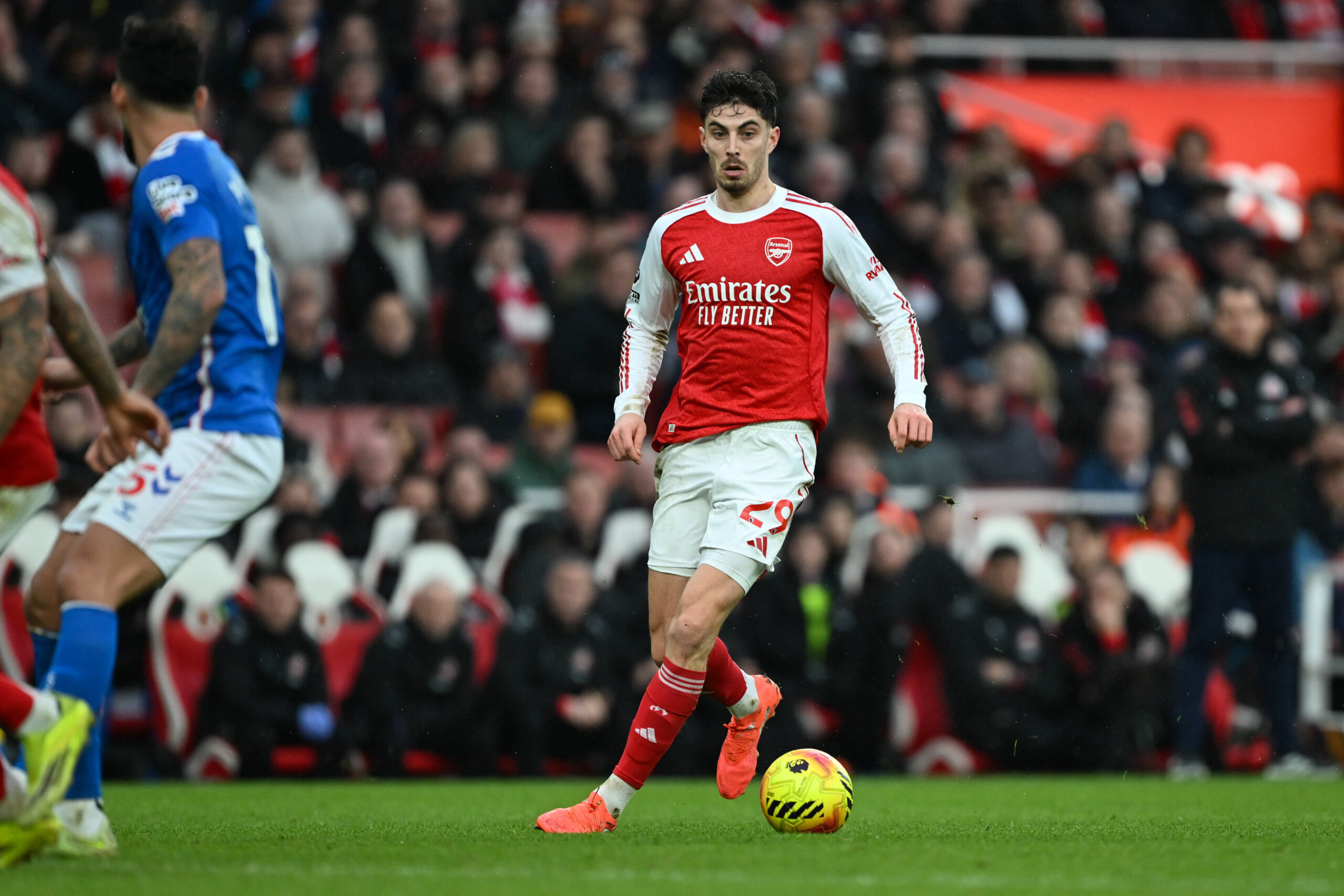
YOU MAY ALSO LIKE: Kai Havertz’s Creative Spark: Arsenal Stumble To A 1-1 Draw Against Brentford
Tactical Evolution Is Fueling Stoppage Time Goals in the Premier League
Intensity, fluid positioning, and high-risk attacking patterns define the modern Premier League.
This tactical evolution is directly fuelling stoppage time goals in the Premier League as managers increasingly abandon conservative structures in search of late breakthroughs — as analysed in the tactical breakdown of Crystal Palace’s evolution.
Full-backs push higher, centre-backs step into advanced areas, and teams flood the penalty area with crosses, cutbacks, and second balls.
In the final minutes, structure gives way to a kind of controlled chaos – a tactical gamble that raises both the chances of a stoppage time goal and the risk of being caught on the counter.
This late-game appetite for risk has helped fuel the rise in stoppage time goals in the Premier League, particularly in matches where one side is desperately chasing the result.
At the same time, defensive organisations will inevitably fray under the strains of physical and mental fatigue. After 90 minutes of pressing, tracking runners and absorbing pressure, even the most disciplined back lines begin to lose their compactness.
Tiny positional lapses become decisive, and elite forwards are quick to pounce. In those chaotic closing stages, stoppage time goals start to feel almost inevitable, as spaces open up in areas that had been carefully guarded for most of the match.
A Mentality Shift Has Redefined The Meaning Of Stoppage Time
There has been a cultural change in how players and coaches handle the last few minutes of games, in addition to changes in refereeing and tactics.
Teams now genuinely believe that games can be won in stoppage time, and recent seasons have reinforced that belief through a steady stream of late winners and dramatic comebacks.
This psychological shift has normalised the idea that stoppage time goals in the Premier League are not exceptions but realistic outcomes of sustained late pressure.
This belief has reshaped in-game management. Substitutes are introduced specifically for late-game impact, aerial threats are saved for final pushes, and set-piece routines are designed with stoppage time scenarios in mind.
Coaches plan for late pressure rather than treating it as an emergency response. As teams prepare more deliberately for the final minutes, the conditions for stoppage time goals in the Premier League become even better.
Stoppage time turns into a time of increased expectation rather than resignation as this mindset permeates the league.
Fans remain on edge until the referee blows the final whistle, aware that the match narrative can change in an instant. The growing expectation of stoppage time goals in the Premier League has, in turn, reinforced the league’s reputation for late drama and unpredictability.
Highly Entertaining Unpredictability Of Stoppage Time Goals In The Premier League
The Premier League has always thrived on unpredictability and drama.
However, with longer added time, tactical evolution, and a renewed belief in late-game impact, stoppage time goals in the Premier League are becoming a structural feature of the competition rather than isolated moments of chaos.
For supporters, one thing is now clear: the game is never truly over until the final whistle sounds — and in the Premier League, the final minutes may be the most decisive of all.
Main Photo
Credit: IMAGO/Pro Sports Images
Recording Date: 10.02.2026




Loved this article!
Amazing!
For these and other reasons, the Premier League is the best league.
Great article! It’s true, the game isn’t over until the final whistle now. This unpredictability is exactly what makes PL the best.