
European football’s governing body has drawn a firm line in the sand.
At an emergency meeting on Thursday, July 30, UEFA’s 55 member associations unanimously agreed to a World Cup boycott of all FIFA competitions if plans to sell stakes in the World Cup to private investors go ahead.
The decision marks one of the sharpest clashes yet between UEFA and FIFA under president Gianni Infantino.
UEFA said its members “unanimously and unequivocally reject” the proposals. No UEFA national teams will take part in any FIFA event while the plans remain active, the body stated, unless they are abandoned completely and binding guarantees are given that FIFA will never again open its competitions or governance to private ownership.
The threat of a World Cup boycott would start soon.
The 2026 Under-20 Women’s World Cup in Poland, set for early September, is the first likely target. Six European sides, including England, are due to compete. The 2026 U-17 Women’s World Cup will follow in October, with five European sides expected to compete.
The 2027 Women’s World Cup, for which four European nations have already qualified, would follow if the stand-off continues. England’s senior women also face a World Cup qualifying play-off in October that would test the Football Association’s resolve.
FIFA has pushed back hard. In a statement, it insisted “nobody is selling football” and that this is “not something FIFA would ever entertain.” The governing body said media reports had disrupted a planned consultation and that it would press on so member associations could vote on the facts.
The proposal centres on creating a commercial entity, FIFA Forward Enterprise, valued at around $20 billion, that would handle major tournaments and invite private investment.
An investor group linked to Thrive Eternal, founded by Joshua Kushner, whose brother Jared Kushner is a son-in-law of US President Donald Trump, has been mentioned as a potential lead backer.
European Unity Behind World Cup Boycott
The emergency meeting, which lasted under two hours, produced a rare show of unity.
UEFA president Aleksander Ceferin opened proceedings, with further contributions from executive committee members and FIFA council representatives. Around 20 association heads spoke.
Sources described an atmosphere of solidarity.
England FA president Debbie Hewitt delivered a tough intervention in favour of action, according to one attendee.
An FA spokesperson later said: “We stand shoulder to shoulder with our European colleagues and fully support the collective view. We oppose FIFA’s plans – the FIFA World Cup belongs to football and always will.”
Wales, Scotland and Belgium issued similar messages of support. British Culture Secretary Lisa Nandy called the move a |principled decision,” adding: “Football belongs to the fans, not billionaire investors.”
The World Cup boycott threat has already drawn backing from other confederations. CONCACAF rejected the proposal after its own emergency meeting, though it stopped short of announcing a boycott.
The Asian Football Confederation expressed solidarity with UEFA and CONCACAF, voiced serious concerns, and called for an urgent review of FIFA’s governance. AFC president Salman bin Ibrahim Al Khalifa had earlier described FIFA’s approach as “unacceptable.”
Pressure on Infantino has mounted further.
Carlos Cordeiro, a senior adviser to the FIFA president, resigned in protest, calling the plan “a bad deal for football.” A second FIFA official claimed staff had been “deceived” by a lack of openness.
UK Prime Minister Andy Burnham described Infantino as “the wrong man” to lead the organisation.
YOU MAY ALSO LIKE: Mykhailo Mudryk Ban Lifted as Chelsea Winger Cleared To Return
What a World Cup Boycott Could Mean
The practical impact of a sustained World Cup boycott would be severe.
European teams currently occupy six of the top 10 places in both the men’s and women’s FIFA rankings.
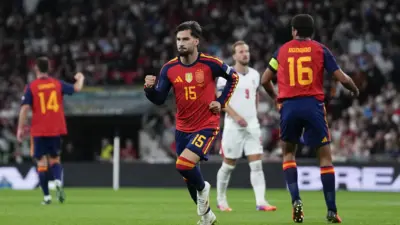
At the recent men’s World Cup, UEFA nations filled six of the eight quarter-final spots and three of the four semi-final places, with Spain lifting the trophy.
A tournament without Europe’s strongest sides would lose much of its competitive and commercial value.
Club football would feel the effects too.
Europe’s major leagues and the Champions League drive global audiences and sponsorship. Removing European national teams from FIFA events would weaken the entire calendar and reduce the appeal of associated commercial deals.
FIFA has promised financial gains for member associations under the new structure, yet opponents argue it risks prioritising investor returns over the sport’s long-term health and could lead to more frequent, expanded tournaments that further crowd domestic schedules.
Politically, the World Cup boycott weakens Infantino’s position ahead of next year’s presidential election. He had been expected to face little opposition for a fourth term.
Sources now suggest a Europe-backed challenger is more likely. Some European associations have already discussed the issue with their governments, many of whom have privately backed the hard line.
FIFA still has time before the September 19 deadline for associations to respond. It maintains the consultation will continue and that the plan is about giving member associations ownership of commercial opportunities without selling the game itself.
UEFA, however, has framed the choice in stark terms: accept the “irreversible capture” of football’s biggest competitions or face the consequences of a World Cup boycott.
For now, the European stance holds firm. Whether other confederations join the boycott World Cup threat or force a climbdown remains the central question.
What is clear is that the threat of a World Cup boycott has turned a commercial proposal into an open governance crisis. Infantino must now decide whether to press on or retreat.
A genuine World Cup boycott would damage everyone involved, but UEFA has made plain it is prepared to take that step if the sell-off plans proceed. The coming weeks will show whether the boycott World Cup warning is enough to force a change of course.