
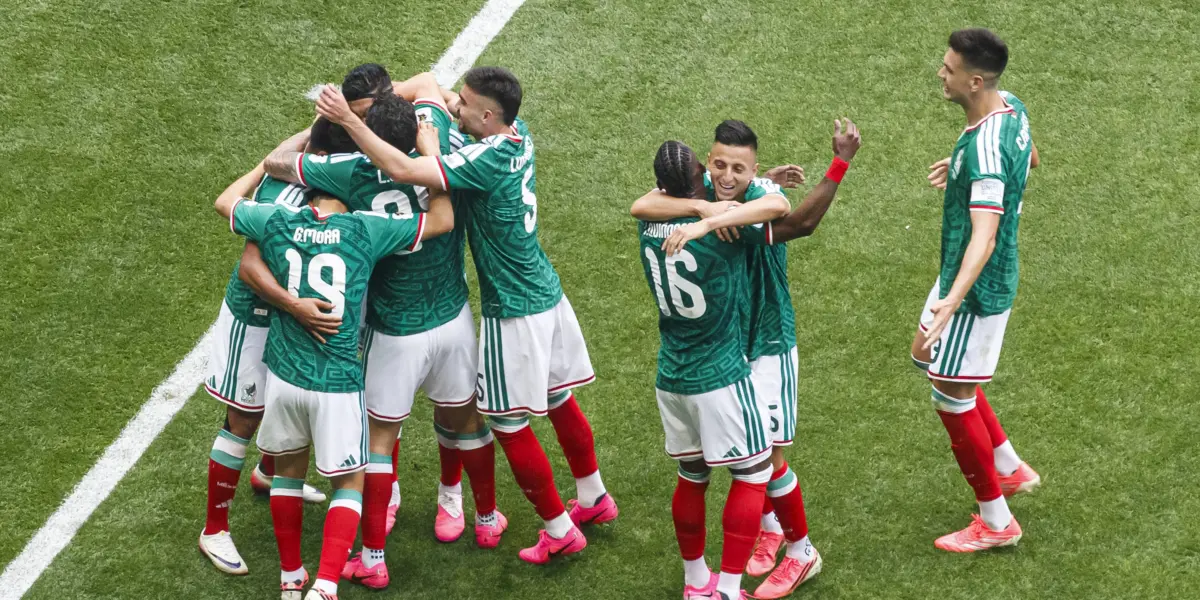
South Africa’s World Cup loss to host nation Mexico in the opening game of the 2026 World Cup gave a whole new meaning to the phrase “hate-watch.”
Back in 2010, when South Africa became the first African nation to host the FIFA World Cup, the continent rallied behind Bafana Bafana and every other African representative.
There was a strong sense of pan-African pride, with fans setting aside rivalries to support teams carrying the continent’s hopes on football’s biggest stage.
Although South Africa failed to progress beyond the group stage, the support never wavered, and the tournament remains widely regarded as one of the most memorable and celebrated World Cups in modern history.
Fast forward 16 years, and that spirit of unity appears to have faded.
Both inside stadiums and across social media, the overwhelming continental backing that once seemed unbreakable for African participants at the World Cup has largely disappeared, replaced by indifference, rivalry, and in some cases, open hostility.
No African nation has ever won the FIFA World Cup. In fact, the furthest any team from the continent has gone remains the semi-finals achieved by Morocco in 2022, and that run brought together millions of Africans behind the Atlas Lions.
Now, with 10 African nations qualifying for the expanded 2026 tournament, many expected a similar sense of continental solidarity to emerge. Instead, what was witnessed was the exact opposite.
During the highly anticipated Mexico vs South Africa clash, social media platforms – including X (formerly Twitter) – across Africa were flooded with supporters openly cheering for the hosts.
Fans from countries such as Nigeria, Ghana, Kenya, Zambia, and Senegal were spotted wearing the Mexican jerseys, and from the opening whistle, they were more invested in seeing Bafana Bafana lose than in backing one of Africa’s representatives.
To supporters of other nations, including Mexican fans, it seemed a bit odd and raised the question – why did Africa support Mexico in the World Cup?
South Africa’s World Cup Loss: How Xenophobia and Continental Tensions Shaped Africa’s Reaction
The decline in support for South Africa did not just happen all of a sudden. It cuts across much of the continent and can be traced to a combination of sporting rivalries and long-standing historical tensions.
However, the biggest factor undoubtedly remains the repeated xenophobic attacks that have targeted foreign African nationals living in South Africa over the years.
The attacks have been a constant occurrence, but in the months leading up to the World Cup, groups like “Operation Dudula” and various localised vigilante movements intensified their campaigns.
These groups carried out unlawful citizens’ arrests, raided informal markets, and profiled fellow Africans from countries such as Zimbabwe, Nigeria, Ghana, and Lesotho.
Some were reportedly assaulted, while in the most extreme cases, lives were lost.
Those incidents have strained relations between South Africa and many of its neighbours, leaving deep scars that have not easily healed.
While football and politics are fundamentally separate, emotions rarely stay confined to a single arena. Those emotions are often amplified when supporters feel they are facing a nation they believe has wronged them.
The memories of violence, discrimination, and hostility experienced by fellow Africans in recent months and years have inevitably spilled over into the sporting world.
As a result, for some supporters across the continent, fixtures involving South Africa – whether in football or other sporting competitions – have become an outlet for frustrations and grievances that extend far beyond what happens on the pitch.
While the reaction of fans across other African nations is open to debate, there is little doubt that the lingering impact of xenophobia has played a significant role in shaping the response to South Africa’s participation on the global stage.
Politics in Sports: The June 30 Deadline and a Divided Continent
As well as the xenophobic attacks, the hostility aimed at Bafana Bafana also stemmed from a direct reaction to a widely publicised June 30 deadline promoted by anti-migrant groups within the country.
These groups publicly demanded that undocumented immigrants leave South Africa by that date, a claim that sparked concern across parts of the continent, although the South African government disputed the message and described it as false.
The situation became so serious that countries such as Malawi and Ghana reportedly began processing the return or evacuation of some of their nationals out of fear for their safety.
By the time South Africa took to the pitch against Mexico, the anxiety and resentment surrounding that deadline were still fresh in the minds of millions of Africans.
As a result, some did not view Bafana Bafana’s 2-0 loss as merely a sporting defeat. Instead, it felt like a symbolic rebuke of the xenophobic hostility that many believe has been simmering on South African streets.
YOU MAY ALSO LIKE: Bernardo Silva to Real Madrid: How the Portuguese Playmaker Could Transform Mourinho’s Midfield

South Africa’s World Cup Loss: How African Football Fans Used Memes to Weaponise Xenophobia
Other African nationals have long felt they have been treated unfairly in South Africa. At the same time, South Africans have frequently argued that limited job opportunities are often attributed to foreign workers, with many claiming that migrants occupy a significant share of available employment and have left them jobless.
That claim has turned out to be economically false, as data from Statistics South Africa (Stats SA), foreign nationals account for only about 3.7% to 4% of the entire working-age population.
This makes it mathematically impossible for such a small minority to capture “all” employment in a nation of over 60 million people
This tension has, in turn, caused resentment and strained relations between South Africa and several of its continental neighbours, culminating in calls such as the widely reported June 30 evacuation deadline.
Using memes to weaponise xenophobia after South Africa’s World Cup defeat was an intelligent display of strategic irony, as African fans took the exact phrases that had been used to taunt and persecute them for years and turned them into weapons to humiliate their critics on the global stage.
By the end of the match, social media users had plenty to say. One tweeted, “South Africa couldn’t attack Mexico in the World Cup match today. The only thing they can do is attack Nigerians living in South Africa.”
Another user wrote, “We’re supporting Mexico so that South Africa can go back home early to protect their jobs.”
“South Africa seems confused about how much you can hit people in a soccer game”
“South Africa didn’t give us goals but they gave us epic memes to work with”
“South Africa’s World Cup loss was poetic because they couldn’t defend cos their job was not on the pitch”
Meanwhile, another simply summed up the sentiment in two words: “Mexico vs xenophobia.”