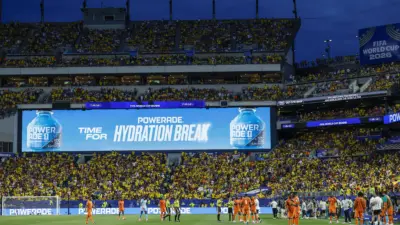

FIFA Disciplinary Code has become one of the biggest talking points after the dramatic conclusion of the 2026 FIFA World Cup final at MetLife Stadium in the United States.
Not only did Argentina finish the match with 10 men, but the chaotic scenes that unfolded after the final whistle also placed the FIFA disciplinary regulations firmly under the spotlight.
While many supporters initially assumed that Enzo Fernández and Leandro Paredes would receive identical punishments after both were believed to have been sent off, the circumstances surrounding their dismissals are fundamentally different under the FIFA Disciplinary Code.
For 120 minutes, the Argentina national team failed to register a single shot on target and were outplayed by Spain for much of the contest.
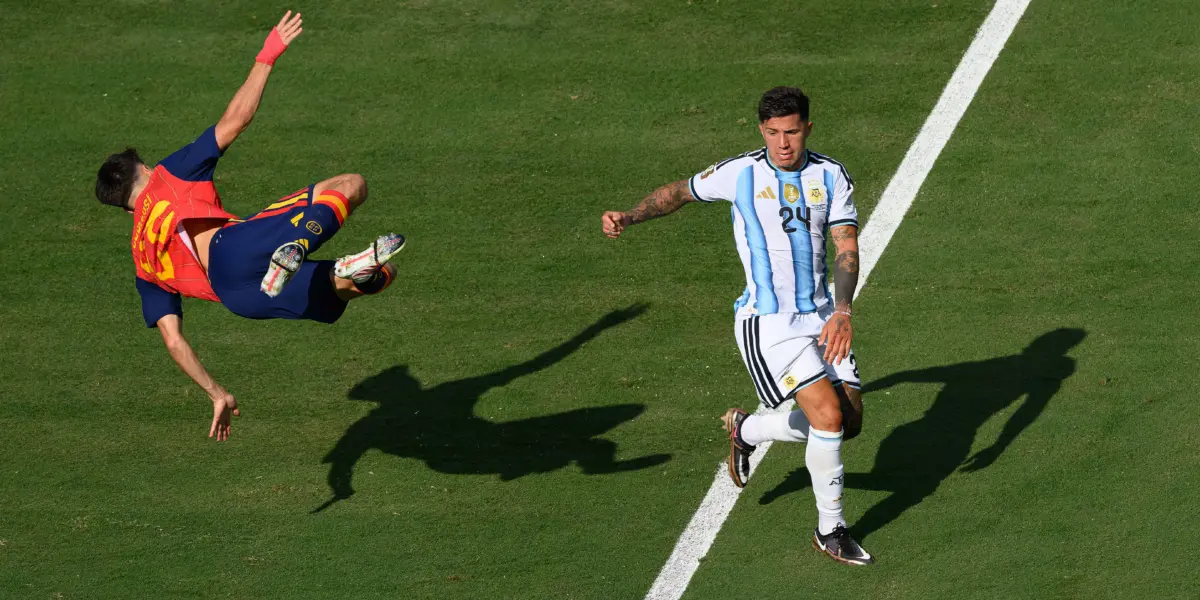
Towards the end of normal time, Chelsea midfielder Enzo Fernández lunged into a reckless challenge on World Cup Young Player of the Tournament Pau Cubarsí, earning him a second yellow card after having already been cautioned earlier in the match.
The incident forced Argentina to play the entire 30 minutes of extra time with 10 players, significantly reducing Lionel Scaloni’s tactical options as Spain took even greater control of the contest.
Despite holding on during the first 15 minutes of extra time, the deadlock was finally broken just seconds into the second period when Barcelona forward Ferran Torres scored the decisive goal to crown Spain world champions.
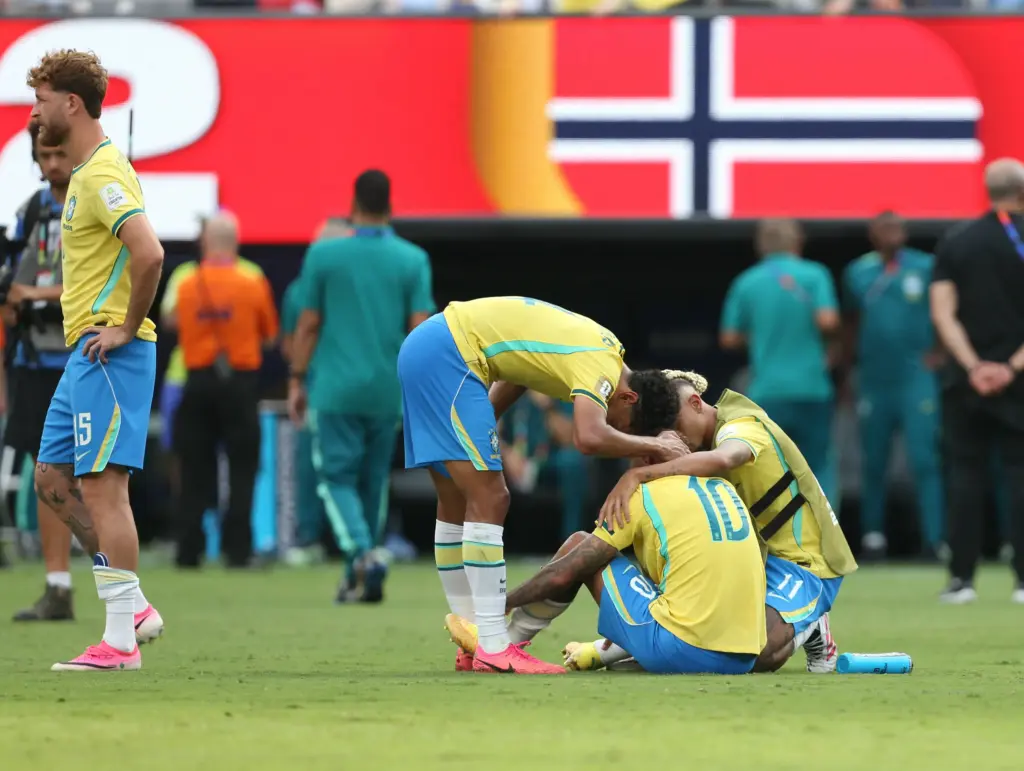
However, the drama did not end with the final whistle. As emotions boiled over, players from both teams confronted one another in the centre of the pitch, leading to a heated altercation.
What initially began as a face-off escalated into Gavi being thrown to the turf and defender Eric García being jabbed in the neck by Leandro Paredes.
Although Paredes was initially reported to have been shown a straight red card, FIFA later clarified that no official dismissal had been issued after the final whistle.
Nevertheless, the incident quickly spread across social media, prompting widespread debate over whether the Argentine midfielder could still face a lengthy suspension under FIFA regulations.
Although both incidents involve disciplinary proceedings, they fall into different categories under the FIFA Disciplinary Code.
Fernández’s dismissal stemmed from two cautionable offences committed during active play, whereas Paredes’ alleged misconduct occurred after the match had ended and is therefore subject to retrospective review rather than an automatic sanction.
That distinction is crucial because it is the primary reason the Enzo Fernandez suspension and the Leandro Paredes suspension are governed by different provisions of the FIFA suspension rules, potentially leading to significantly different disciplinary outcomes.
FIFA Disciplinary Code: Why Enzo Fernández’s One-Match Ban Is Automatic
The Enzo Fernandez suspension, unlike Leandro Paredes, is relatively straightforward under the FIFA Disciplinary Code.
He was sent off during active play, which fell entirely within the jurisdiction of on-field referee Slavko Vinčić, who judged that the Chelsea midfielder’s tackle on Pau Curbasi was reckless and warranted his second yellow card.
Since that incident was immediately dealt with by the on-field referee, there is typically no need for further disciplinary review unless exceptional circumstances arise.
Under the FIFA suspension rules, any player who is sent off after receiving two yellow cards in the same match automatically serves a one-match suspension.
This sanction is applied without the need for a separate hearing by FIFA’s Disciplinary Committee, making it one of the clearest and most consistently enforced provisions in the FIFA disciplinary regulations.
Although the 2026 FIFA World Cup has ended, the suspension does not automatically disappear.
The FIFA Disciplinary Code states that any suspension which cannot be served during a competition is automatically transferred to the representative team’s next official international match.
What this means is that Enzo Fernández’s automatic one-match ban is expected to be served when Argentina play their next competitive international fixture, which is likely to be a FIFA World Cup qualifier during the September international window.
YOU MAY ALSO LIKE: World Cup 2026 Biggest Disappointments: The Hidden Reasons Football’s Giants Fell Short
FIFA Disciplinary Code: Why Leandro Paredes Wasn’t Automatically Suspended
The Leandro Paredes suspension controversy stems from the post-match brawl that erupted immediately after the World Cup final.
Shortly after the match ended, commentators and broadcasters reported that the Argentine midfielder had been shown a straight red card for his involvement in the altercation.
The dismissal also appeared on several official data feeds of leading journalists and pundits, making supporters believe that Paredes would automatically miss Argentina’s next competitive international fixture.
However, the situation took a surprising turn several hours later when FIFA clarified that Paredes had never been shown a red card.
The removal of the red card from the official match record reignited FIFA corruption allegations across social media, with many fans accusing the governing body of favouritism.
Critics questioned why an incident that appeared clear on television was no longer reflected in the authority’s official documentation, further fuelling speculation about the integrity and consistency of the disciplinary process.
According to the governing body, the report was the result of an administrative error in the official commentator information system.
It confirmed that referee Slavko Vinčić did not physically brandish a red card after the final whistle, meaning no dismissal was officially recorded by the match officials.
Consequently, an automatic suspension for Paredes was invalid under the FIFA Disciplinary Code.
Despite the clarification, the controversy refused to die down. Videos showing Paredes’ involvement in the confrontation with several Spanish players quickly spread across social media, with many fans arguing that his actions deserved punishment regardless of the administrative mistake.
The incident sparked widespread debate over whether FIFA’s Disciplinary Committee could still take retrospective action under the disciplinary regulations, even in the absence of an official red card.
From a legal perspective, however, the administrative error does not necessarily end the matter.
Under FIFA disciplinary regulations, the absence of an on-field red card simply means Paredes avoids the automatic one-match suspension that normally follows a dismissal.
FIFA’s disciplinary committee still retains the authority to review post-match incidents using the referee’s report, video footage and other evidence before deciding whether retrospective disciplinary action is warranted.
This distinction is why the Leandro Paredes suspension remains a disciplinary issue rather than an automatic consequence under FIFA suspension rules.
FIFA Disciplinary Code: Why Leandro Paredes’ Case Is Far From Over
If Leandro Paredes was fortunate to avoid an official red card during or after the 2026 FIFA World Cup final, he may not be out of danger just yet.
Under Article 36 of the FIFA Disciplinary Code, the committee has the authority to appoint a disciplinary and ethics prosecutor to investigate incidents using all relevant evidence.
The provision serves as a legal catch-all for misconduct that extends beyond ordinary on-field fouls, allowing the governing body to impose sanctions on players whose actions are deemed to have brought the game into disrepute or violated its core principles.
If investigators conclude that Paredes was guilty of deliberately grabbing Eric García by the throat or that he engaged in violent or unsporting behaviour during the post-match confrontation, those actions could fall within the scope of Article 13, exposing him to sanctions that extend beyond the standard FIFA suspension rules applicable to on-field dismissals.
History shows that retrospective sanctions under the FIFA disciplinary regulations can be far more severe than an automatic suspension.
One of the best-known examples came during the 2014 FIFA World Cup when Luis Suárez received a four-month football-related ban for biting Italy defender Giorgio Chiellini, despite the referee taking no action during the match.
That case demonstrated that the FIFA Disciplinary Code allows the governing body to impose global sanctions when post-match investigations uncover conduct considered damaging to the sport.